Swedish fashion crimes


I read recently about how Sweden is famous around the world for fashion. Designers such as Filippa K, Efwa Attling, Johan Lindeberg and lables such as Nudie, Cheap Monday and weSC were mentioned as leading the way. Swedes have an image as a trendy, fashionable bunch.

I often witness what some Swedes wear. Now, I am no expert in sartorial trends but I do know a couple of Swedish fashion crimes that would be arrested and thrown into isolation by the fashion police.

Crime 1
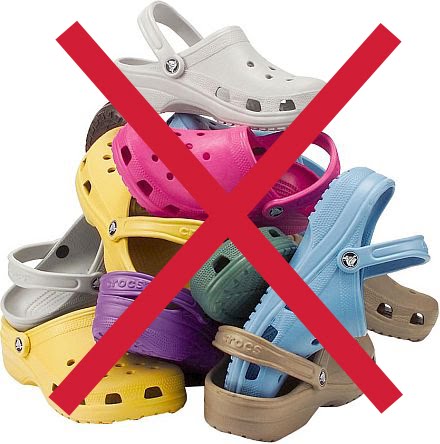
Rubber clogs, invented in Sweden, and known as crocs. We’ve all seen them in their lurid, eye-catching colours. They are banned in hospitals because the static they cause can deactivate life-support equipment. Personally, I think they’re banned because they’re ugly.

Crime 2
Knee-length tube socks and open sandals. Not uncommon in offices where a lot of technical people work it seems. Say no more.

Crime 3
Underpants under swimming trunks
I’ve mentioned this before, but am shocked every time I see it. It’s reflects the ultimate in brand obsession. A pair of designer underpants can’t just be secreted where no-one can see them. Oh no, put them on under your swimming trunks and let everybody see the designer’s slogan when you’re on the beach. I’m sure everybody isn’t thinking how cool it is, but how disgusting it is.

Crime 4
High-waisted shorts
Shorts pulled so high up the body that they could also be nipple warmers. Not only are the pulled up, but they are often way to tight down below. Now, I know Swedes are open about their bodies, but that leaves nothing to the imagination.

So remember when Swedes are portrayed as a trendy nation, there are also many who commit terrible fashion crimes.

Anybody got any others to add?

Why can’t it rain?

Why are some people never satisfied?

Sweden is currently experiencing one of the longest and hottest heat waves in history. It has been a fabulous summer so far with temperatures not going below 25 degrees and tropical nights enveloping the country. But some people are complaining about it. It’s too hot. It’s unbearable. Why can’t it rain?

These are probably the same people who complained that it rained too much last summer, that is was too windy and too chilly. The same people who moaned that this past winter was too long and dark, too stormy and enough to drive you mad with the cold. The same people who whinged about spring being late and about the ground being too hard to plant anything. Or the autumn being too wet and too blustery.

Sometimes I think some people are only happy when they have something to moan about.

Think, if they could channel all that energy into something positive instead. Imagine what amazing things they might achieve.

And they’d probably be so busy achieving that they wouldn’t have any time left to complain.

Freedom on Österlen

When visiting the Swedish countryside, tourists are often struck by the little red wooden houses with white corners, the endless forests of evergreen and the omnipresent lakes and rivers.

And quite rightly so. This kind of landscape is ‘typically Swedish’ and is often how Sweden is marketed abroad. As a rural, forested paradise. But there are regions of Sweden which look quite different.

Take Skåne, for example, a county on the southern-most tip of Sweden facing Germany, Poland and Denmark. I am fortunate enough to have a summer place in the eastern part of Skåne – an area called Österlen. This area is as far from the Swedish stereotype as you can get. A flat agricultural countryside of wide open spaces, wild sandy beaches, fruit orchards and endless fields of billowing crops. The stone houses are mostly plastered and painted white. Gardens burgeon with hollyhocks, roses and fragrant lavender.

Being on Österlen feels alive. The place is different. The pace is different.

For me, my mind becomes free when I am here. This is thanks to the lack of oppressive pine trees and the fact that you can see the horizon far, far away. This gives a special kind of light, a bright light that inspires all the artists that have settled here. And it inspires me.

On Österlen, anything seems possible. The people here are amongst the most entrepreneurial in Sweden. All those creative ideas that you have do not get stuck in the overhanging branches of the fir and the birch trees. Instead, ideas can soar into the blue sky and expand.

And they can go all the way over the horizon.

Linguistic limbo


I find that writing this blog has heightened my awareness of my surroundings – made me more míndful. I regularly see, hear, experience things and think – yes, that’s definitely blogworthy. And I come home and write.

But one thing I’ve noticed. It’s not that easy. I struggle sometimes with my English.

Having lived in Sweden for 16 years, I find I do not speak English the way I used to. Swenglish creeps easily into my writing, often without me even noticing it. The prepositions are the worst – for example, is it ‘at’ Midsummer or ‘on’ Midsummer (‘s Eve)? I battle with myself.

And I realise something.

My English is frozen at the level it was when I left England. My Swedish is not as good as my English.

I am in lingustic limbo.

How to kill a party


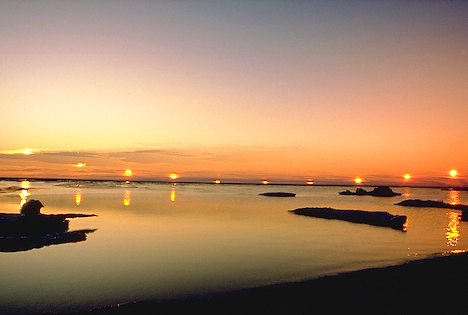
Today is the longest day of the year. In the north of Sweden, the sun sits high in the midnight sky. Further south, it hovers below the horizon reaching up with rays of light.

Tomorrow, the days start to get shorter. This gives some cheerful Swedes an opportunity. The newsreader on tonight’s weather forecast is one such example. Since today is the longest day, he decided to remind us,

‘We’re going towards darker times’.

Summer hasn’t even begun properly yet, we have weeks of free time and holiday ahead of us!

Jeez, some people really know how to kill a party!

The little people


Right now, Carl Henrik Svanberg must be the most famous Swede on the planet. The CEO of BP was filmed giving his statement of apology to the American people and this film has spread like, well, an oil slick, all over the world. In his apology speech, he said,

‘We care about the small people’

And this has caused a mixture of outrage and ridicule. Of course, he meant to say ‘ordinary people’. ‘Small people’ is a direct translation from Swedish and can be equated with ‘the man on the street’. And it’s a clear example of inappropriate Swenglish.

It wouldn’t have been so bad, maybe, if ‘small people’ wasn’t such a derogatory comment in English. Small people – the insignificant, unimportant, expendible people who have suffered in the wake of the worst oil disaster in history.

In a tv interview on Swedish televsion the day after, Carl Henrik excused himself saying that his English is not perfect, it’s ‘alright’.

For me, this is not acceptable. I fully accept that people don’t speak a foreign language as well as their own. Lord knows my Swedish is no way near as fluent as my mother tongue. But I am not the CEO of a global corporation.

On that level, there is no excuse for bad English, no matter where you’re from. There’s no excuse for making stupid language mistakes that could so easily be avoided. And there’s no excuse for being so blasé about it afterwards.

So, Carl Henrik, welcome back to Sweden. You’d better enjoy it because this is where you’re going to have the rest of your career.

When the politicians listen


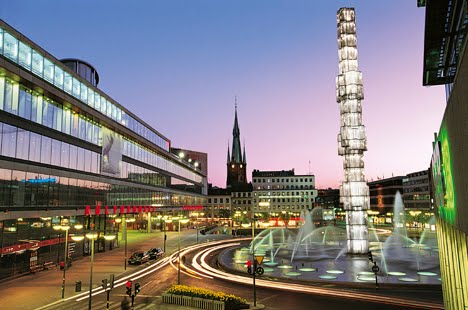
When students graduate from Sixth Form College in Sweden, they go on a procession around the city. Part of the route takes them through Sergels Torg, a heavily-trafficked square in the centre of Stockholm. Politicians decided at the weekend that the students would not be allowed to go through this area this year.

And there was a public outcry. The students started a Facebook group and demonstrated against the decision. And today, the decision was rescinded. The students can go through Sergels Torg as they have always done.

On the tv, they interviewed the 19-year old student who had started the protest. They asked him how he felt. He answered

‘I think this shows that politicians listen. And that we really can influence them and make a difference.’

What a fantastic lesson for a 19-year old boy to learn on the day of his graduation.

Throw us a crumb


And so Eurovision is over, and Germany won.

But not to worry, Sweden was still strongly represented. The Swedish song may have fallen at the first hurdle, but the whole contest was full of Swedish dancers, backing singers, choreographers and songwriters. There was even a Swedish celebrity pianist on stage backing up Belarus.

Without Swedish involvement, the contest wouldn’t have been as professional. So we can also see 2010 as a Swedish success, according to commentators and journalists.

I guess it’s good to be grateful when you get thrown a crumb from the banquet table.

A reality check is needed


Tonight is a night of anxiety for many Swedes. In fact, the last couple of days has been quite traumatic for them. You see, on Thursday, Sweden failed to qualify for the Eurovision Song Contest final which is being broadcast tonight.

Sweden sent a sweet girl, Anna Bergendahl, with a sweet song, to the semi final in Oslo. And Europe voted. And Sweden failed to impress the voters. And Anna was on the first bus back to Stockholm.

The next day, the papers were full of headlines screaming ‘Fiasco!’ and ‘Ban the Eurovision shit’. It was unjust, they claimed. Anna deserved better. Sweden deserves better. Europe is just jealous of our musical talents so they don’t vote for us. Eurovision should be changed! There should just be a Nordic Eurovision! Sweden should pull out immediately. The rhetoric was rabid, and the people were livid.

Sweden takes its Eurovision very seriously. Since ABBA won in the 70’s, and put Sweden on the musical map, it’s been a matter of national interest and pride to participate in the yearly contest.

But now, it’s fanatical.

One debate in the papers and on the television is about how Europe’s music is inferior to Sweden’s. They claim that all Europe’s music is basically rubbish and Sweden’s is the best. Sweden always sends great songs to the Eurovision Song Contest but they never win. This is because European voters are too stupid, or too tasteless, to appreciate good music.

I have rarely heard such blatant arrogance before.

A reality check is needed. The fact is that Sweden’s results in the Eurovision Song Contest have gone from bad to worse every year, while other Nordic countries have won. Sweden’s music is not the best, in this context. Sweden is out of touch with what music appeals to the masses in the rest of Europe.

What’s worse is that Sweden makes the mistake of believing that the Eurovision Song Contest is a contest for the best song. It isn’t, and it never has been. It is about politics, nationalism and entertainment. It always has been.

So, if winning is important, this is my advice to Sweden. Do not vote for the song you think is best. Vote for the song you think will do the best in Europe. Even if you think it is rubbish, chances are that millions of Europeans will disagree with you. Vote strategically.

Maybe then you will have a shot at the glory and recognition you obviously desperately desire.

A walk down the aisle


Isn’t it funny how something small can be so meaningful? In Sweden, it is less than a month until the Royal wedding when Crown Princess Victoria marries Daniel Westling. The party is planned to last two weeks, culminating on May 19th in the cathedral.

And it’s what will happen in the cathedral that is causing a huge stir. Victoria has stated that she wants her father, the King, to escort her down the aisle and give her away at the altar. Not so strange, you might think. Not so controversial. But in Sweden, this is causing a storm.

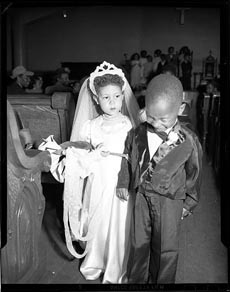
A father giving away his daughter at her wedding is not a Swedish tradition. In Sweden, the bride and groom walk down the aisle together towards the altar where they are then married. This is a major symbolic action. In Sweden, a woman is not something that is owned by one man and can be given away to another man. A woman is strong, independant, mature and educated. She is fully capable of walking down the aisle on her own, together with the man she has chosen to marry. She is not anybody’s property. This is yet another way in which the Swedish value of equality is exhibited in society.

That the future queen chooses to go against the tradition is a break in protocol. It is also seen by many, including myself, as a lost opportunity to communicate to the world’s press that in Sweden men and women are equal.

Of course, Princess Victoria should be able to do what she wants to do at her own wedding, but let’s not forget that she has a responsiblity to the nation, especially when the nation is funding her wedding. A future regent, if anyone, should be seen to uphold and promote the values of the country she represents.

If she doesn’t, what then is the point of a monarchy?