The banning of gingerbread in a tolerant society

gingerbread-manA short while ago an elementary school in the small town of Laxå placed a ban. The ban was preventing children, when participating in the annual Lucia celebration, from dressing up as gingerbread men, as is the tradition. The reason, it is claimed, was to not cause offense to anybody brown-skinned. This decision has caused a storm on social media and news media around the world. The school later backtracked and lifted the ban, claiming the whole thing was a misunderstanding.

Whatever the reason, this is a great example of the fragility of a tolerant society. Sweden is a tolerant society in comparison to many countries around the world. However, in a tolerant society, the question always arises at what point should we say no to something in order to reinforce our own values, traditions and beliefs. It is my experience in Sweden that many people are afraid of standing up for what they believe for the fear of being labelled racist. Sweden is in a very sensitive political shape at the moment with the right-wing nationalistic party, the Swedish Democrats, being the third largest party in the country. So, the issue of tolerance and racism has never been more relevant than now.

There is a definéd process of development that people and societies go through when developing intercultural competence and understanding.
– The first stage is ‘denial’ – in which people refuse to accept that others are different.
– The second stage is ‘duality’, where people start to see that there are other ways but the other ways are wrong.
– The third stage is ‘relativity’ where people understand everything is relative and that there are lots of right ways. And this is the stage in which I believe Sweden is ‘stuck’ politically and socially.
– There is a fourth stage, which is difficult to achieve, and it is called ‘commitment in relativity’. This is the stage in which people can say that they understand that there are different ways but that certain behaviours/attitudes etc are not ok here. This is the stage when we feel strength to stand up for what we believe without being racist or afraid that we are perceived as racists. Racism and racial discrimination are often used to describe discrimination on an ethnic basis and not, in my view, the same thing as standing up for what you believe is right or wrong.

The example of the gingerbread ban, be it a misunderstanding or not, is a good example. Let’s say for argument’s sake that the school’s decision to change the tradition was based on the fear of being perceived as racist. In my mind, this is a social decision springing from the third stage described above. In other words, from their perspective, an acceptance that people are different and that we should tolerate this means that we should change our traditions and attitudes so as not to cause offense to them. I am not saying this is easy, but I think this is an underdeveloped decision.

Take another example – the hitting of children. In most countries around the world, violence against children is not illegal. Does this make it ok? The relativist would say yes, based on the circumstances and traditions in that country, it’s ok. But I would say no. It’s not ok. It’s not ok here, it’s not ok there, it’s not ok anywhere. Does that make me a racist? No it doesn’t. But what it does mean is that I commit to my values and stand up for them.

Don’t misunderstand me, I am not saying tolerance is a bad thing. Quite the opposite. Tolerance and understanding are essential for human interaction. But if Sweden is to meet the genuinely racist tendencies in society, people have to face up to the fear of being perceived a racist, and instead, without racial prejudice, stand up for their beliefs and values. The beliefs and values that make Sweden the unique place it is.

Santa Lucia – the Swedish festival of light

Lucia
Lucia December 13

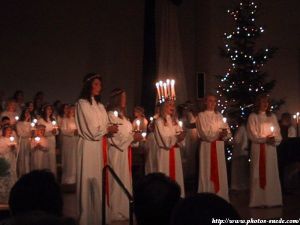
Today is Lucia Day and this is a beautiful day in which Swedes celebrate Saint Lucia who brings the light to all the dark places. It is especially beautiful and atmospheric to witness a Lucia procession at this dark time of year. Lucia herself wears candles in her hair as she leads her maidens and followers around the town streets and in churches. But where does the whole thing come from? Why do Swedes celebrate a Sicilian saint? Agneta Lilja from Södertörn University College gives us a retrospective:

‘The Lucia tradition can be traced back both to St Lucia of Syracuse, a martyr who died in 304, and to the Swedish legend of Lucia as Adam’s first wife. It is said that she consorted with the Devil and that her children were invisible infernals. Thus the name may be associated with both lux (light) and Lucifer (Satan), and its origins are difficult to determine. The present custom appears to be a blend of traditions. In the old almanac, Lucia Night was the longest of the year. It was a dangerous night when supernatural beings were abroad and all animals could speak. By morning, the livestock needed extra feed. People, too, needed extra nourishment and were urged to eat seven or nine hearty breakfasts. This kind of feasting presaged the Christmas fast, which began on Lucia Day. The last person to rise that morning was nicknamed ‘Lusse the Louse’ and often given a playful beating round the legs with birch twigs. The slaughtering and threshing were supposed to be over by Lucia and the sheds to be filled with food in preparation for Christmas. In agrarian Sweden, young people used to dress up as Lucia figures (lussegubbar) that night and wander from house to house singing songs and scrounging for food and schnapps.

The first recorded appearance of a white-clad Lucia in Sweden was in a country house in 1764. The custom did not become universally popular in Swedish society until the 20th century, when schools and local associations in particular began promoting it. The old lussegubbar custom virtually disappeared with urban migration, and white-clad Lucias with their singing processions were considered a more acceptable, controlled form of celebration than the youthful carousals of the past. Stockholm proclaimed its first Lucia in 1927. The custom whereby Lucia serves coffee and buns (lussekatter) dates back to the 1880s, although the buns were around long before that.’

Swedish dinners

food

Food is in the highest degree cultural. Our memories of childhood and our upbringing are often connected to food. What we eat, how we cook it, when we eat it and who with and the rituals around the consumption of food are all cultural. What generations pass down through generations – recipes, stories, table manners, traditions – all of them cultural.

Often when we travel or live abroad many of the strongest and lasting memories we have are connected to cuisine. That sloppy stew we ate at Clara’s Place in Soweto, or that fresh tuna that we devoured in Bodega Bay, the vegetarian street food from Penang and the spicy mango salad in Bangkok are often what we think of when we recall the visit to that particular country.

I am fascinated by rituals around food, and I have had a couple of recent experiences in Sweden connected to this. At the weekend, I was going out for dinner in Stockholm with a large party of about 60 people. The non-Swedish owner of the restaurant had declared that everybody should pay their dinner on arrival. The result of this was a mood-testing long queue partly in the restaurant and partly out into the snowy and windy winter street. Each person waited patiently to pay at the counter, some in cash and some with card, and bought a drink before sitting down. The process was insufferable and took the best part of an hour until everyone was seated and the food could be delivered. I know that Swedes typically prefer queuing, just like us Brits, but this was ridiculous and not the best start to what was later a pleasant evening.

Another food ritual is happening this evening in the City Hall in Sweden. Today is the anniversary day of Albert Nobel’s death in 1896 and for over 100 years has been the day of the Nobel banquet when the Nobel winners receive their prizes from the King and then sit through a 5-hour long banquet. This is an evening full of ritual, of glamour, intelligence, royalty and gossip. The whole thing is televised and many Swedes sit infront of the television to watch it, me included. To watch people eating for 5 hours. It is rather a strange and idiosynchratic cultural event. I am not aware of any other country in the world that has this kind of culinary celebration.

Now if you’ll excuse me, I need to go back to my potato crisps.

A SAS crash?

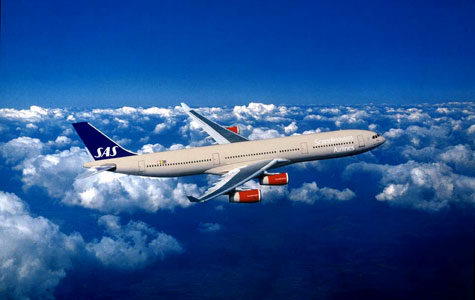
Call me old fashioned, but I think a national airline is a part of a national identity and pride. British Airways flies the red, white and blue, FinnAir coolly spreads Nordic culture, Lufthansa gradually takes over the world with its German wingspan. This week, we heard that Scandinavian Airlines, SAS, is teetering on the edge of bankruptcy. A SAS crash is to be expected and this would mean Sweden, Denmark and Norway are without this national airline. I love SAS, I am very loyal to them and I would hate to see them disappear to be replaced solely by bargain airlines or German alternatives. I believe the service and coverage would deteriorate and Scandinavia as a hub would become irrelevant.

What I don’t understand really is why SAS can’t make it work, when other airlines such as Norwegian are rapidly gaining profitable ground.

I read in the paper today that a SAS bankruptcy would cost the Swedish State 920 million kronor. That’s a lot of tax payers’ money – surely it could be better invested to save the company?

Always wear gloves to wipe tears

It has been a while since I blogged about Swedish culture. I guess I needed a break. I have seen many blogworthy things during the last months but chose not to comment, until now.

On Swedish TV, a new drama is being broadcast which is causing a lot of reaction in social media and in the press. Author Jonas Gardell has decided to tell the story of the AIDS era in 1980’s Sweden. This is a story that has never been told – and it is  high time.

Although it may seem like a long time ago, the so-called AIDS crisis was only 25-30 years ago. A short time in the history of humanity. And Jonas Gardell’s story portrays a cold and uncaring Sweden, a country where Hiv patients were treated with disrespect and utter disgust, nursed by people in rubber gloves and face masks and then disposed of. Where it was acceptable to call gay men revolting, say that they spread AIDS, that they were a threat to society, that they should be incarcerated against their will, that they deserved to die. This was only 25 years ago. This opens a gaping wound in a Swedish society that prides, and markets, itself on equality and human rights. Where were these for gay men 25 years ago?

Of course, Sweden wasn’t alone in this. In the UK and the USA and many other countries the attitides were the same and in many parts of the world, such as our neighbouring Baltic countries. this is still a reality today. In Sweden, it is something that belongs to the past, thankfully, although the stigma of Hiv still weighs heavily in society.

AIDS decimated a whole generation, my generation.  Jonas Gardell’s drama has brought back a lot of terrible memories for me. These ghosts from my past are welcome in my life however. And I thank Jonas Gardell for that. But as I watch the programme, I am reminded of something that Astonomer Carl Sagan once said ‘you have to know the past to understand the present’ and I wonder how the younger generations of gay people see this story. Do they relate to it? Can they relate to it? Do they see this as part of their heritage, their cultural identity? Or is it a case of having to be there…

Our stories have been consciously erased from the history books by people in power. We have been made invisible.

But now our story is being told. And it steps out into the cold light of day to be seen and known by everyone.

http://www.svt.se/torka-aldrig-tarar-utan-handskar/

Swedish Swedish Sex Stereotypes

A funny sketch is circulating around the internet from Saturday Night Live where the comedians are acting out a Swedish chat show. Full of stereotypes, it goes something like this:

‘Hurdy gurdy flurdy ja ja my vagina lurdy flurdy gago?’

‘Liga gargy murdy flurdy rollga buggla hurdy gurdy you bitch.’

And so on, you get the picture. Everyone was stereotypically blond and all of the understandable words were sex-related – yet another Swedish stereotype.

As I watched the clip, I couldn’t help laughing because, without knowing it, the comedians were actually right on the ball. I’m not talking about the Swedish chef style way of communicating but the Swedish preference for chucking English words into sentences when there is a perfectly good Swedish word to use. Why is this such a preference? Is it to sound international? Or to impress? I don’t know the answer, but it something very noticeable as you listen to Swedes conversing with each other.

Only the other day,  I was listening to the radio and, although I can speak Swedish, I imagined what it would be like if I couldn’t. As it happened, the hosts were talking about sex toys, and the conversation went something like this:

‘Swedish, Swedish, Swedish, Swedish, dildo, Swedish, Swedish’

‘Swedish, Swedish, sex, Swedish, Swedish, swingers’

‘Swedish, Swedish, rimming, Swedish, Swedish, Swedish, butt plug’

Seems like the comedians weren’t that far off!

 SNL Link: http://feber.se/video/art/242494/swenglish_med_snl/


Swedish pollen attack!

Image

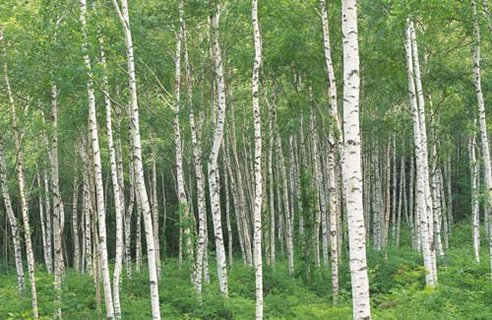
You see them everywhere around town, with their red eyes and runny noses. Your hear them around you as they try to unblock the nasal congestion that is driving them to insanity. These poor people suffer from pollen allergy and, at this time of the year, just want to curl up and die, as the tree pollen assaults their noses, throats and airways. According to statistics 2 million Swedes suffer from pollen allergy, mostly related to the treachorous birch trees. These lovely trees that signal the arrival of the spring, also torture more than a quarter of the population.

Apparently, not since 2006 has the pollen assault been as bad as it has this year. So much so that the chemist shops are rapidly running out of allergy medicines and there is apparently none left to order.

So what should these poor people do? Stay inside is the cruel advice from the government.

But if 2 million people stayed indoors, then there would be nobody left to fuel the Swedish economy through work and consumption. Wouldn’t it be better just to produce more medicine? It would boost production, boost the economy and boost the poor sufferers who collapse under the anslaught of thesepollen invaders.

You can’t believe everything you read


Scanning the internet, I discovered the following description of Sweden. Talk about the internet being a great way to spread false information! You can’t believe everything you read!

‘Sweden is the homeland of the great Moose and the majority of Swedes are dependent on it for their survival. Don’t go to Sweden for business purposes in September. It is most likely that the firm you’ll supposed to visit is closed down because of flu which is a swedish nickname for Moosehunt.

The yearly moosehunt, this is Sweden remember, is a folk feast heavily regulated by govermental legislation. Each county, every village, down to the very individual landowner gets a statistically based yearly quota on how many moose they have the right to shoot. For the average landowner this counts down to 0.0342 moose. Now how do you shoot 0.0342 moose? The best way is to team up with other hunting neighbors until you reach score one and then hump off to the woods with walkie-talkies and hope that you not shot each other or even worse – more than one moose, a catastrophy that could prevent your hunting rights for decades.

Swedish hunters always use the latest weaponry when hunting. However after an incident in 1912 when a tactical nuke accidentally killed some polish lingonberry-pickers, hunters were banned from using anything more destructive than paper airplanes. The ban was lifted 19 years later after country-clown Markoolio had been successfully assassinated with a flame thrower.

Now direct hunting is not the most important way to survive on the Swedish moose. More profitable is either to sell hunting rights to germans or moose related souvenirs to everyone else. The Swedish Moose Souvenir Industry is surpassed in the field of cheap mass produced gizmos only by toy production in Taiwan and lately the Wal-Mart’s Republic of China.

Even if the demand for Swedish moose puppets has rocketed on world market, business analyst believe that the sign of the future is export of the Moose warning traffic signs.

Moose manure paper is a huge profitable industry. Recently the paper quality has been good enough for printing dollars on, something that greatly has improved Swedens trade balance with the US.

Another successful product related to moose is the popular drink Tomtebloss, served at all nightclubs concerned of their reputation. The ingredients are: 1/3 home made booze 1/3 blueberry juice 1/3 lobster broth and a dash of Moose piss. This drink usually occurs together with Surströmming.’

Are you an Extreme Swede?


We’re participating in a trade show called ‘Personalmässan’ today and tomorrow. After Day 1, it’s looking promising. The theme that we have is ‘Are you an Extreme Swede?’. We held a lecture on the subject which was well-visited and popular and we also have a quiz card with 4 simple questions to help people analyse if they are an extreme Swede.

So the question is…..are you an Extreme Swede?

Here are the questions, answer ‘yes’, ‘maybe’ or ‘no’:

1. It is ok to call the boss by his/her first name
2. I have the right to give my opinion on matters that affect me
3. Religion should always be considered in government decisions and policies
4. I am irritated if people are late without letting me know

If you answered 1. Yes, 2. Yes, 3. No, 4. Yes – then you are, according to research and Extreme Swede!

Congratulations!