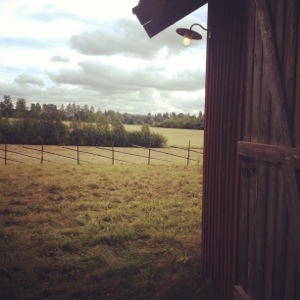
Do you see the horse?

See the horse

Much intercultural understanding arises from misinterpretation and misconception. We tend to think our perceptions of something are correct, when often they can be very wrong. What we see usually isn’t the whole picture.

In a cultural situation, simple situations such as how much eye contact we give people when we talk, how close we stand to somebody when we communicate and what kind of gestures we use are all examples of things that can easily lead to misinterpretation. I remember when I moved to Sweden and some of the misperceptions I had because I didn’t understand the whole picture. I remember, for instance, thinking Swedes were unfeeling, purely based on the lask of emotional response and the more reserved body language than I was used to. I was wrong. Just because a person doesn’t gesticulate or emphasize when they speak does not mean they feel any less.

The road to cultural sensitivity is paved with misunderstanding, misinterpretation and false perception. One key is to suspend judgement about another person or a specific situation and instead try to see the larger context. To ask ourselves why might this have happened? What are all the possible interpretations?

Look at it from another angle, who knows what might emerge. Just like in the visual above…so, do you see the horse?

Are Swedes always off work?

keep-calm-its-nearly-holiday-time

‘Swedes never work, they’re always on holiday’

This is a frequent comment I hear when I work internationally. Colleagues and sometimes customers abroad, are irritated by the fact that they can’t get in touch with Swedes from, for example, the end of June to the second week of August. Sweden seems to be shut down! ‘Swedes never work, and are also lazy’ – they say.

I, of course, defend Sweden’s holiday structure by emphasizing that people work longer hours in the winter to compensate for shorter hours in the summer time. Or that the winters are so long here, it’s only natural that people want to be off work during the warmest, brightest time of the year. Or that thanks to advances in technology, Swedish employees are often still accessible though they might not be at the actual workplace. Or I even try the argument that Sweden has a healthy work-life balance.

These arguments however often fall on stony ground and I am often disbelieved. People shrug their shoulders, shake their heads and roll their eyes. From their perspective, Swedes are spoiled.

I try to encourage cultural understanding, I really do. But sometimes it’s not that easy. For example, situations like this Christmas and New Year don’t help me to be more persuasive. While most Americans got 3 days off work and many Brits got 5 days of work, Swedes frolicked in the free time they were able to access. This festive period was commonly referred to as an ’employees’ Christmas’ meaning it was good for the employees and not for the employers. Many Swedes (and me too) are back to work for the first time today, and have been free since the 23rd December 2013. That makes a total of 12 days off work – 16 days if you also count the weekends.

You see Swedes don’t only take the national holidays off – they also take off the ‘Eve’. So although ‘Christmas Eve’ and ‘Midsummer’s Eve’ are technically not national holidays, they are celebrated as though they are. And then it’s also considered a right to be able to take off a half a day before the ‘Eve’ just in order to get ready for the approaching celebrations. If a national holiday falls on a Thursday or a Tuesday then there’s also something called a ‘Bridge day’. It’s not officially a holiday but most people take it off because there’s no point in going in to work for just one day is there? This Christmas season had a couple of bridge days in it to pad out the time taken off work and required only a little bit of personal holiday leave to be taken.

So the question becomes are Swedes happy that they got 16 days off work? I think most are. But on social media, in the office and on public transport, others complain that it wasn’t long enough, that they’re exhausted or that they need a break.

Mmm, maybe there’s something in the perception of the spoiled Swede?

The process of ‘culturing’

The word ‘culture’ is not unproblematic. Experts and academics often do not agree with each other on how to define it. Anthropologists may say one thing, sociologists have another description, psychologists something else. This can be confusing for those of us talking about or discussing the intricacies of ‘culture’.

Typically, experts have defined culture as a ‘thing’ – a set of rules, a set of behaviours, a shared way of doing things. This is fine as a definition, but somewhat limited and uncontemporary. This definition ascribes ‘culture’ with a static quality and does not allow for the changing, flexible nature of groups of people.

In former days, when people didn’t travel as much internationally, when there was less interaction across national borders, when there was less global influence on local matters, when technology did not exist to encourage remote contact, when people stayed in one place, it might have been appropriate to describe a culture as a static ‘thing’. In other words, to describe the behaviours and attitudes of a group of people identified by the borders of their nation. Eg, Swedish culture is like this…Swedes are like this…

But I’m afraid this doesn’t work anymore. Thanks to migration, immigration, internationalisation and individual travel, we are subjected to different influences and attitudes. These differences are integrated into our societies and our societies change. So ‘culture’ is not a static concept. It is constantly changing. It is always in flux. It is not a fixed thing, but a fluid thing.

This is why I try to describe what we are experiencing as a process of ‘culturing’. We are forming our realities together. We are constructing our societies and our groups. We are navigating and negotiating with each other constantly. This is why different groups of people do things differently – they have ‘cultured’ differently. But it’s not written in stone – it changes.

And this is why, for me, racism is defunct. It’s unavoidable that there are diverse people with different perspectives in a community. And it’s this diversity that keeps us continuously ‘culturing’.

20140104-112623.jpg

Origins of FIKA

20140102-210626.jpg

Interesting description of the origins of the Swedish word for drinking a cup of coffee – ‘fika’.

In the 1800’s it was weirdly fashionable to invert words. For example, ‘gata’ might have become ‘agat’ or ‘roligt’ might have become ‘igtrol’.

The slang word for coffee at that time was kaffi.

And when this is inverted, it becomes ……. FIKA!!

Glocalization in the Swedish market

glocalizationREV4

Sunny holidays. Weight loss. Healthy eating.
All of the above are currently hot topics in Sweden. Maybe this is not so surprising after the Christmas break, but there is another reason why this is interesting.

Are you familiar with the term ‘glocalization’? The term was made popular in the 90’s by sociologist Roland Robertson and describes the adaptation of a product or service specifically to each locality or culture in which it is sold. The goal of course is to make the product or service more attractive in order to sell more. The method of glocalization is a smart way to meet local needs and at the same time expand business globally. In some ways, it is the opposite of Americanization – which just applies one business model and product wherever in the workd it is. More and more companies are attempting to expand their business in the way of glocalization.

One example of glocalization is the dominant advertizing in a specific region or country. The advertized products or services that most appeal to the locals reflects what the locals perceive as interesting and important. The type and content of the adverts often reflect the attitudes and values of the society. One example I remember is when I was standing on an underground platform in Stockholm a while ago, and I was confronted by huge adverts containing lots of naked backsides, of all shapes, sizes and genders. In the UK, this would probably not occur, but in Sweden, there is a more relaxed attitude to and acceptance of nudity.

Glocalized advertizing is often seasonal. A short glimpse in newspapers, tv, Internet or billboards around Sweden tells us what the locals prioritize at this time of the year – holidays! Almost everywhere you look, there is an advert promoting a sunny break away from the dark and the cold of the Scandinavian winter. The second most common advert at the moment seems to be weight loss -an apparent necessity for getting into that swimsuit on that quickly-approaching sunny holiday.

Another illustration of glocalization is actual adaptation of products. For example, the way in which hamburger chain McDonald’s changes its menu and promotions to appeal to local tastes. In France, for example, they replaced their Ronald McDonald mascot with Asterix the Gaul, a local cartoon character. When in Spain a few years ago, I noticed that McDonald’s had McTapas on their menu. Currently, in Sweden, the food chain is marketing ‘fullkorn’ (wholegrain) burger bread. This clearly appeals to the Swedish consumers’ health interests and the prevailing trend of slow carbohydrates but I’m guessing that they don’t market this kind of bread in, for example, India.

What might we see next if McDonald’s takes glocalization to a Swedish extreme? The festive McSilvia Burger Royale? The homely McTastyMeatballs? The appetizing Mc Filet-of-Herring? or the absolutely delicious McPalt?

Sweden 2014 – two hundred years of peace?

20131230-084644.jpg

So it’s soon the start of a new year – 2014. Another year of sublime and strange Swedish things.

Over Christmas the Swedish King mentioned something in his speech, something that is repeated in the media. For Sweden, 2014 marks the 200th year of peace. In 1814, Sweden signed a treaty with Norway thereby giving them independence. And Sweden, it is claimed, haven’t been at war since then. 200 years of peace is something that the media is proud of.

But hang on a minute. Sweden was ‘neutral’ in the Second World War, but still allowed German troops to cross the nation as they occupied Norway and the country sold iron to Germany for their weapon industry.

In 1961, Sweden was involved in the war in Congo, in the 1990’s in Bosnia and, as we speak, Swedish armed forces are active in Afghanistan and the Libyan Civil War.

Maybe it’s semantic, but is there actually any difference between being in a war and being at war?

Alid’s Lightening Catcher

Long, long ago on a remote southern island in Stockholm, there lived a small group of people. These people supported themselves on fishing and foraging in the woods.

And they were a nasty bunch.

Whenever they got the chance, they would steal from other villages, or they would shout abuse from the hill tops or urinate in the lake water. For years this went on until one day Thor, from his heavenly position, got tired of listening to their behaviour and profane language. Now Thor, being the God of Thunder, had resources at his fingertips. With one swift movement of his hammer, he shot a bolt of lightning down at the villagers and blew them straight off the hillside. 

But this didn’t stop the villagers. Laughing at Thor, they shook their fists and shouted abuse up into the sky. This made Thor more angry and for every time they laughed, he continued to bombard them with lightning. The years went by and with new generations, the behavior of the villagers changed. Tired of being blasted from above, they began to speak more kindly, to stop their stealing and to use appropriate methods of hygiene. But Thor was an unforgiving God and lividly continued to shoot his burning bolts down onto them. 

More time went by and the villagers realized that Thor would not cease. Instead they would have to combat his attacks. They dug a fire pit to engulf the lightning, but it did not work. They built a fountain to extinguish the lightning but this didn’t work either. They sacrificed goats and pigs. But nothing worked and Thor’s wrath continued to rain down. 

In despair, they turned to the wisest woman in the village – Ancient Alid. Alid was somewhat of a witch and the villagers were rather scared of her. But she had an idea. She told them to build a lightning catcher. So the villagers set to work. 

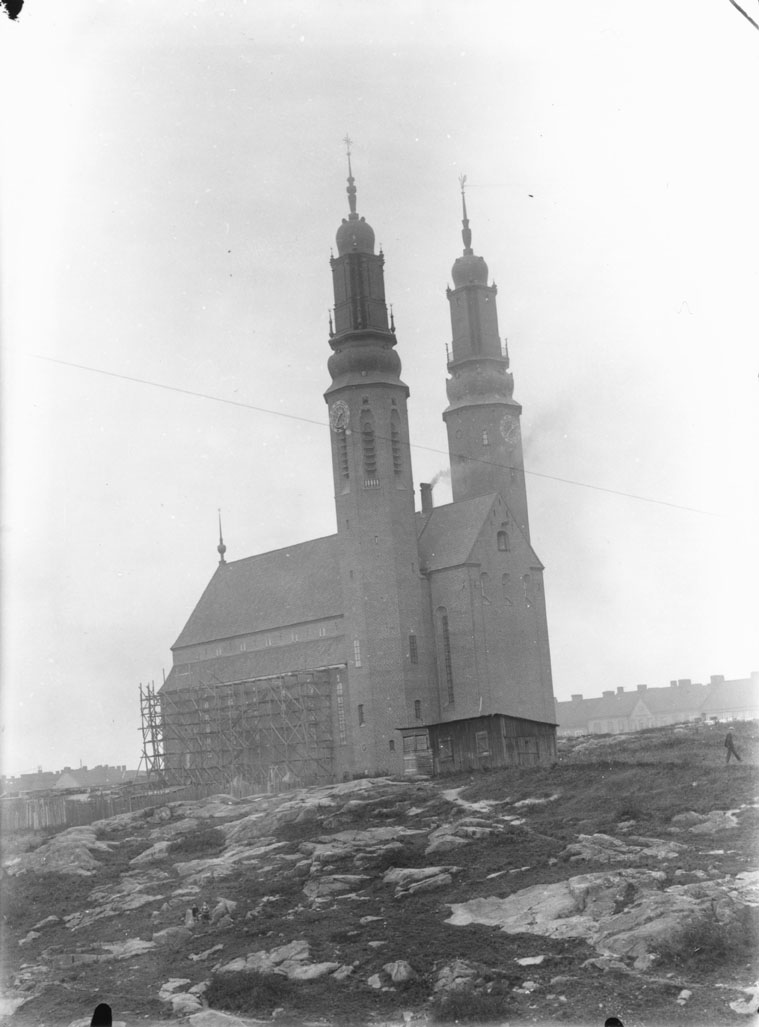
For years they built, until one day their masterpiece was finished. Upon the highest point of the hill, they had constructed a lightning catcher. The structure had two mighty towers reaching high up into the sky. And it worked! Every time Thor threw a lightning bolt, it was dissolved into one of the towers first and did not hit the village. The people of the village rejoiced! They were saved and slowly they could start to grow their community in the safe shadow of their construction. In honour of the wise lady, they gave the structure a name.  Hög Alid – High Alid.

You can still see it there today, high on the hilltop of Södermalm.  Today Stockholmers use it as a church but long ago it was built to protect the people from a very different god. 


högalid<

Sweden’s Top 10 Most Handsome Politicians

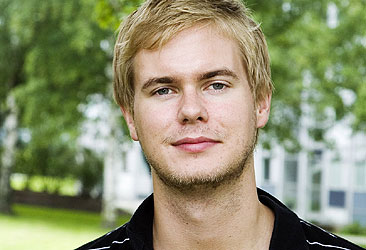
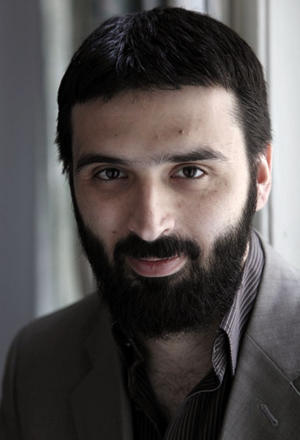
It doesn’t come as a surprise that looks count in politics. We all know that PR people try to pimp their candidates so that they look more attractive and gain votes. We all know that, although politics is all about the issues, a winning smile doesn’t hurt. At the weekend, some friends and I designed a list of Sweden’s most handsome politicians. We came up with the Top Ten! This list is in no way objectively researched but purely the subjective reflections and objectifications of this little international group. So, here’s the list!

Position 10 – Tomas Tobé. Moderaterna Tomas_Tobe_0000149000

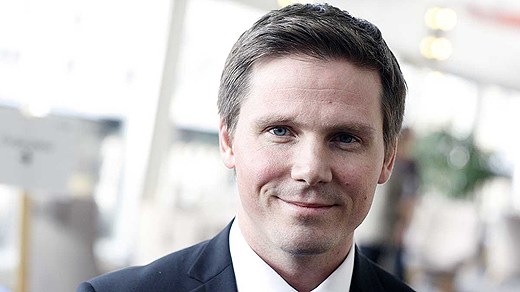
Position 9 – Erik Ullenhag, Folkpartiet
erik ullenhag

Position 8 – Christopher Fjällner, Moderaterna
christopher fjallner

Position 7 – Ardalan Shekarabi, Social Demokraterna
Shekarabi_Ardalan

Position 6 – Hans Lindberg, Social Demokraterna
hans lindberg

Position 5 – Gustav Fridolin, Miljöpartiet
gustav fridolin

Position 4 – Ali Esbati, Vänsterpartiet
ali esbati

Position 3 – Hampus Magnusson, Moderaterna
Hampus-med-Lars2

Position 2 – Hans Linde, Vänsterpartiet
02_Hans-Linde-192

Position 1 – Jan Eliasson, Social Demokraterna
jan eliasson

The relief of Swedish advent

Image  A practical Swedish electric advent calender to light up the darkness 

So it’s the first of Advent this weekend and this year it comes as a major relief for those of us in Stockholm.

You see at Advent, Swedes decorate their houses, apartments and windows with lights. From ceilings, illuminated stars are hung. On window ledges, electric advent candles are placed. On tables, four candles are positioned and one is lit every Sunday up until Christmas. Small candles, often red, are dotted about the home.

Some years, there is already snow at the first of Advent, but this year in Stockholm, there isn’t. So it is very, very, very dark. The collective advent decoration is a definite reprieve from this darkness as light is spread into these murky places.

The word ‘advent’ comes from the Latin ‘adventus’ which means ‘arrival’ and is traditionally the start of the period where we wait for the nativity, or Christmas. Some religions also see it as waiting for the second coming of Christ. But in this secular society that is Sweden, the waiting is probably for the snow to come, the cold to hit, the water to freeze to ice and for winter to clasp its fingers firmly around us.