Sweden’s 2016


What signified 2016 as a year? 

Disregarding Brexit, terrorist attacks, human tragedies of displacement, the celebrity death spate and Trump’s triumph for a moment, what was other important news in Sweden? 

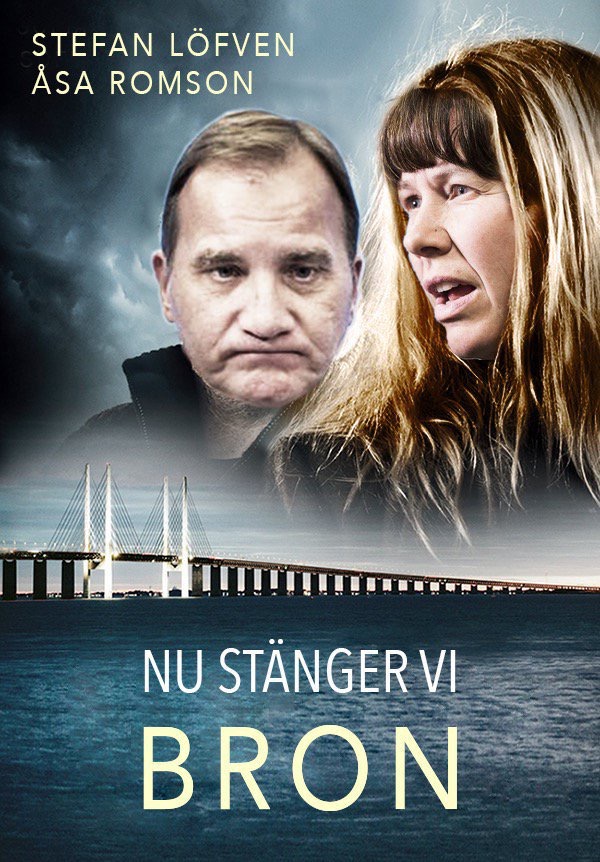
One of the most covered stories in the media was Sweden’s refugee policy. As the EU collapsed, and tens of thousands of people streamed into Sweden many Swedes reacted negatively.  Eventually the border was closed between Sweden and Denmark – the very same bridge made famous in the detective series ‘The Bridge’. The border closing succeeded in stemming the influx. 

Bob Dylan won the notorious Nobel Prize for Literature. Refusing to attend the ceremony in Stockholm, he inspired headlines such as ‘there’s not much rebel in nobel’. 

Swedish actress Alicia Wikander won an Oscar. Only Ingrid Bergman had won one (actually two) previously. Alicia officially became Sweden’s sweetheart together with Olympic swimmer Sara Sjöström who brings home a gold, silver and bronze to the mother nation. 

The Swedish royals kept the media busy with two baby princes – Oscar and Alexander. The country is divided into cooing royalists, rabid republicans and those who couldn’t care less. 

British indie boy band Viola Beach die tragically when their car plunges off a bridge outside of Stockholm in the middle of the night. 

Outlying areas of Sweden’s main cities develop into the Wild West. Malmö, Gothenburg and Stockholm report many shootings and brutal deaths throughout 2016. 

The Eurovision Song Contest is held in Stockholm. The city welcomes thousands of visitors and the event is a roaring success. Next year the contest moves on to Ukraine. Let’s see how that goes. 

Lots of political resignations happen during the year. Everything from drunk driving to dining with extremists, partying at sex cabarets, lack of confidence and renting out cheap apartments are cited as the various reasons. 

Sweden’s foreign minister criticizes amongst others the Israeli state. Her outspoken words earn her an unflattering place on the top ten list of antisemites of the year. 

And then there’s the weather. Whether the weather’s hot, cold, windy or snowy, it features as a constant headline in Swedish media. This is at least one news item we know will continue into 2017. 

What else will the new year hold? Well, that’s the magic of time. Who knows? 

Whatever it is, I’m sure it’ll be as eventful, terrible and beautiful as the year gone by. 

How to give festive greetings the Swedish way 


I used to be very confused. Now I’m only a bit confused. 

You see, in British English we give festive greetings by saying Merry Christmas and that lasts until the end of December until we say Happy New Year. That’s it. 

In Swedish, it’s a bit different. And it’s not totally clear. 

Leading up to Christmas, Swedes say ‘God Jul’, Merry Christmas. This lasts until around Christmas Day. 

Then it at some point changes into the greeting of ‘God Fortsättning’ which literally means Good Continuation. 

This keeps continuing until at some time between the 28th and 31st Dec, it becomes ‘Gott Slut’. This doesn’t mean Good Slut but Good End. 

This lasts to the end of December and then from 1st Jan it becomes Happy New Year – ‘Gott Nytt År’. And then from the 2nd Jan, it becomes ‘God Fortsättning’ – Good Continuation– for a while, I actually haven’t worked out for how long. 

Not as straightforward as in English maybe. However, Swedish etiquette expert Magdalena Ribbing provides us with a way out of potential embarrassment. According to her, it is not so important what one says. What’s more important is that one actually greets another person. 

A shockingly early Swedish Christmas 


Christmas Eve is the day of celebration in Sweden. So what happens on Christmas Day? Mostly it’s about eating the leftovers, going to the sales, maybe the cinema, chilling out. However for some people it has a more symbolic meaning as they get up at the crack of dawn and go to the shockingly early Christmas service called Julotta. 
Julotta is usually held at 7 AM in most churches, but in some churches it is celebrated as early as 4 AM. During previous decades, most Julottas were held at 4 AM. Traditionally, the service should end before, or at the time of, dawn: hence the word otta which means ‘the time just before dawn’. 

Swedish immigrants have even spread the festivity to different countries. The earliest recorded history of Julotta service in the United States of America was held in Strombeck Church in Minnesota in 1883. After Julotta, people raced to get home first from the church. The winner was believed to harvest the most bountiful crops for the year ahead.
Merry Christmas! God Jul! 

Toward the light! 

Today  is the Winter Soltice, the day when the sun is the furthest away from the northern hemisphere. At 11.44 today to be exact. Way in the north of Sweden, the sun doesn’t even go up for 24 hours. But from tomorrow, the familiar hot ball of heat starts getting closer again and we move towards the light and from January 1st it’s visible in the sky at some point all over Sweden. 

Moving towards the light is a big deal for the dark countries like Sweden. In Swedish folklore, the winter solstice was a dangerous night when animals could talk and supernatural spirits appeared. Animal sacrifice was common to appease the gods and beg them to bring the light back. Today’s not as extreme as that but it is a topic of comment -on social media, in coffee rooms and on the cover of most newspapers who emblazon the phrase ‘now we’re going towards lighter times’. 

It’s astronomical but also metaphorical. After all that’s happened this autumn and winter, it feels positive that the forces of light are gaining more strength.
For a while at least. 

Shedding my light on the Lucia debate


Today is Santa Lucia in Sweden – December 13th.  At the darkest time of the year, when we all are drained by the black mornings and afternoons, Lucia pays us a visit. With candles in hair and surrounded by a posse of singers, Lucia shines light into the dark depths of our spirits. The music plays. The choir harmonises. Lucia smiles at us. And slowly, slowly, the day awakens.

I love Lucia. Long live Lucia – this Sicilian martyr, who’s tradition is said to have come to Sweden via Italian merchants around the late 18th century.

Every year, towns around Sweden elect a Lucia and they visit shopping malls, old people’s homes and churches, singing and handing out gingerbread. And every year there is a debate about who owns the right to be Lucia. The answer to that question depends on your starting point – does one take a traditional view or a modernist view? The Swedish traditionalists will say that Lucia definitely has to be a girl, ideally blonde and blue-eyed. The modernists will say Lucia should reflect today’s society and therefore can be any colour or gender.

This year, as many before, the debate took a nasty turn. A large department store depicted Lucia as a gender-neutral, dark-skinned child. For some people, this was too much. Hateful, despicably racist, and, of course, anonymous comments flowed in via social media, revealing yet another crack in Sweden’s tolerant facade.  Consequently, the department store removed the advert to protect the child. This social media behaviour is unacceptable and should be in no way condoned. Having a view point is everybody’s right (be it traditionalist or modernist), but attacking a child is something totally different.

As I watched Lucia this morning I was reminded of the real message. The humanist message. Sure, Lucia is literally about bringing light to the dark day. But the metaphor is clear, if we care to remember it. It is about caring. It is about being open even when we feel closed. It is about community.

One of the songs the choir sang this morning is called ‘Sprid ditt ljus’ – and I think this sums it all up. Translated into English, the chorus goes: ‘Spread your light, in the darkest times, warm us now and let us all feel peace’

Maybe it’s just me, but I think who is elected Lucia isn’t that important. What’s more important is that we remember the point. We should open our eyes to the light that is shone on our society where we have growing social divides, enormous groups of displaced people, poverty, starvation, homelessness on our streets.

Once a year, Lucia shines the light. Can we find it within us to shine our lights on each other? I, for one, intend to try.

Happy Lucia! May the light keep you warm.


Grand Hotel in Stockholm – you make your bed, you lie in it. 

Today I wrote a comment on Stockholm’s Grand hotel’s FB page. This is what I wrote: 

‘Companies can decide themselves who they want to do business with. Hopefully their decisions are based on some kind of vision and social responsibility. That’s why I am so surprised that Grand Hotel chose to accommodate a gala event of Europe’s fascists hosted by Sweden’s right wing racist party last night. You have damaged your reputation and you have lost this customer. I will personally never set foot across your threshold again and I will never recommend your hotel to any friends or business acquaintances. Appropriately for a hotel – ‘you make your bed, you lie in it’.

My comment got a lot of likes, but also I was accused of hating democracy, of being false, of being a liar. The trolls were out. I was told that if I don’t like it, I can leave the country. The concept of freedom of speech was used as a main argument. 

This made me curious about what freedom of speech actually means in Sweden, since it got thrown at me as an insult. This is what I found:

Freedom of speech is regulated in three parts of the Constitution of Sweden:

1) Fundamental Rights and Freedoms protects personal freedom of expression “whether orally, pictorially, in writing, or in any other way”

2) Freedom of the Press Act protects the freedom of printed press, as well as the principle of free access to public records (Principle of Public Access) and the right to communicate information to the press anonymously

3) Fundamental Law on Freedom of Expression extends protections to other media, including television, radio and web sites.

However, most interesting and relevant for the net trolls and the haters at the Grand Hotel, Sweden’s Freedom of Speech laws do not mean everything is ok. 

There are clear ‘Hate speech laws’ which prohibit threats or expressions of contempt based on race, skin colour, nationality or ethnic origin, religious belief or sexual orientation.

So to all the trolls out there, don’t throw freedom of speech at me or at anybody else who stands up for democratic communication without first knowing what you are talking about. There is no freedom to express your kind of hate in Sweden, and if you don’t like that – you can move to Russia. 

How Swedes reflect on their mortality

skogskyrkogarden

Thankfully, it isn’t every day that you are faced with death. It is isn’t every day we contemplate our own mortality. Probably a good thing. Imagine what life would be like if we thought about death all the time.

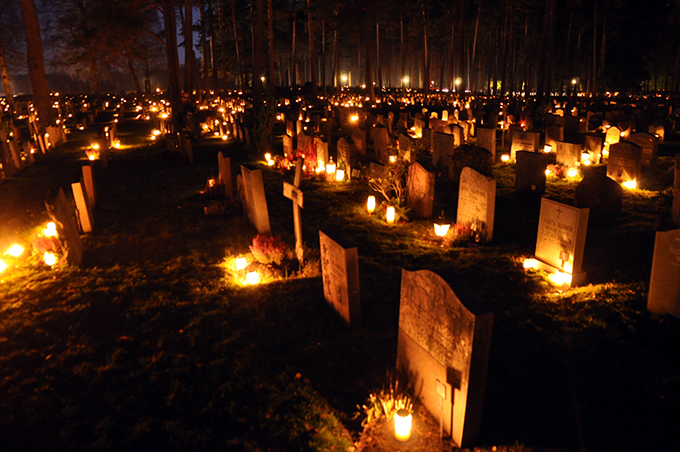
But this weekend is an opportunity to do just that. Tomorrow is All Saints’ Eve. Well, not technically. All Saints’ Eve is actually October 31st. But in Sweden, they are practical and, since 1953, they round it up to the nearest weekend and call it a public holiday.

Legislation aside, tomorrow is the day in Sweden when people reflect over life, death and those who have passed away. It is a peaceful time. It is a beautiful time.

Graveyards around the country twinkle with candle light. Relatives flock to the burial grounds and light candles and lanterns and place them by the graves of their loved ones. It is a miraculous sight to see the dark cemetries twinkling and glowing with bright white lights. It brings scerenity and majesty to an otherwise intensive and dark time of the year.

On Österlen in the rural south of Sweden, they have taken it a step further. A festival called ‘Österlen Lyser’ – Österlen shines – happens this weekend. The dark villages and fields are lit up with candles, flares, lanterns and torches. People play lantern-illuminated night time boule by the edge of the sea. Choirs sing, windows glow and open bonfires celebrate this dark time of the year.

It isn’t every day that you are faced with death. Full respect to Halloween, which is also taking hold in Sweden, but I don’t need to be reminded of witches, vampires and zombies. The less commercial traditional Swedish approach provides a more reflective vehicle for us to contemplate our own mortality and remember those we loved.

Top 10 things I miss about Sweden

swebuildings

I’ve been hearing and reading a lot of Sweden-bashing recently. While we are free to think what we want, I believe it’s all too simplistic to focus on the negative and complain about Sweden or Swedes. It’s very easy to focus on what Sweden is not, rather than what it is.

Recently, I’ve been a lot in Asia and Latin America, far away from Sweden and my family and friends. Sometimes when we’re confronted by new environments, it is then we realize what we appreciate about our home locations. I’ve been putting some thought into it. Apart from my loved ones, what is it that I miss about Sweden when I’m away?

Here are my top 10, in no particular order of priority.

  1. the feeling that the sky is big and endless, giving a sense of freedom in my mind and spirit
  2. knowing that I can take a deep breath and fill my lungs with fresh oxygen instead of polluted toxic fumes
  3. the calmness in my thoughts and that I don’t have to battle with external noises in order just to hear myself think
  4. my anonymity and just blending in with the crowd
  5. the certainty of knowing how things function and how I am supposed to behave
  6. walking outside without interruption, confusion or danger
  7. the knowledge that I don’t have to keep buying bottled water – I can drink directly from the tap without getting seriously sick as a consequence
  8. the evening light cascading on the colorful buildings – the umbras, the rusty reds and the deep golds
  9. the sting of the cold air on my nose and cheeks (never thought I’d admit to that one)
  10. the Swedish aesthetic – environments filled with stylish modern design, cool Nordic solutions and healthy-looking easy-on-the-eye people

None of this is to say that I don’t enjoy traveling, because I do very much so. I just think that sometimes it’s worth taking a moment to reflect over what you appreciate about where you live.

I’m sure, if you do, you’ll find there’s a lot more than you think.

What do you appreciate about Sweden when you’re not here? I’d love to hear your thoughts – write them in the comments below.

If you like this blog, please share it with your friends.

This thing about being tall 

At a height of 193 cm, I am at the tall end of the man scale. However, in Sweden, I am rarely reminded of it. While I am taller than the Swedish 182 cm average, I still blend in. It isn’t until I visit another country that I become reminded that I am towering over other people and height becomes a source of attention or in worse case ridicule. 

This makes me think of visibility in relation to the intercultural experience. Does the more visible we are affect the authenticity of the experience? 

I remember my first time in Asia how people pointed at me and laughed. I remember in Mexico how people wanted to touch me and in China how they wanted to take a photo with me. My physicality was strange to them and, as such, my presence was impossible for them to ignore. 

I genuinely think that my experience of other countries is coloured by the fact that I can’t hide. I am seen by everybody wherever I go. Shorter people can more easily disappear in the crowd and, as such, can more neutrally observe their surroundings. Through no choice of my own, I am often influencing mine, which consequently makes my surroundings less authentic. 
In Sweden, people don’t notice. Or maybe they just don’t care. Or are too polite to point it out. Whatever the reason, I perceive that my feeling of physical sameness rather than difference is something that helped me adapt quickly to Swedish society and acknowledge it as the place I feel at home. 

Watching the Brazilians at Gate C15 


Sitting at gate C15 in Frankfurt waiting to board for Sao Paolo and it’s a whole different experience than when waiting for a plane to Sweden. 

The majority of the passengers are Brazilian and it is reflected in the extremely high noise level here at the gate. No quiet contemplation and patient queuing here, but joyous raucous banter. 
Then a priest arrives in white collar. He stops and addresses the whole gate with something jovial, a big smile on his face. Everyone laughs and many get out of their seats to shake his hand. 

The flight is overbooked. They offer 600 Euros to anyone from economy who wants to give their seat up until tomorrow. Hysteria ensues. Several people want to and clamour around the counter, the remaining passengers start talking to each other in one giant Portuguese conversation. 

The situation at Gate 15 is vibrant and alive. 

If this is a taste of Brazil, I can’t wait to arrive.