The dangers of direct translation


A colleague of mine was running a course for a group of Swedish people. As part of the course, participants had to get up and make a presentation. One after one, participants stood up and presented, with varying success.

It came to the turn of the second from last person. Feeling nervous, she stood up and started to talk. Her nerves got the better of her and she started to cough and splutter. She stumbled over her words.

Embarrassed, she said, ‘Excuse me, I’ve had a cock in my throat all morning.’

How wrong it can be when we directly translate!

Note: The Swedish expression ‘tupp i halsen’ translates literally as ‘a cock in the throat’. In English, the closest we get is ‘a frog in the throat.’

Not that this makes more sense, but at least it’s not as dirty.

Let the sun shine on


Today as I waited to take a train out of town, I noticed an unproportional distribution of travellers on the platform. The sun, positioned directly above, cast the majority of the platform into shade, apart from a thin strip of sunlight that was cast along the knife-edge of the platform. Lines of travellers teetered on the edge of the platform and leaned slightly over the tracks into the sun. The light shone down on their faces as they felt the warmth of the spring sun. The rest of the platform was almost empty.

This isn’t an untypical sight in Sweden this time of the year. Not surprisingly, Swedes seek the sunny side of the street or stand frozen on a street corner face turned up to the sun. If the sun happens to strike a wall, whole groups of people will take a pause in their day, lean against the wall and, eyes squinted, glare up into the sun to soak in the rays.

The myth has it that sunflowers turn their heads to follow the sun as it glides across the sky.

Whether that’s true or not, I don’t know, but I do know it’s true about the Swedish.

A nation of hard workers


According to statistics from the Swedish Statistical Office, unpaid overtime in Sweden increased by 40% last year. It was a majority of men who worked additional overtime and it is believed that this is the result of the financial crisis.

Ask most Swedes how hard they work, and the majority of them would say they work extremely hard. Unfairly hard, some of them may even say.

And yes, they do work hard. As long as it’s not before 9am or after 3pm of course, since they have to go to day care to pick up the kids. And not between 11.30 and 1pm because that’s when they eat lunch and exercise. Nor should it be mid-morning or mid-afternoon because that’s the coffee (fika) break. And as long as it’s not on a Friday afternoon because then they’re winding down for the weekend.

Nor should it be anywhere between the end of June and the second week of August because that’s the summer.

And as long as it’s not on a bank holiday (of which there are many), or a day between a bank holiday and a normal weekend, or the day before a bank holiday.

Yes, apart from that, they work very hard.

Big babies and the ageing process


One thing that strikes me as I walk the city streets, is the size of children in pushchairs. They are humongous! Kids that can obviously walk are transported about by Swedish parents all over the city. I don’t know if the kids are lazy, or the parents, but they are huge!

I’ve always thought that the parents weren’t willing to accept that the children were growing older. That they wanted to keep them young and ‘babyish’ for as long as possible. My theory was given credibility with the fact that Swedes remain as students for longer than many other nationalities and there is a high proportion of grown adults still living at home.

This is why I was surprised to see the see the results of a recent survey from the University of Kent, in the UK. The survey was about when different cultures think that we stop being young.

According to the survey, Swedish people think that we stop being young at 34. This is much younger than in many other countries.

In the UK, we think we are young until 35, apparently. And in Cyprus – the age where youth ends is 45.

In fact, Portugal is the only surveyed country that thinks that our youth finishes earlier than the Swedish average.

So, my argument about why big Swedish kids are still in pushchairs doesn’t hold.

Or maybe it does.

Given that their youth ends earlier than most other countries in the survey, it’s necessary to hold on to it while you’ve still got it.

It happens today at 17.32


At 17.32 today, we will experience the vernal equinox, when night and day are of equal length. From tomorrow, the days get longer and lighter. Spring and summer are on the way, and the temperature is rising.

This time of the year, it’s easy to feel that everyone is Sweden is either going away or has already been away on a long-haul holiday to the sun. Thailand is the favourite winter destination for Swedes, followed by the Dominican Republic and the Canary Islands.

But not everybody can afford an overseas holiday. Not everyone has the means or the state of health to sit on a plane and be catapulted to warmer climes. But there is a solution. In the Swedish town of Västerås.

At the care home for the elderly, ‘Södergården’, the staff have created a South Pacific room for the residents.

In the ceiling, there are infra red lamps which provide heat and solarium tubes which provide ultraviolet light. Electric fans provide a light sea breeze. The room is filled with sand, and projected onto the walls are images of a Hawaiian blue sky, sea and palm trees. These images can be changed so as to alter the theme of the room – for example to an archipelago scene or city view of Paris or Rome. The residents lounge in deckchairs or sit at the bar and sip exotic fruit cocktails.

This is such a fantastic idea to brighten up the existence of the residents in an old folks’ home. Apparently it hasn’t been proven yet, but experts believe that a room like this can lead to better sleep patterns, more energy and reduced anxiety for the old timers.

When all you hear are horrific examples of how old people are treated in residential homes, this comes like a breath of fresh air.

When I hear examples like this, it’s almost as though I’m looking forward to becoming old in Sweden.

Reflections over a frozen canal


Walking over the bridge on the way home from town today, I looked down at the frozen canal which is now in the process of thawing. Pools of water lay here and there on the surface and ducks were happily bobbing around in the open areas under the jetties.

I lingered for a while and looked down over the canal and over towards the city hall.

On the ice, I noticed thin track lines. The evidence from people on cross-country skis was now melting into the slushy surface. I also noticed footprints. Remnents of Stockholmers out for a walk one winter Sunday on the ice. The footprints had lost their sharpness, they had become diffuse, blurred at the edges. Slowly, slowly, they were disappearing as the canal reclaimed its watery surface.

I was struck by how temporary things are. Soon all proof of those skiers and those Sunday strollers will be gone. Any trace of their activities melted away.

Is this how it is for all of us? Our lives are temporary. We are only here for a fleeting moment. With all our activity, we leave a mark. And then gradually that mark dissipates and nothing is left to show we were ever there.

Are we all Sunday strollers on a frozen Swedish canal?

The longest Swedish word


A Swedish word you often hear this time of year is ‘vintervår’ or ‘vårvinter’. You hear it on the tv and the radio, read it in the newspapers, hear it on the underground.

Literally translated, it means ‘winterspring’ or ‘springwinter’. It is used to describe this time of the year, when winter slowly but surely crawls exhausted over into spring. It’s a word that boulsters the self-confidence of Swedes because it means that spring is on the way. It also acts as a way for Swedes to deceive themselves that spring is already here even though it still might be snowing.

This is also a great example of Swedish language structure. Putting two separate words together, in this case ‘spring’ and ‘winter’ to form a new word which has a new meaning. This is one of the reasons why Swedish words ofter seem inscrutable to the foreign eye. It also means that Swedish words can sometimes get very long.

According to the Guiness Book of Records, the longest Swedish word is:

‘Nordösterssjökustartilleriflygspaningssimulatoranläggningsmaterielunderhållsuppföljningssystemdiskussionsinläggningsförberedelsearbeten’

Scary, huh?

It translates as something like “Coast artillery flight searching simulator area material maintaining follow-up system discussion preparation tasks of the Northern Baltic Sea”.

Still doesn’t really make sense, but then I’m not a translator.

By the way, did you know that the fear of long words is called ‘hippopotomonstrosesquipedaliophobia’?

Now that’s just cruel isn’t it?

They dropped the bomb on Stockholm


Saturday night in Stockholm in March. Night has descended. The remnants of the winter snow are melting away leaving gravel and sand on the pavements and in the gutters. The wind whistles along the facades of the buildings, round the corners and away into the sky.

The streets are empty. They echo with isolation. Like a post-apocolyptic landscape, all sign of humanity is wiped out. It’s like the bomb has dropped. It’s as if all Stockholmers have died from a mysterious disease and all that is left is an abandoned shell of a city, the diffuse lights in the apartment windows and the blinking neon of the local pizzeria.

Stockholm is eerie like a ghost town.

But this vision is not unique to Stockholm. All over Sweden, in every town, on every street, the sight is the same. It’s Saturday night in Sweden. In March.

And it’s the final of the Swedish Melody Festival on the telly.

Lou Reed’s fear of Sweden


The other day I heard a interesting quote by Drew Curtis about Sweden. Drew is the founder of community website FARK and a popular lecturer in social media. He said ‘I love Sweden. The entire world should be like Sweden. They all like to drink and get naked, and the women are hot. I can’t think of a better nation on the planet.’ No reinforcing of stereotypes there then.

This inspired me to find other quotes from celebrities about Sweden. After extensive searching, I only managed to find 3 more. And here they are.

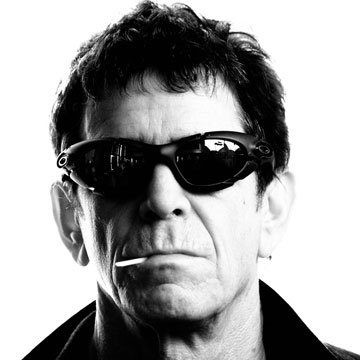
The legendary Lou Reed said,

‘Compared to New York City, Sweden is a very scary place’

I don’t know what national characteristics or behaviours he was basing this on. Then there’s New York Doll’s member Johnny Thunders who said,

‘I was in Sweden for 10 days. They put me on the front page of the daily papers eight days in a row. I did nothing to warrant any of the attention. It was ridiculous.’

Small country, ‘big’ international celebrity.

And, finally, my personal favourite from the very religious Sir Cliff Richard,

‘Sweden is just about porn and gonorrhea’