Swedish icons 17: Rolf de Maré

Rolf de Maré was born 1888 in Stockholm into a wealthy family. He is one of the most important Swedish cultural profiles of the 1900’s, renowned for being an influential collector of art, a dance impresario and the founder of the world’s first museum of dance.

Rolf de Maré had the financial means to fulfill his dream of being a patron of the arts, and as such he could travel all over the world. On his many trips, he bought art directly from the artist. Among his collection, he purchased works from Picasso, Braque and Léger.

In 1920, he started the avant-garde Swedish Ballet in Paris. The Ballet was a creative power that aimed to combine dance, drama, painting, poetry, music, circus, film and pantomime, and attracted talent such as Jean Cocteau.

Rolf de Maré loved living in Paris, by all accounts. Here he could live openly as gay; something that was impossible at that time in close-minded Sweden. He had a series of romantic liaisons, the most notable with the artist Nils Dardel.

In 1933, Maré founded the world’s museum and research institute for dance, also in Paris. The museum gathered material and records about dance from all over the world. During this period he became a powerful and celebrated person on the French culture scene – and was responsible for launching the career of the legendary Josephine Baker.

After the Second World War, he attempted to hand part of the material from his dance museum archives to the Paris Opera. They took 6,000 books which are today stored at the Opera’s library. However, they did not want the rest of the material. As a result, information on the Swedish Ballet and some other documentation ended up in Stockholm at the Dance Museum, which he founded in 1953. This material can still be seen today. His modern art collection is on display at Stockholm’s Museum of Modern Art.

Rolf de Maré died of a stroke in Barcelona in 1964 and is buried at Gustaf Vasa church in Stockholm. Next to the Dance Museum is a restaurant called in his honour ‘Bistro Rolf de Maré’. The bistro has French and Swedish classic dishes on the menu. As he was grandson to the incredibly wealthy Wilhemenia von Hallwyl, also a patron and collector of the arts, a beautiful portrait of him hangs in the grandiose Hallwylska House in Stockholm. The painter? His beloved Nils Dardel.

Gun salutes in the UK and Sweden

To mark the recent death of the UK’s Prince Philip, a 41-gun salute was held across Great Britain yesterday. For many, it seemed like an odd number. So, why 41?

In both the UK and Sweden, gun salutes mark special royal occasions and the number of rounds fired depends on the place and occasion. The basic salute in both countries is 21 rounds.

In the UK, however if fired from a royal park, an extra 20 rounds are added – making 41. At the Tower of London 62 rounds are fired on British royal anniversaries (the basic 21, plus a further 20 because the Tower is a Royal Palace and Fortress, plus another 21 for the City of London.)

The most shots have been given from the Tower when the late Duke of Edinburgh’s birthday (62 shots) coincided with the Queen’s official birthday (62 shots). This gave a total of an annoying 124 shots booming out over the city.

So, does Sweden always have 21 shots?

No, not always. When a Royal birth takes place and the infant is the firstborn to either the reigning monarch or to the heir to the throne, an extra 21 rounds (for a total of 42) are added to the normal salute. Additionally, 19-gun salutes are used for heads of government, cabinet ministers and ambassadors.

Another gun salute consists of two rapid gunshots only. This is used by the military and was fired to identify a Swedish ship entering a harbour or on the battle field to identify the Swedish troops. This signal is called the ‘Svensk Lösen’ – the Swedish Signal. This salute is today fired on special occasions, usually within the armed forces.

21-gun salutes in Sweden occur on:

  • 28 January – the King’s Name Day
  • 30 April – the King’s birthday
  • 6 June – Sweden’s National Day
  • 14 July – Crown Princess Victoria’s birthday
  • 8 August – Queen Silvia’s Name Day
  • 23 December – Queen Silvia’s birthday.

So, why is 21 standard?

Well, it originated in British maritime tradition. Historically, ships would fire 7 shots as they approached a foreign harbour. As ships usually had seven cannons on board, this was to show they had disarmed themselves and declare the vessel to be no threat on entry.

The military on land could store more gunpowder and therefore could reload their cannons more quickly. The tradition became that they would fire three shots for every one shot made at sea – hence 21 shots – as a sign of welcome and peace.

Interestingly in Sweden’s neighbouring country, Denmark, the gun salute given to majesties is 27. Could this be based on the same thinking? 3 x 9 shots?

Swedish icons 16: Olof Palme, Sweden’s most reviled politician

I had the weirdest of nightmares the other day involving the former British Prime Minister, Margaret Thatcher. When I checked her out, I discovered oddly that the very day was the 8th anniversary of her death.

No British Prime Minister in history has been so reviled, and also loved, as Margaret Thatcher. My dad absolutely hated her. With a vengeance. He blamed her for single-handedly causing the economic and social depression that utterly destroyed the north of England, where I’m from.

It made me think about what Swedish politician has been so despised through history. Who in Sweden is the most reviled?

While Swedish Prime Ministers such as Carl Bildt, and Göran Persson were not always popular, probably topping the list is Social Democratic Olof Palme. He was a legendary Prime Minister who was loved by many. On the other hand, there were a lot of people who absolutely loathed him, his ‘arrogance’ and his ‘radical’ politics. He was Prime Minister for 17 years, in two different periods, up until his assassination in 1986. One person said about him – ‘He had a very special personality, he was so intense, so brilliant but his brilliancy was a problem for him as well because many people got hurt by his harsh words.

Palme was most controversial in his overseas politics than his domestic ones. This gave him many enemies. He was often alone among political leaders in the western world in expressing his stand against colonialism. He railed against the Soviet crackdown in Czechoslovakia, criticized Spanish dictator Franco, befriended Cuba’s Fidel Castro and crusaded against apartheid in South Africa. He was anti Vietnam war, and therefore perceived by many as anti-US, who love to use the classic rhetoric ‘you’re either with us, or against us’.

Just like Thatcher, what people thought of Palme depended on their political leanings. For many, Palme was a beacon of hope – a living manifestation of the social-democratic ideology. For others, he was a socialist, a meddler and a rabble-rouser. Thatcher and Palme, I’m sure, detested each other. They were politically very far apart – she hated both socialism and feminism – two things that he firmly believed in.

Palme’s murder is considered by many to be the end of Swedish innocence. Margaret Thatcher wrote ‘ He will be grievously missed, not only in Sweden but really the world over.″ She herself had escaped an IRA assassination attempt in 1984, and said that other world leaders ‘have to carry on taking risks for democracy and not be deflected.’

A lot of mystery surrounded Olof Palme’s assassination. 16 years later in 2020, the perpetrator was identified as graphic designer Stig Engström. However, many people do not believe this conclusion.

Olof Palme, loved or hated, meddler or mediator, peace-keeper or political activist, is buried in the churchyard at Adolf Fredrik Church in Stockholm.

International Romani Day-Roma in Sweden

Today, 8 April, is International Romani Day. It marks the first World Romani Congress that was held in London in 1971, making today the 50th occasion it has been celebrated. The day exists to shine a light on the ongoing persecution and abuse that the Roma population of the world has been forced to endure throughout history.

The Romani originate from northern India. They are dispersed, and their most concentrated populations are located in Europe, and Western Asia, since around 1007. Nobody really knows why the Roma left India in the first place, as no records were kept. However theories abound: from early persecution based on caste, to banishment from angering the king, and religious war.

The estimated 12 million Roma are consequently a nomadic people with no land to call their own. Their mobility and the fact that they lived in temporary camps contributed through the centuries to associations with poverty and accusations of high rates of crime. The discomfort that others felt about their presence led to perceptions of the Roma as antisocial, unsophisticated or even dangerous. Partly for this reason, discrimination against the Romani people has continued to the present day.

Romani have existed in Sweden since at least the 1500’s and today they are classed as one of Sweden’s five national minority groups (together with Jews, Sami, Swedish Finns and Tornedalers). Romani chib has the status of official minority language.

Over the centuries, the people of Sweden discriminated against, marginalised and excluded its Roma population. For 40 years, Sweden had a legal policy of enforced sterilization of people to avoid ‘unacceptable offspring’. Much suggests that Roma women were particularly subjected to this abuse, and mostly it was involuntary. Sweden removed this law in 1976. The Pew Research Poll of 2016 found that 42% of Swedes held strong anti-Roma views (compared to 82% in Italy, and 37% in Holland).

A Romani political activist in Sweden was Singoalla Millon, who died in 2020, and spent her entire life fighting for education, housing and acceptance. Another was Katarina Taikon who dedicated herself to improving conditions for Romani people in Sweden. She tried to convince the Swedish government to see the Romani as political refugees. She died in 1995. Today, the politician Soraya Post has worked as an EU politician defending the rights of the Romani and other minorities.

In 2012, the Swedish government introduced an 20-year equal opportunities strategy for Roma people. The strategy includes objectives and measures within several areas such as schooling, employment; housing, health, social care, culture and language. Of course, discrimination and marginalization are still very real in Sweden, but this is at least a step in the right direction.

The legendary philosopher who died in Sweden

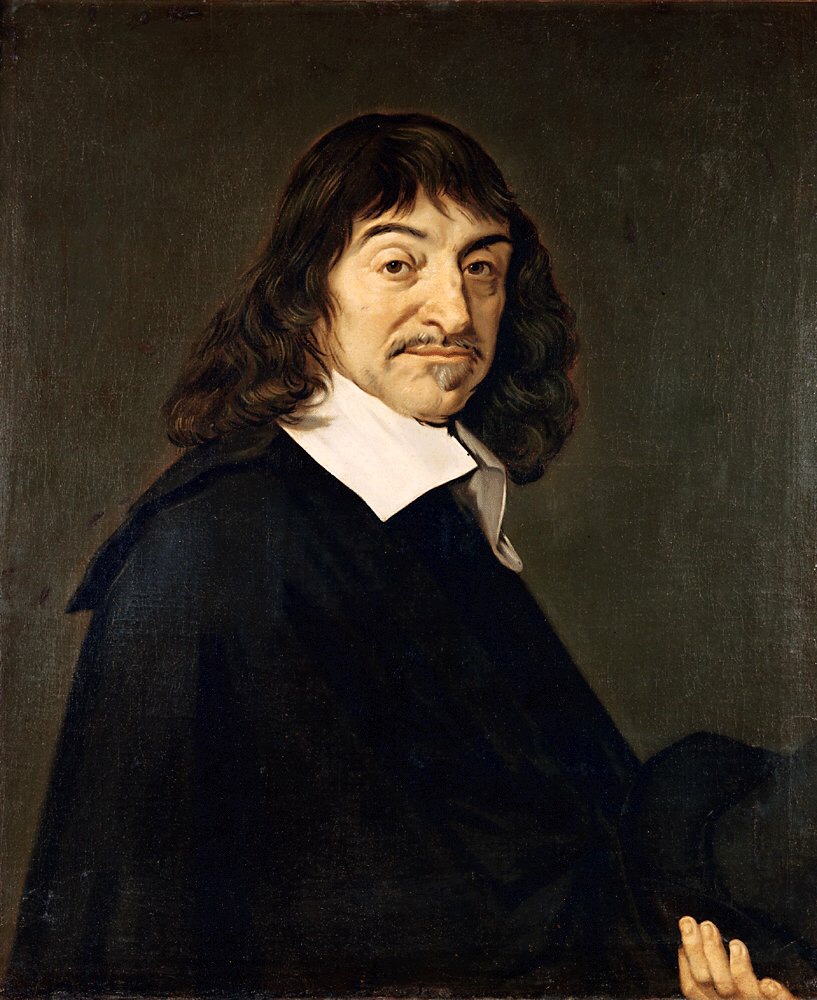
Yesterday, I learned something I didn’t know. Every day, as they say, is a school day. I learned that the iconic French philosopher, scientist and mathematician René Descartes died, and was buried, in Stockholm.

When I studied philosophy at university, I was fascinated by Descartes. Said to be the father of modern Western philosophy, his list of notable ideas is long. Radically, Descartes shifted the debate from God to Man by asking ‘of what can I be certain?’ rather than ‘what is true?’ The latter question relies on belief in an external authority, whereas Descartes instead relied on the judgement of the individual. This was an extreme, and dangerous, thought as it emancipated the individual from religious doctrine and equipped mankind with autonomous reasoning.

This controversial thought sparked the Age of Enlightenment – the fascinating intellectual and philosophical movement that dominated the world of ideas in Europe during the 17th and 18th centuries. How we reason today in the western world is profoundly based on this period – our embrace of doubt and our attitudes towards pursuit of happiness, sovereignty of reason, search for liberty, progress and secularism are all based on Descartes initial ponderings. On top of this, his scientific and mathematical theories later inspired the works of Leibniz and Newton.

Perhaps his most known legacy is a famous quote. In his ‘Discourse on the Method’, he wrote ‘je pense, donc je suis’. This appeared later in the Latin form it is today famous for – ‘cogito, ergo sum’ – ‘I think, therefore I am’. As Descartes explained it, “we cannot doubt of our existence while we doubt.” He was the father of doubt – challenging the blind faith that was the norm of his time.

Descartes was active when Queen Christina was the ruler in Sweden. Intrigued by his philosophies, she invited him to visit her in Stockholm. The idea was that Descartes would organise a new scientific academy in Sweden and tutor the Queen in science, philosophy and love.

Descartes moved to the Swedish capital in the middle of winter, and lived in a cold and draughty building near the palace. It became clear after a couple of visits that he and Queen Christina did not like each other, and on February 11 1650, Descartes died from pneumonia. Another theory is, however, that he was poisoned by a Catholic missionary who opposed his controversial views.

He was buried in the cemetery of Adolf Fredrik’s Church in Stockholm, where there is today a memorial to him. In 1666, his corpse was transferred to France and his skull is on display in the Musée de l’Homme in Paris.

It was surprising to learn that this giant of intellectual thinking died in Sweden. It makes me wonder what other non-Swedish, internationally-noted people spent their last days in this frozen country of the north. If you know of any, please share your insights with me and the rest of the readers.

‘Pingis’ in Sweden

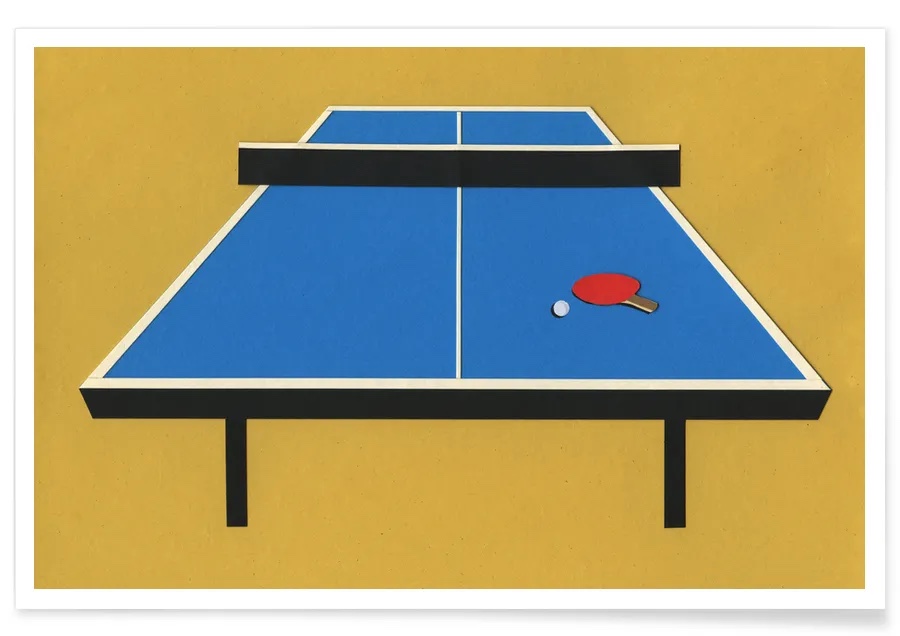
Today is International Table Tennis Day, or Ping Pong as it is also called – a name originating from the Mandarin Ping Pang Qiu. In Sweden, table tennis has the nickname ‘pingis’. Table tennis is a popular sport in Sweden, from sport centers, to community centers, offices, games rooms, and on an international level of competition. The game was first played in the 1890’s, with the first Swedish championship organised in 1925.

Although elite table tennis is dominated by the Chinese, Sweden has had some success over the years. Probably the best Swedish player through history is Jan-Ove Waldner. Known as ‘The Evergreen Tree’ in China, Waldner had an extraordinary successful and long career. He won a total of 20 Gold, 17 Silver and 9 Bronze medals in the Olympics, World and European Championships. Jörgen Persson, Kjell Johansson, Marie Svensson and Stellan Bengtsson are other successful ping pong athletes.

On a non-elite level, the game of ‘rundpingis’ is popular in Sweden. This is knock-out ping pong played in large groups where people run around the table and hit one shot each. Another popular pastime is outside table tennis, with many parks building tables and nets out of weather-proof iron.

So, today’s the day to grab a racket and play a round of table tennis. Who knows, maybe you’ll be the next pingis star in pingis heaven!

Swedish icons 15: Anna Q Nilsson

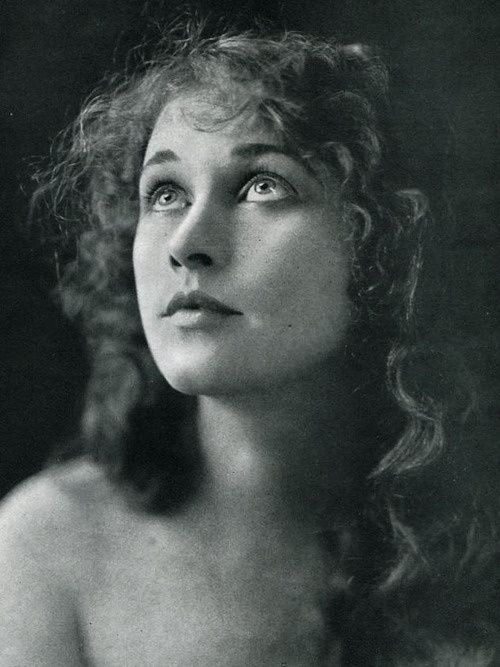
In 1907, Anna Q Nilsson was named the most beautiful woman in America. Born in 1888 in Ystad, Southern Sweden, Anna Quirentia Nilsson emigrated to the USA and became one of the most famous actresses of her time.

Her era was the golden era of the silent movies. During her career, she appeared in almost 200 films, but she didn’t successfully make the transition into the talkies. Her most important films are considered to be Adam’s Rib, They Died with their Boots On, The Luck of the Irish and The Thirteenth Commandment. A qualified pilot, she was well known for being daring and she carried out her stunts herself. Consequently she was burned, broken and bruised throughout her career. She was also the first woman to smoke and wear trousers on camera.

She broke the record in fan mail, and was the first Swedish actor to receive a star on the Hollywood Walk of Fame on Hollywood Boulevard. She appeared opposite legendary actors such as John Barrymore, Loretta Young, Errol Flynn and a young Elisabeth Taylor.

Her final credited appearance was with Buster Keaton and other contemporaries playing themselves in cameo parts in the classic ‘Sunset Boulevard.’ After this, she appeared uncredited in movies such as Showboat, An American in Paris and Seven Brides for Seven Brothers. Her final movie appearance was in 1954.

Aged 85, Anna Q Nilsson died in 1974 in Sun City, California. When she died, tv channels in the US interrupted their broadcasting to make the announcement. Her ashes were scattered in the Pacific Ocean.

‘Long’ Friday in Sweden

Today is called Long Friday in Swedish – ‘Långfredag’. It commemorates the long day and the long suffering that Jesus endured on the cross, according to Christian teachings. It is a public holiday, and for many years, everything was closed in Sweden making the day long and boring for many people. Now, most things are open, even the middle of a flaming, raging pandemic.

Good Friday is a day of cooking, shopping and going for walks. Some people attend church services. Tomorrow, Easter Saturday, is the normal day of celebration when Swedes gather to eat from a bulging smörgåsbord. Typical food includes variations of salmon, egg, herring and lamb. Dark Easter beer is consumed and snaps is knocked back.

In English, this day used to be called Long Friday also, but at some point in history it changed to Good Friday. Good in this context means Holy. According to the Daily Mash this is ‘still stupid. You don’t get much worse days than being flogged, nailed to a cross, then stabbed. And that includes your annual performance review. It’s like calling funerals ‘Happy Burying Nana Day’.

Tricking Sweden – April Fool

april-fools-day-2015

Playing April Fool’s jokes on each other on the first of April is a tradition in many countries – Sweden included. In fact it is an old tradition – the oldest written reference being in 1392 in Chaucer’s ‘The Cantebury Tales’.

In Sweden, when someone is tricked, the tradition is to say ‘April, April din dumma sill!‘. This translates as ‘April, April you stupid herring!’. This is however not as weird as it might sound. In many countries, such as Italy, France and Holland, April 1st is known as “April fish”. On this day, people try to attach paper fish onto the backs of their victims.

April Fool’s pranks are common in newspapers, with classics such as:

  • IKEA is getting into the airline business. Furnishing all the flights with Ikea furniture, the name of the airline is FLYKEA.
  • Swedish supermarket chain ICA introduced toothpaste with the taste of chocolate. It might be brown, but it makes your teeth white.
  • Burger King introduced a new burger for left-handed people where ingredients were rotated 180 degrees.

I had a look this morning to see if I could identify any April Fools tricks but I failed. The papers were just full of misery – War, Death, Politics, Covid, Murders, and Shootings. Maybe the seriousness of our current times renders silly jokes redundant. If you manage to find one, please share here!


Sweden’s Clean Thursday

easterwitchmooon

Today is ‘Skärtorsdag’ – meaning Clean Thursday. So, why ‘clean’? Is it to do with spring cleaning? Or window cleaning? Or the art of Swedish death cleaning? No, it has a much more biblical relevance.

If you know your bible stories, today is the day when Jesus gathered his disciples together for the Last Supper. On this day, he introduced communion, and was later betrayed by Judas, condemned to death on the cross and ultimately resurrected. Prior to the Last Supper, according to the Gospel of John, Jesus washed the feet of the disciples. And he washed them clean – a symbolic metaphor for purification and the washing away of sin.

In fact, in English ‘Maundy Thursday’ also relates to the same act in the bible – the act of ritual cleaning of the feet is known an The Maundy. The word ‘maundy’ is said to come from the Latin word ‘mondatum’ which means commandment. During the Last Supper, Jesus issued a new commandment – ‘to love each other as I have loved you.’

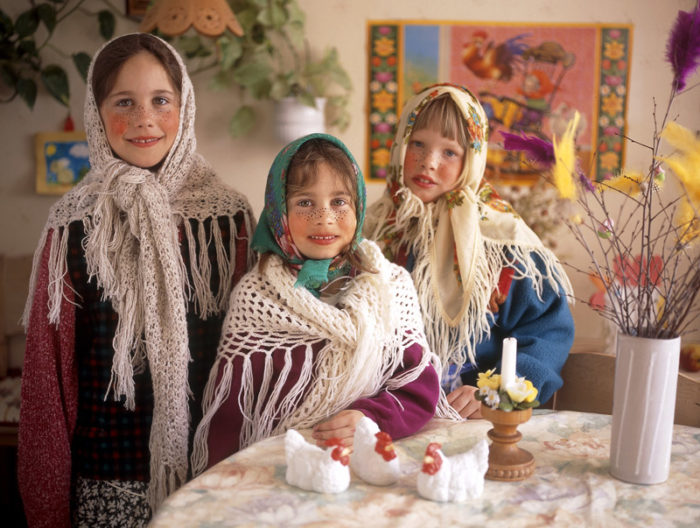
However, for most people in Sweden, today isn’t about washing feet – it’s more about witchcraft! This is celebrated by children dressing up as witches, rather like we do in the UK and USA on Halloween. This tradition originates from the belief centuries ago that Skärtorsdag was the night of the witches, where these wicked hags would climb onto their broomsticks and fly to a mountain called Blåkulle. It was a night of danger and evil, and Swedish people would bar their doors to their houses and barns and leave outside gifts that would make the witches’ journey easier – food, milk, clothes, broomsticks. Today, that translates into the Swedish version of trick or treating.

paskkarringar-2-700x528

So if you dress up as a witch and eat candy – you’ll be kicking off your Easter the Swedish way!