NATO – an extraordinary day in Sweden’s history

So Sweden is now an official member of NATO, the military defense alliance.

As the 32nd country to join the alliance, Sweden will be protected under Article 5 – the ultimate guarantee of allie’s freedom and security.

To the outside world, this might not be that significant. But for Sweden, March 7th 2024 is a day that will be recorded as one of the most momentous in history.

By becoming a member of NATO, Sweden ends over 200 years of official non alignment. This neutrality stretched back to the Napoleonic wars.

Sweden joining NATO was inconceivable just over two years ago, and the Swedish population had little appetite to join a military alliance.

The country remained neutral in both World Wars but when Russian troops began marching toward Kyiv in February 2022, Sweden – and neighbour Finland – became alert to the threat Moscow could pose to nearby countries outside the alliance.

And everything changed.

Finland joined NATO in April 2023, and Sweden, after lots of head-butting with Turkey and Hungary, formally joined yesterday.

It is currently unknown how the membership will affect the lives of Swedes. Hopefully, not noticeably.

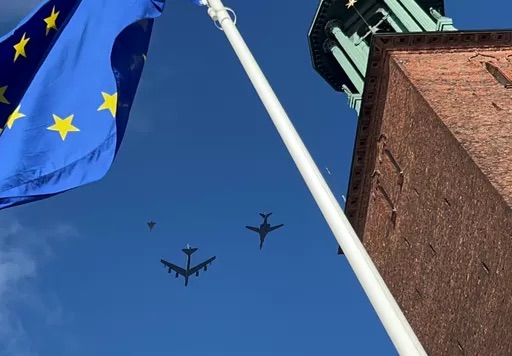
But it was very apparent on Tuesday when two American bomb planes, B52 and B1B, flew at a low altitude over central Stockholm – that things have changed in this formally-neutral country in the north.
Sweden’s Freedom of Expression – a cornerstone of democracy.

Given recent provocative manifestations, some people are starting to question Sweden’s freedom of expression laws. This criticism is even being used as a way to prevent the ratification of Sweden’s membership of NATO.

English writer Evelyn Beatrice Hall wrote in her biography of Voltaire – ‘I disapprove of what you say, but I will defend to the death your right to say it’. This phrase is frequently used to describe the principal of freedom of speech.

Sweden’s democracy is built on the principle of freedom of expression. It is a fundament of society, together with freedom of information, freedom to demonstrate and freedom of assembly. The individual’s right to freedom of religion is also strongly protected by the Constitution. Freedom of Expression is also enshrined as Article 10 in the Human Rights Act.

There are people in Sweden with, in my opinion, disgusting views, who manifest these in public demonstrations. However, under Swedish law, they have a right to express what they believe. I don’t have to agree with what they believe – that is also my right.

Sweden’s freedom of expression is a ‘constitutionally protected right including the right to express thoughts, opinions and feelings through speech, writing or images without interference by the authorities.’

Freedom of expression does not however mean the freedom to always say practically anything at all. For example, this freedom ‘does not extend to slander or committing an act involving threats or agitation against a national or ethnic group. On the other hand, religions as such are not protected against expressions of opinion that challenge religious messages or that may be perceived as hurtful to believers.’

To be honest, I would probably prefer some conservative opinions not to be expressed, as I feel they are deliberately provocative and lead to agitation and unrest. However, without a doubt, I would rather live in a country where individuals are free to express what they think, than in a country where religious or political powers suppress this.

If we start to limit freedom of expression, and censor opinion, we are dismantling our democracy. And where does it end? We don’t have to look very far to get the answer…..

Sweden’s Freedom of Expression – a cornerstone of democracy.

Given recent provocative manifestations, some people are starting to question Sweden’s freedom of expression laws. This criticism is even being used as a way to prevent the ratification of Sweden’s membership of NATO.

English writer Evelyn Beatrice Hall wrote in her biography of Voltaire – ‘I disapprove of what you say, but I will defend to the death your right to say it’. This phrase is frequently used to describe the principal of freedom of speech.

Sweden’s democracy is built on the principle of freedom of expression. It is a fundament of society, together with freedom of information, freedom to demonstrate and freedom of assembly. The individual’s right to freedom of religion is also strongly protected by the Constitution. Freedom of Expression is also enshrined as Article 10 in the Human Rights Act.

There are people in Sweden with, in my opinion, disgusting views, who manifest these in public demonstrations. However, under Swedish law, they have a right to express what they believe. I don’t have to agree with what they believe – that is also my right.

Sweden’s freedom of expression is a ‘constitutionally protected right including the right to express thoughts, opinions and feelings through speech, writing or images without interference by the authorities.’

Freedom of expression does not however mean the freedom to always say practically anything at all. For example, this freedom ‘does not extend to slander or committing an act involving threats or agitation against a national or ethnic group. On the other hand, religions as such are not protected against expressions of opinion that challenge religious messages or that may be perceived as hurtful to believers.’

To be honest, I would probably prefer some conservative opinions not to be expressed, as I feel they are deliberately provocative and lead to agitation and unrest. However, without a doubt, I would rather live in a country where individuals are free to express what they think, than in a country where religious or political powers suppress this.

If we start to limit freedom of expression, and censor opinion, we are dismantling our democracy. And where does it end? We don’t have to look very far to get the answer…..