Sweden – a peaceful society awash with violence

Yesterday in the town of Örebro in Sweden, 10 people were killed in a despicable school shooting. While this kind of attack is rare in Sweden, it follows a rapidly escalating period of terrible bombings, gang shootings and other hate crimes in society. In 2025, so far, there has been at least one crime of this type reported on the news every day.

Politicians, police and the population in general are devastated. It seems like authorities have lost control, and it is not easy to fix, as it has been going on a long time. However, it is resolvable – with the right strategies and the right investments.

I was curious on how AI might solve the problem, so I asked the question. And this is what I got. Definitely food for thought, and many good suggestions for concrete action.

Stopping a wave of shootings and bombings requires a multi-layered approach that addresses both immediate threats and the deeper causes of violence. Here are some key strategies:

1. Immediate Security Measures

• Increase Law Enforcement Presence: Deploy more police in high-risk areas to deter attacks.

• Improve Intelligence Gathering: Strengthen surveillance, monitoring of extremist groups, and cooperation between law enforcement agencies.

• Gun and Explosive Control: Tighten regulations on firearms, ammunition, and bomb-making materials.

2. Addressing Root Causes

• Social and Economic Programs: Address poverty, unemployment, and lack of opportunities that may push individuals toward violence.

• Education and Awareness: Promote education programs that counter radicalization and teach conflict resolution.

• Mental Health Support: Provide access to counseling and mental health services to identify and assist individuals at risk.

• De-radicalization Programs: Engage with communities to rehabilitate individuals influenced by extremist ideologies.

3. Political and Legal Reforms

• Strengthen Laws Against Violence: Enforce strict penalties for illegal weapons possession, terrorist activities, and hate crimes.

• Promote Dialogue and Mediation: Encourage political and community leaders to engage in discussions that prevent extremism and violence.

• Fight Corruption: Ensure law enforcement and government agencies operate transparently to maintain public trust.

4. Long-Term Cultural Shifts

• Promote Nonviolence and Tolerance: Through media, education, and religious institutions, promote peaceful coexistence.

• Strengthen Community Bonds: Encourage local communities to work together in preventing violence.

• Regulate Social Media Misinformation: Work with tech companies to prevent the spread of extremist propaganda.

A society that combines strong security measures with social reforms and long-term cultural changes has the best chance of stopping a wave of shootings and bombings.

The Koran burnings in Sweden – legal, but unethical?

More than 90,000 articles have been written about the Koran burnings that are occurring in Sweden. The burnings have led to an escalated terrorist threat, international public protests, storming of embassies, burning of the Swedish flag, and condemnation from everyone from Turkey’s Erdogan to the Pope.

For many people outside Sweden it is hard to understand why the burnings are being permitted. The bottom line is that it is not against the law. The question is why is it not against the law.

It all boils down to understanding Sweden’s version of freedom of speech, expression and demonstration. In Sweden, you are allowed to publicly comment on, demonstrate against and criticize anything. Sweden’s centuries-old democracy is built on this.

Powers such as the royal family, industry giants or organized religions cannot legally stop or influence this. In secular Sweden, religion has no influence over politics. However, you are free to follow any religion you want, and this right is protected by law. Likewise you are free to criticize any religion you want.

With this understanding, you can see how the burning of books, including any religious scripture is allowed and not, per se, limited only to the Koran.

So you have to separate the law from ethics. Is it ethical? Maybe not. Is it illegal? No. This is why the Swedish government condemns the action but at the same time defends the right to self expression.

That said, there are other laws in Sweden that restrict public speech. For example, if it is considered hate speech, or incitement to violence, or against the interests of national security.

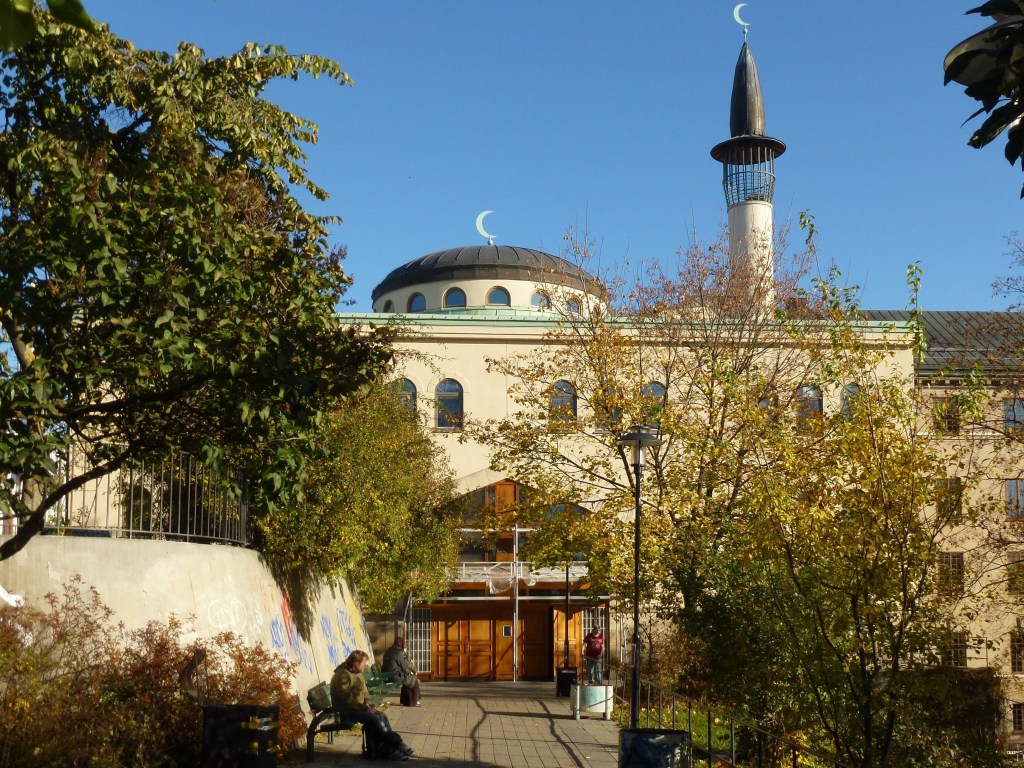
In the case of recent Koran burnings, outside a mosque on the first day of Eid, or outside the embassies of Muslim countries, and with today’s political instability, one can seriously question the police’s choice to allow such demonstrations to occur. Many Swedes say that it shows a poor sense of judgement and disregard for public safety and national security. But it isn’t illegal, and is fully in line with freedom of speech and demonstration.

Swedish law often looks at intent. At this could be the case with the Koran burnings moving forward. What is the intent of the demonstrators? Personally, I see it as a obvious provocation, an attempt to destabilize Swedish society and a direct insult to all the Swedish Muslims residing in the country.

Denmark has recently suggested a law change, based on the fact that the intent behind the action is malicious. The legislation will prohibit the inappropriate handling of objects with essential religious significance for a religious community. The Minister of Justice says ‘I fundamentally believe there are more civilised ways to express one’s views than burning things.’ I’m sure he is right. Changing the law isn’t about bowing down to the extremist demands of other nations, but showing respect for the diverse citizens of one’s own country.

Maybe it is time for Sweden to follow suit?

What are your thoughts on this current debate?

The Swedish Death Penalty

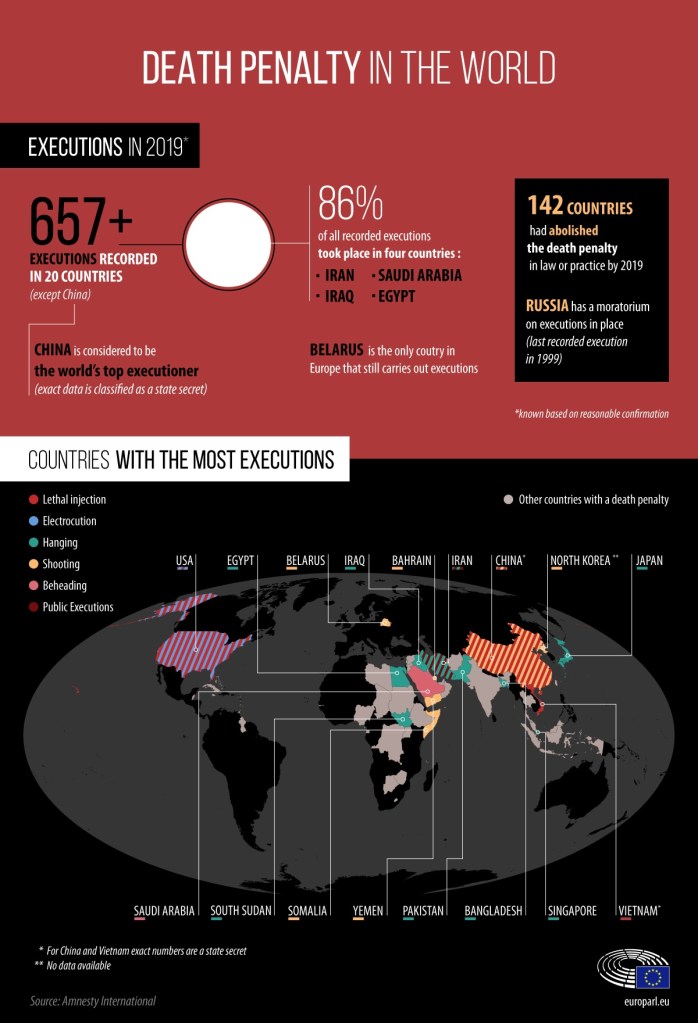
The name Bridget Bishop might not mean anything to you – unless you are seriously into history. On this day, June 10th, in 1692 Bridget Bishop was the first woman to be hanged during the Salem Witch Trials in Massachusetts. In total 19 women were accused of witchcraft and hanged and many others were persecuted. Capital punishment still exists in the USA, with lethal injection and electrocution as the favoured methods. In 2020, 17 executions were carried out in the USA.

In Sweden, capital punishment was legal until 1973, although an execution was last enacted in 1910 on murderer Johan Alfred Ander. The last death penalty was actually given in 1927 but the sentence was changed to hard labour. In 1917, Hilda Nilsson, a child murderer, was sentenced to death. She escaped execution, however, by committing suicide. That meant that the last woman to be executed in Sweden was murderer Anna Månsdotter in 1890.

At the time of its abolition in 1973, beheading was the legal method of execution. Today capital punishment, corporal punishment and torture are all outlawed in Sweden.

Interestingly, 110 countries have completely abolished capital punishment like Sweden. However, over 60% of the world’s population live in countries where the death penalty still exists, such as USA, China, India, Nigeria, Saudi Arabia, Iran and Japan.

Sex working in Sweden

Today, June 2, is International Sex Workers’ Day. It is celebrated today because on 2 June, 1975, 100 sex workers occupied the Sant-Nizier Church in Lyon, France to express anger about their exploitative living conditions and work culture. The Church was brutally raided by the police forces on 10 June. This action became a national movement and the day is now recognised in Europe and worldwide.

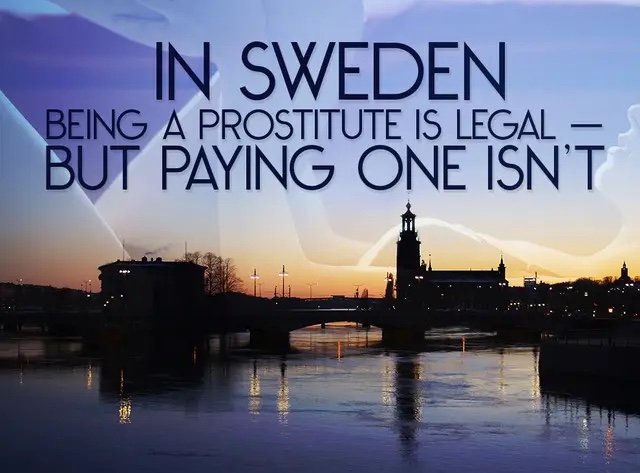
In 1999, Sweden was unique in the world with the introduction of a ‘Sex Purchase Act’. The act makes it illegal to purchase sex but not to sell it. Under this law, it is the customer that is the criminal but not the sex worker, who is considered to already be in a vulnerable position. The law is based on the principle that prostitution is an act of violence against women. The ‘Swedish Model’ has been duplicated and adapted in the other Scandinavian countries as well as Canada, Ireland and France.

The Swedish Sex Purchase Act stands as a complete opposite to the laws in Germany and the Netherlands where the purchasing of sex services is legalized. Proponents of the Swedish law would at this is why Germany and the Netherlands have become European hotspots for sex tourism and trafficking.

However, many organisations, including Amnesty International, WHO and Human Rights Watch oppose the Swedish model. They suggest instead that legalization improves the sex worker’s access to health care, their ability to report crime and ability to organize themselves in, for example, unions. They also claim that the sex worker is not always a victim of the situation and that the Swedish law forces them into risky behavior and contributes to their poverty.

Despite the criticism, the Swedish law stands strong and does not look like it will be changed anytime soon. It seems that most Swedes agree with the law, based on the belief that nobody has the right to buy another person’s body.

What do you think?

International Romani Day-Roma in Sweden

Today, 8 April, is International Romani Day. It marks the first World Romani Congress that was held in London in 1971, making today the 50th occasion it has been celebrated. The day exists to shine a light on the ongoing persecution and abuse that the Roma population of the world has been forced to endure throughout history.

The Romani originate from northern India. They are dispersed, and their most concentrated populations are located in Europe, and Western Asia, since around 1007. Nobody really knows why the Roma left India in the first place, as no records were kept. However theories abound: from early persecution based on caste, to banishment from angering the king, and religious war.

The estimated 12 million Roma are consequently a nomadic people with no land to call their own. Their mobility and the fact that they lived in temporary camps contributed through the centuries to associations with poverty and accusations of high rates of crime. The discomfort that others felt about their presence led to perceptions of the Roma as antisocial, unsophisticated or even dangerous. Partly for this reason, discrimination against the Romani people has continued to the present day.

Romani have existed in Sweden since at least the 1500’s and today they are classed as one of Sweden’s five national minority groups (together with Jews, Sami, Swedish Finns and Tornedalers). Romani chib has the status of official minority language.

Over the centuries, the people of Sweden discriminated against, marginalised and excluded its Roma population. For 40 years, Sweden had a legal policy of enforced sterilization of people to avoid ‘unacceptable offspring’. Much suggests that Roma women were particularly subjected to this abuse, and mostly it was involuntary. Sweden removed this law in 1976. The Pew Research Poll of 2016 found that 42% of Swedes held strong anti-Roma views (compared to 82% in Italy, and 37% in Holland).

A Romani political activist in Sweden was Singoalla Millon, who died in 2020, and spent her entire life fighting for education, housing and acceptance. Another was Katarina Taikon who dedicated herself to improving conditions for Romani people in Sweden. She tried to convince the Swedish government to see the Romani as political refugees. She died in 1995. Today, the politician Soraya Post has worked as an EU politician defending the rights of the Romani and other minorities.

In 2012, the Swedish government introduced an 20-year equal opportunities strategy for Roma people. The strategy includes objectives and measures within several areas such as schooling, employment; housing, health, social care, culture and language. Of course, discrimination and marginalization are still very real in Sweden, but this is at least a step in the right direction.

Swedish Press Freedom – the first in the world

In several countries, I would not be allowed to freely write what I want in this blog. Many nations are fighting for press freedom and against censorship – some of them not very far away. Thankfully, Sweden has solved this issue of media independence. Everyone is free to express themselves in writing, provided they do not publicly defame another person or commit an illegal act.

Obviously, Sweden didn’t always have freedom of the press. In the early days of print, Swedes fought many battles against censorship and limitations on the printed word. However, things changed when, on 2 December 1766, Sweden became the first country in the world to write freedom of the press into the constitution. The Swedish Freedom of the Press Act also allowed public access to information, which made it legal to publish and read public documents.

The Act that applies today actually came into effect in 1949. Today, laws cover press ethics, disputes, freedom of expression over digital media and protection of the individual and of whistleblowers.

Compared with other countries in the EU, Sweden is the 3rd best country in terms of media independence, preceded by Finland and Denmark. Sweden holds the 4th position on a global scale, the number one country being Norway.

According to Reporters without Borders, one reason that Sweden isn’t ranked higher is that over 50% of local media is owned only by five major companies. These control the editorial line and job security.

Additionally, one third of Swedish journalists claim they self censor due to threats and harassment from trolls, violent groups, heads of overseas states and security forces. Very few perpetrators are sentenced.

The Swedish Law of Sexual Consent

I’ve been watching the interesting Martin Scorsese documentary series on Netflix called ‘Pretend it’s a City.’ The programme is based on a series of interviews with sardonic writer Fran Lebowitz. In one episode, she talks about MeToo, and how when a woman accuses a man of rape the focus has shifted from ‘prove to me that she’s telling the truth’ to ‘prove to me that she’s lying.’

This is merely a change of perspective in most places and not enshrined in law. Except in a few countries, including Sweden. In 2018, a new law was introduced in Sweden – called the samtyckeslag – the Law of Sexual Consent. The basic principle of the law is that sex should be voluntary and that sex without explicit consent is considered rape. This applies whatever the gender.

The Swedish verb for ‘to rape’ is ‘våldta’ which literally translates as ‘to take by violence’. This reflects the previous definition of rape which involved some form of violence, force or threat or that the victim had been in a vulnerable position. An important part of the previous legislation was that the victim decisively said ‘no’. Since 2018, this is not the case.

A crime called ‘negligent rape’ was introduced which is a sexual act that occurs when there has not been an explicit statement of consent, but in which the perpetrator had not intended to commit rape or assault. In other words, before sex there has to be a clear ‘yes’ or active demonstration of consent. If there isn’t, it is rape.

Today, if a woman accuses a man of rape, she does not have to provide evidence that he was violent or coercive, that she had to fight him off or prove that she said ‘no’. The victim does not have to prove she is telling the truth, the accused has to prove she is lying.

The new law has been significant in many convictions in recent years. In one case, the Supreme Court wrote: ‘A person who is subjected to sexual acts against their will does not have any responsibility to say no or express their reluctance in any other way.’

So a ‘yes’ is a ‘yes’. And a lack of a ‘yes’ is a ‘no’

Buying sex in Sweden

In a recent police raid, over 40 men were arrested at temporary brothels in Stockholm. They were charged with buying, or attempting to buy sex. The brothels, which are also illegal in Sweden, were shut down.

So what is Sweden’s policy on prostitution? Well, it is criminalized and in fact Sweden has a trail-blazing approach to prostitution. In 1999, the Sex Purchase Act came into existence. This Act makes it illegal to purchase “sexual services” but not to sell them. So the purchaser is the criminal and not the prostitute. The rationale for criminalizing the buyer, but not the seller, was stated in the 1997 government proposition, namely that “…it is unreasonable to also criminalize the one who, at least in most cases, is the weaker party who is exploited by others who want to satisfy their own sexual desires”.

This law has since been copied and put in place in various other countries, such as Canada, Norway and Iceland. According to the statistics, the law has seen a huge decline in prostitution and trafficking, although it is by far not eradicated.

According to journalist Meghan Murphy, who has written extensively about prostitution- ‘The Swedish model is about more than just changing the law. It is also an idea — it is about changing the culture, and the culture is what needs to change as well as our legislative approach. What the model and its proponents are saying is that men are not entitled to access the bodies of women and girls, even if they pay.”

However, the law is controversial and is not without its critics.

Those who criticize it claim that the law isn’t as effective as people think and that sex work in Sweden is just driven more dangerously deeper underground. They also claim the law strips women of their control and their rights to do with their body as they wish to. An article on mic.com says ‘Sweden’s belief that prostitution is the most brutal expression of patriarchy has engendered a kind of paternalism about commodified sex that holds men responsible for their actions while assuming women can’t be. It wipes out the possibility of gray areas for men and women to be equal partners in exchanging money for sex.’ In other words, according to them, the feminist-driven Sex Purchase Act is entirely unfeminist.

So, the age old debate carries on. The discussion about if prostitution is inherently exploitative. Should it be criminalized, or can it be developed to maximize equality for everyone involved? In Sweden, the buyer is criminalized. In most other countries, the seller is criminalized. In Germany, Holland, Austria, Switzerland, Greece, Turkey, Hungary and Latvia prostitution is legal and regulated. Different approaches to the same situation.

What do you think?

When Sweden lays down the law

The international spotlight has been shone on Sweden’s judicial system in recent weeks. An American rapper is currently being held in custody on suspected physical assault. The President of the USA has intervened and tried to get the rapper released on bail – to no avail. Consequently, Sweden has been accused of corruption and racism.

I thought in this blog, I’d quickly clarify a few things about Sweden’s legal system so that you understand the holding of the rapper is fully compliant with the law.

The Swedish system. Sweden has a civil law system based on Romano-Germanic law. Sweden’s criminal courts have three levels: The Supreme Court of Sweden (Högsta Domstolen), 6 courts of appeals (hovrätter)and 53 district courts (tingsrätter).

The Constitution of Sweden prohibits capital punishment, [1], corporal punishment [2], and “torture or medical influence aimed at extorting or suppressing statements.”[3] Searches and seizures are restricted under Article 6 of the Constitution of Sweden.

When somebody is arrested, police and prosecutors are responsible for conducting initial investigations to determine whether an individual should be prosecuted for a crime – and which crime. Prosecution is mandatory if guilt has been established through the investigation period.

A defendant is entitled to counsel as soon as reasonable suspicion is established during the investigation stage. The defense attorney may ask the prosecutor to conduct specific investigations on the defendant’s behalf.

Any witness may be interrogated for up to six hours. In some jurisdictions such as Gothenburg, the local municipal council hires lay individuals to attend and document interrogations.

No bail system. There is no bail system in Sweden, where somebody can pay a bond to avoid pre-trial detention. Bail is more common in the Anglo-American judicial systems and not the European continental systems. In Sweden, individuals are often detained while awaiting trial, although they can be released without detention and have their travel restricted by court order. If there is a risk of fleeing the country, suspects can legally be kept in police custody by court order until investigations are complete. This is common praxis when it relates to foreign citizens with no residence in Sweden.

Once the initial investigations are complete, a court of law decides what the individual should be charged with, and the trial proceedings commence.

Independent Court of Law. In Sweden, and Finland, the legal system is totally independent and free of influence from political leaders. Members of the government or cabinet may not dictate or interfere with the daily workings of a government agency, court of law or similar. While this is common practice in other countries, in Sweden, this so-called ‘ministerstyre’ is illegal.

When Donald Trump called Sweden’s Prime Minister Stefan Löfven, the Swede explained that the Swedish judicial system, prosecutors and courts are totally autonomous. Everybody is equal in the eyes of the law and that the Swedish government will not and can not try to influence the legal process.

Let’s see what happens. If the rapper has been held in custody incorrectly or if he is charged with a crime that does not warrant incarceration then he has a right to claim compensation.