The decay of Sweden


An interesting article about Sweden in the UK’s Guardian on Sunday describes the decay of Sweden.

Uppsala’s Chief of Police, who was a rabid anti-sexism activist, but who has been found guilty of abusing and raping women and children is central to this portrait of Sweden. The journalist compares him to a character out of Henning Mankell or Stieg Larson’s crime books.

Sweden has an international and domestic image of itself as an equal, modern country with a strong tendency for concensus. According to the journalist, this image is way out of sinc with the Göran Linberg scandal.

He goes on to describe cut-backs in the health care system, political corruption, abuse of power, the assassination of Olof Palme, the submarine scandal, and sex scandals involving MP’s as examples of things that break through the Swedish facade and reflect a society crumbling from within.

To read the article, follow this link:

http://www.guardian.co.uk/world/2010/aug/01/goran-lindberg-sweden-crime-palme
So you think you can speak Swedish?


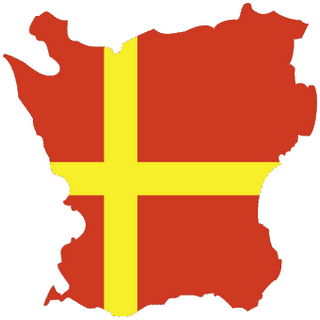
I remember the first time I visited Skåne, in the south of Sweden. I flew to Malmö airport and boarded the bus to the city. As I boarded, the driver looked up at me and spoke. Now, I thought I could speak Swedish, but I didn’t understand a word the driver said.

I asked him to repeat. He repeated. And I still didn’t understand a thing.

You see, he wasn’t speaking Swedish. Well not as I know it. He was speaking Skånish -the dialect they have in this part of Sweden. And to me, it was indecipherable.

He might as well have speaking Swahili.

Now many years later, after 3 years of living in Skåne and very many visits, I can understand the dialect a little better. But still, it is really difficult. I always get my partner to make phone calls to plumbers, electricians and the like when we need help around the house. I know I probably won’t be able to understand a thing they say to me.

To help me in my language development, a friend gave me a dictionary. It is a Swedish-Skånish dictionary, and I recommend it to anyone venturing into this part of the country and to anyone who thought they could speak Swedish.

Here are some gems:

Potato
Potatis (Swedish), Pantoffel, Pantålla (Skånish)

Penis
Penis (Swedish), Koddastake (Skånish)

Strong coffee
Starkt kaffe (Swedish), Rävegift (Skånish)

Garden
Trädgård (Swedish), Have (Skånish)

Clothes
Kläder (Swedish), Töj (Skånish)

Swedish fashion crimes


I read recently about how Sweden is famous around the world for fashion. Designers such as Filippa K, Efwa Attling, Johan Lindeberg and lables such as Nudie, Cheap Monday and weSC were mentioned as leading the way. Swedes have an image as a trendy, fashionable bunch.

I often witness what some Swedes wear. Now, I am no expert in sartorial trends but I do know a couple of Swedish fashion crimes that would be arrested and thrown into isolation by the fashion police.

Crime 1
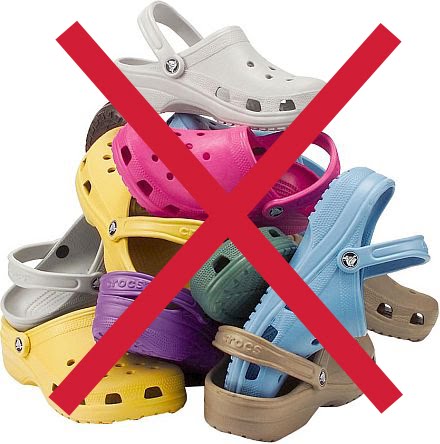
Rubber clogs, invented in Sweden, and known as crocs. We’ve all seen them in their lurid, eye-catching colours. They are banned in hospitals because the static they cause can deactivate life-support equipment. Personally, I think they’re banned because they’re ugly.

Crime 2
Knee-length tube socks and open sandals. Not uncommon in offices where a lot of technical people work it seems. Say no more.

Crime 3
Underpants under swimming trunks
I’ve mentioned this before, but am shocked every time I see it. It’s reflects the ultimate in brand obsession. A pair of designer underpants can’t just be secreted where no-one can see them. Oh no, put them on under your swimming trunks and let everybody see the designer’s slogan when you’re on the beach. I’m sure everybody isn’t thinking how cool it is, but how disgusting it is.

Crime 4
High-waisted shorts
Shorts pulled so high up the body that they could also be nipple warmers. Not only are the pulled up, but they are often way to tight down below. Now, I know Swedes are open about their bodies, but that leaves nothing to the imagination.

So remember when Swedes are portrayed as a trendy nation, there are also many who commit terrible fashion crimes.

Anybody got any others to add?

Why can’t it rain?

Why are some people never satisfied?

Sweden is currently experiencing one of the longest and hottest heat waves in history. It has been a fabulous summer so far with temperatures not going below 25 degrees and tropical nights enveloping the country. But some people are complaining about it. It’s too hot. It’s unbearable. Why can’t it rain?

These are probably the same people who complained that it rained too much last summer, that is was too windy and too chilly. The same people who moaned that this past winter was too long and dark, too stormy and enough to drive you mad with the cold. The same people who whinged about spring being late and about the ground being too hard to plant anything. Or the autumn being too wet and too blustery.

Sometimes I think some people are only happy when they have something to moan about.

Think, if they could channel all that energy into something positive instead. Imagine what amazing things they might achieve.

And they’d probably be so busy achieving that they wouldn’t have any time left to complain.

Top 10 Stereotypes about Swedes


In my job as a trainer and lecturer in cultural difference, I have the privilege of travelling all over the world. On these trips, I often carry out informal surveys on the people I meet to try to understand their perceptions of Swedes. These are usually professional people, male and female, who have some experience of working with Swedes in one way or another. Some of them may have a Swedish boss, others may have Swedish colleagues, subordinates or customers. The majority of the people asked are European.

Very often the same perceptions come back, and it’s interesting that some of the old stereotypes of Swedes still hang in there.

Top 10 stereotypes about Swedes

1. Honest (‘can always trust a Swede’)
2. Unemotional (‘don’t know how they’re feeling or if they’re even interested’)
3. Exotic (‘cold, snow, ice, chilly’)
4. Sexually liberated (‘open-minded and have many partners’)
5. Independant (‘men and women in work place and they travel everywhere’)
6. Slow (‘at deciding things, getting things done and in discussions’)
7. Naive (‘easy to manipulate’)
8. Modern (‘adopt new technology, drive new cars, follow latest trends’)
9. Good-looking and health-conscious (still ‘blonde, blue-eyed, tall’)
10. Arrogant (‘think the Swedish way is the best and only way’)

So are these stereotypes useful? Sure, they are. Firstly, they help us understand how others see us and then we have a choice what we want to do about that. Do we want to act in ways which reinforce the stereotype or in ways which contradict it?

Stereotypes also give us a place to start in our communication with people from other cultures.

But there’s one crucial thing to remember. Every person we meet is an individual. They may be typical of their culture or not.

So we should always try to check our assumptions about each individual and not just presume they are their stereotype.

Freedom on Österlen

When visiting the Swedish countryside, tourists are often struck by the little red wooden houses with white corners, the endless forests of evergreen and the omnipresent lakes and rivers.

And quite rightly so. This kind of landscape is ‘typically Swedish’ and is often how Sweden is marketed abroad. As a rural, forested paradise. But there are regions of Sweden which look quite different.

Take Skåne, for example, a county on the southern-most tip of Sweden facing Germany, Poland and Denmark. I am fortunate enough to have a summer place in the eastern part of Skåne – an area called Österlen. This area is as far from the Swedish stereotype as you can get. A flat agricultural countryside of wide open spaces, wild sandy beaches, fruit orchards and endless fields of billowing crops. The stone houses are mostly plastered and painted white. Gardens burgeon with hollyhocks, roses and fragrant lavender.

Being on Österlen feels alive. The place is different. The pace is different.

For me, my mind becomes free when I am here. This is thanks to the lack of oppressive pine trees and the fact that you can see the horizon far, far away. This gives a special kind of light, a bright light that inspires all the artists that have settled here. And it inspires me.

On Österlen, anything seems possible. The people here are amongst the most entrepreneurial in Sweden. All those creative ideas that you have do not get stuck in the overhanging branches of the fir and the birch trees. Instead, ideas can soar into the blue sky and expand.

And they can go all the way over the horizon.

Linguistic limbo


I find that writing this blog has heightened my awareness of my surroundings – made me more míndful. I regularly see, hear, experience things and think – yes, that’s definitely blogworthy. And I come home and write.

But one thing I’ve noticed. It’s not that easy. I struggle sometimes with my English.

Having lived in Sweden for 16 years, I find I do not speak English the way I used to. Swenglish creeps easily into my writing, often without me even noticing it. The prepositions are the worst – for example, is it ‘at’ Midsummer or ‘on’ Midsummer (‘s Eve)? I battle with myself.

And I realise something.

My English is frozen at the level it was when I left England. My Swedish is not as good as my English.

I am in lingustic limbo.

Social outcast


Today I felt like a social outcast.

Sitting in my office, the rooms echoed with their emptiness. Everyone had gone home even though it was only 3 o’clock. Only I sat there – working.

You see, tomorrow is Midsummer’s Eve, possibly the most important celebration in the Swedish calender. And though it isn’t officially a bank holiday, it is a day off.

But the interesting thing is how Swedes always take half a day off the day before a day off in order to prepare. No matter what the holiday. Midsummer being no exception. Only lonely souls and Neil No Friends are left rattling around empty offices like peas in an empty tin can.

But why do Swedes take half a day off before the holiday day? Is it because day care is closed? Is it because the food takes a long time to cook? Is it because people are travelling long distances? Maybe.

But I think the real reason is to do with alcohol. On Midsummer especially, the off-licenses are packed. The day before Midsummer is by far the busiest day of the year for them. This means that it takes such a long time to buy alcohol that they need a good few hours to queue.

Happy Midsummer, wherever you are.

How to kill a party


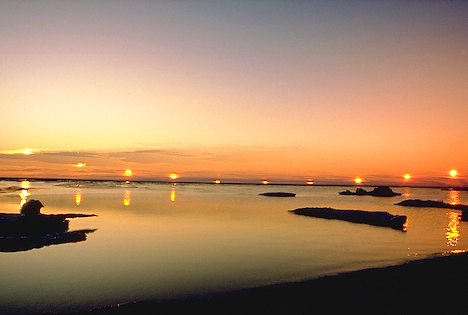
Today is the longest day of the year. In the north of Sweden, the sun sits high in the midnight sky. Further south, it hovers below the horizon reaching up with rays of light.

Tomorrow, the days start to get shorter. This gives some cheerful Swedes an opportunity. The newsreader on tonight’s weather forecast is one such example. Since today is the longest day, he decided to remind us,

‘We’re going towards darker times’.

Summer hasn’t even begun properly yet, we have weeks of free time and holiday ahead of us!

Jeez, some people really know how to kill a party!

Loving Stockholm


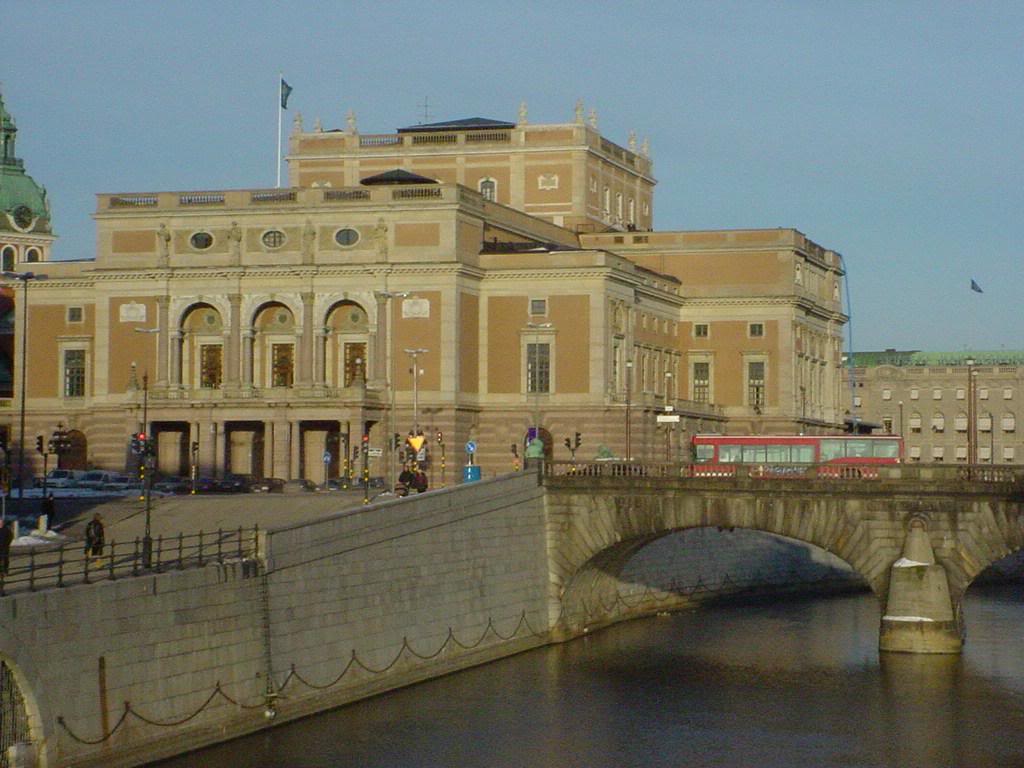
It was a few minutes to midnight, and the giant digital clock, projected onto the facade of the opera house, started counting down. Hundreds of people in the square outside watched as the clock reached 5,4,3,2,1. And the place exploded with music. Stockholm’s largest outdoor club had started. House music boomed out from the roof of the opera, giant screens showed the bouncing DJ’s and strobes shot out over the crowd.

This was the end of the Royal wedding Saturday and the start of Sunday morning. In my 16 years in Sweden, I have never seen Stockholm so alive with people and parties. Open-air bars and clubs on every square, concerts on stages around the city, people of all ages wandering around enjoying the sights and sounds. Everyone participating in Sweden’s largest party – Love Stockholm 2010.

And who couldn’t love Stockholm on a night like this? While the priveleged were banqueting in the palace, the people had taken to the streets.

And they kept it going. All. Night. Long.