Don’t choke on the almond

And so it is Christmas. Like many places around the world, Sweden celebrates on Christmas Eve. Festivities throughout the day include eating the Christmas ham, receiving a visit from Santa, opening presents, drinking, playing board games and eating more. 

But the day usually kicks off with a steaming bowl of rice porridge. This delightful dish is made of rice, milk, sugar and cinnamon. Deep inside the porridge, there is often an almond. Presuming you don’t choke on it, if you find the almond it means you will be married during the following year. In the south of Sweden, and in Denmark, Norway and Iceland, the person finding the almond receives a gift. During the 1920’s it became trendy in Sweden to replace the almond with a ‘porridge doll’ made of porcelain and hide that in the porridge instead. 

Really superstitious people will even leave a bowl of porridge outside tonight to appease the house gnome who, according to legend, can make your cows dry up if he’s pissed off. 

But hopefully nobody should be pissed off on a day like today. And with family and friends gathered around a twinkling Christmas tree, a bowl of steaming hot rice porridge is a great way to kick off a lovely day. 

  

And Sweden’s ‘Christmas present of the year’ 2015 is…

Every year, Sweden’s trade research institute nominates an item that is the ‘Christmas present of the year’. This item should have sold in large quantities and/or represent current trends in Swedish society. 

The first item to be granted this status was in 1988 and it was the baking machine. Since then, various items have been the mobile phone, the tablet, the spike mat, the book, the food home delivery service, the woolly hat and the wok. Last year’s was the smartband – a reflection of today’s physical activity trend and the need to digitally track and register results. 

So this year, what is it? 

Given the current state of the world, and the number of refugees that Sweden has taken in, one might hope that it is a charitable contribution. But no it’s not. 

It’s the robot hoover. 

What does this say about Sweden’s current time? It clearly represents the robotisation of our society, and the automisation of household functions. But it also reflects the stressful nature of today’s society in which people feel that time is limited. Additionally, it shows that the home is back in focus and the need to be liberated from boring tasks such as vacuum cleaning is strong. 

So Happy Christmas and a dust-free New Year! 


What is a Swede? 

Went to see stand up comedian Jonas Gardell yesterday and he told a story about when he had been awarded the ‘Swede of the Year’ award. But what actually is a Swede he pondered. Is it what the right-wing party in Sweden would have us believe? Blond-haired, fair-skinned, blue-eyed, hetero, Christian, arian? 

With reservation for misquotation and mistranslation, he defined himself this way.

‘ I am a middle aged gay man married to a Finnish American immigrant. We have two children with a lesbian couple, one of whom is Jewish. My brother is married to a Muslim and has two kids. And my sister is married to a woman and has a kid with a Jewish man’. 

They are one big fantastic, modern Swedish family. 

Spotifree time

spotify sketch

It’s common knowledge that Sweden has one of the world’s best systems for paid leave in connection with the birth of a child – thirteen months parental leave which can be shared between both the parents. The payment received is equivalent to about 80% of salary up to a certain level.

Now, Swedish company Spotify has announced an upgrade to this system for employees working in their company. Parents at Spotify are allowed to take free time, or parental leave, for 6 months at full pay. This is for either parent so is not gender, or role, specific. When the employee returns to work, there is also a ‘welocme back’ month where they can work part-time and from home to ease themselves back into the workplace and from their infant. The great thing about this is that it’s not just Sweden. It’s GLOBALLY! For all employees everywhere in the world.

It’s great to see private organisations taking responsibility for their employees. The government and the tax payer can only do so much, if they even do anything at all. The Head of HR at Spotify says

“This policy best defines who we are as a company, born out of a Swedish culture that places an emphasis on a healthy work-family balance, gender equality and the ability for every parent to spend quality time with the people that matter most in their lives.”

The Gentle Minister

Anders_Ygeman

Reading on social media recently, I am struck by the amount of praise given to Sweden’s Home Secretary, Anders Ygeman. The minister is appearing a lot in newspapers and on the TV at the moment commenting on the tragic events of Paris and the impact terrorism has on the increasing security levels on Swedish soil. He also regularly informs the public on the refugee situation and the political reasons behind the government’s actions to reintroduce border controls.

On the face of it, Anders Ygeman should not be considered a good communicator. He has a very gentle, apologetic manner. He avoids eye contact at times. He speaks with a very quiet voice and a very flat tone. He is, in fact, the opposite of everything that a leader is said to be – inspiring, charismatic and energetic.  In the USA, or the UK, he would probably be ridiculed. But in Sweden, it seems to work.

From a cultural perspective, this is really interesting. What is it about Anders Ygeman that works so well in Sweden? Maybe it is a case of content over packaging. Often how we say something has more impact than what we say, but in Anders Ygeman’s case, it’s the opposite. He might not be charismatic, but he is clear and very direct. And is this an approach that Swede’s prefer in times of crisis – a no frills, humble and direct communication?

This queen don’t wave

  
A month or so ago, I bought a little model of Sweden’s Queen Silvia. Brandishing a handbag which encloses a solar panel, the energy from the sun is supposed to make her wave   She’s been standing on my window ledge for a while now in direct light. But for the last few days, that queen isn’t waving. Her hand remains still. Royally poised. But nothing happens. Nothing. Nada. Zero. Zilch. Ingenting. 

It’s a clear indication of the lack of sunlight we’ve had in Stockholm recently. 

So little that the queen herself protests. 

Wilkommen, bienvenue, welcome – to Sweden….

Cabaret_Trio

Last night I went to a performance of ‘Cabaret’ at Stockholm’s ‘Stadsteatern’. Starring popular singer, Sarah Dawn Finer, the story never felt more relevant. Set in and around the decadent Kit Kat Club, the familiar story depicts the slow and insidious growth of Nazism in pre-war Germany. As Hitler’s politics start to become more accepted, life initially goes on as usual inside the nightclub. But slowly, even the performers  cannot ignore the hardening attitudes, the anti-semitism and what is necessary to survive.  As the Nazis rise to power, and ‘Germanness’ falls into focus, the characters have to make a choice: stay or go.

One of the main characters is an American author based in Berlin. As he is confronted by the rise of Nazism he stands up against it saying ‘if you don’t stand against it, you stand with it’. Somewhat remniscent of a US President in a speech against terrorism, this hit a raw nerve. Just because we are not actively and vocally against something, does it really mean that we are for it? Is it that black and white?

As right-wing politics yet again take hold in Europe, what can we learn from the past? If we stand by and say nothing, do nothing, are we in effect accepting it? Are we saying it’s ok? And if we don’t stand up for others, who will stand up for us when we need it?

In the musical Cabaret, we see the nightclub as a metaphor of Berlin, slowly falling more and more under the influence of dark powers. We see the characters numb themselves in alcohol and we see one main character bend to the norms of society by demonstratively removing his makeup – stripped of his uniqueness and his humanity.

Never has it felt more relevant than today. ‘You are not German’ is today expressed as ‘You are not European‘ or ‘You are not Swedish’. And as I was consumed in the musical, I thought to myself, can we do it differently this time? Can we beat the negative forces in society and come out of it victorious? Or are condemned to repeat the mistakes of the past?

Stockholm’s building

  
Someone, I don’t know who, once said that you can tell if a town is prosperous by the amount of building that’s going on. By that definition, Stockholm must be a very wealthy place.

The amount of roadworks and building works currently happening in Stockholm is astounding. Main arteries have been dug up to create more lanes or bus stops, buildings are creeping upwards and additional floors are built on the rooves, new developments are being squeezed into empty plots. And the Slussen intersection is being demolished, reformed, debated and berated. 

As a Yimby, I love these improvements but it can make day-to-day life difficult. And the fact is, this isn’t going to stop. Stockholm continues to thrive and be Sweden’s engine. In research by the Chambet of Commerce released this week, Stockholm is the fastest growing capital in the EU. 

So fasten your seatbelts. It’s gonna be a bumpy ride. 

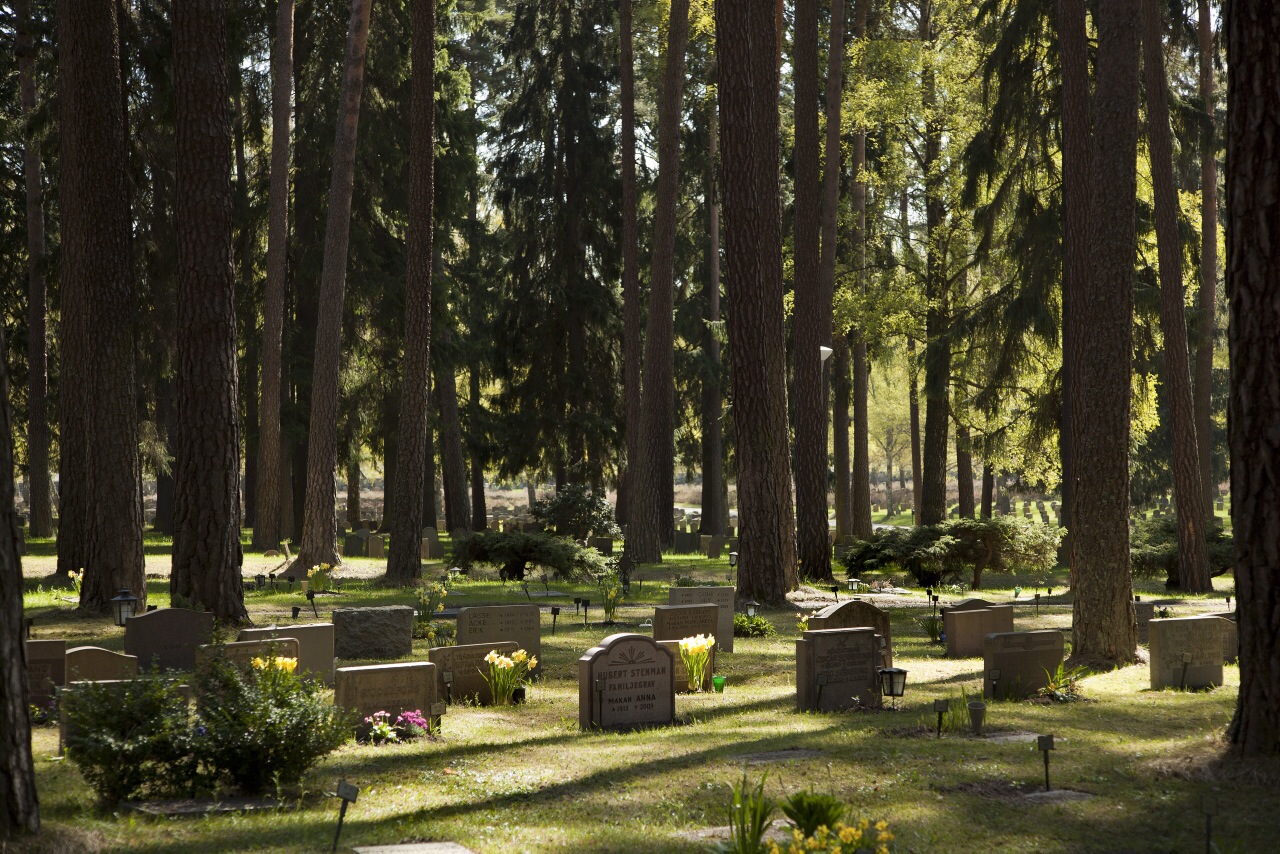
Sweden’s forest cemetery 

  
Today I visited a peaceful, magical place in Stockholm – Skogskyrkogården – the Forest Cemetery. 

Built between 1919 and 1940, this location combines a burial ground with a chapel of rest and a coniferous forest.

Listed since 1994 as a World Heritage Site, the Forest Cemetery is a wonderfully serene place to say goodbye, to remember or just to visit.