They dropped the bomb on Stockholm


Saturday night in Stockholm in March. Night has descended. The remnants of the winter snow are melting away leaving gravel and sand on the pavements and in the gutters. The wind whistles along the facades of the buildings, round the corners and away into the sky.

The streets are empty. They echo with isolation. Like a post-apocolyptic landscape, all sign of humanity is wiped out. It’s like the bomb has dropped. It’s as if all Stockholmers have died from a mysterious disease and all that is left is an abandoned shell of a city, the diffuse lights in the apartment windows and the blinking neon of the local pizzeria.

Stockholm is eerie like a ghost town.

But this vision is not unique to Stockholm. All over Sweden, in every town, on every street, the sight is the same. It’s Saturday night in Sweden. In March.

And it’s the final of the Swedish Melody Festival on the telly.

Lou Reed’s fear of Sweden


The other day I heard a interesting quote by Drew Curtis about Sweden. Drew is the founder of community website FARK and a popular lecturer in social media. He said ‘I love Sweden. The entire world should be like Sweden. They all like to drink and get naked, and the women are hot. I can’t think of a better nation on the planet.’ No reinforcing of stereotypes there then.

This inspired me to find other quotes from celebrities about Sweden. After extensive searching, I only managed to find 3 more. And here they are.

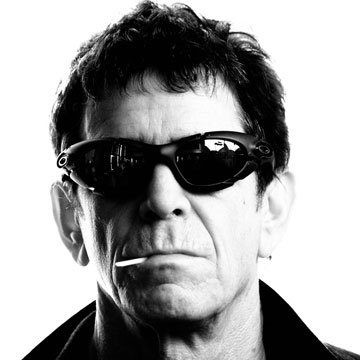
The legendary Lou Reed said,

‘Compared to New York City, Sweden is a very scary place’

I don’t know what national characteristics or behaviours he was basing this on. Then there’s New York Doll’s member Johnny Thunders who said,

‘I was in Sweden for 10 days. They put me on the front page of the daily papers eight days in a row. I did nothing to warrant any of the attention. It was ridiculous.’

Small country, ‘big’ international celebrity.

And, finally, my personal favourite from the very religious Sir Cliff Richard,

‘Sweden is just about porn and gonorrhea’

Suicidal Swedes


So, the newspapers are trying to paint a picture of a ‘Wallander curse’. A second Wallander actor, Emil Forselius, was discovered dead this morning in his apartment. He had committed suicide. A while ago, popular actor Johanna Sällström also killed herself – while in the middle of a Wallander film project.

The myth of Swedish suicide still has a strong hold outside of Sweden. When non-Swedes are asked what stereotypes they have of Swedes very many of them say ‘suicidal’. Why is this the case?

Is it because of the long dark winters and the problem we can have with seasonal adjustment disorder? Maybe. Is it the legacy of depressing, morose Bergman films that have painted a miserable and introspective view of the Swedes? Perhaps. Is it the lack of ‘godliness’, no real strong belief in religion, that means taking your own life is easier? Could be.

Combined, of course, with statistics.

According to statistics, Swedes have the highest suicide rate in the world. This is something that non-Swedes often love to refer to. But statistics are deceptive.

Most countries in the world do not even keep statistics of suicide, especially those countries with strong religious beliefs (which is most of them). When people commit suicide, they call it something else, in order to secure a place for the dead person in heaven or to prevent the family from being burdened with shame.

But in Sweden, suicide is not a sin. Suicide is a tragedy. In Sweden suicide is documented as what it is – suicide – as a reminder for the rest of us how fragile our existence is.

So, of course Sweden has the highest statistics, because Sweden is one of the few countries to actually keep accurate documentation.

I don’t believe that Swedes have a tendency to take their own lives more than other nationals. I just believe that when they do, the nation doesn’t try to hide it. It is hard enough for families to deal with their grief without having to also be weighed down with shame.

Ultimately, Sweden is a modern society where citizens have free choice to make decisions that influence their own lives. Suicide is, in its extreme, a way of exercising this free choice. It is of course a tragedy but it is not something we should ignore and hide.

As long as some people in our society feel that suicide is their only choice, it is our obligation to document and defend an open dialogue about it.

Swedish airport efficiency


Sitting in the airport lounge waiting for my flight to Helsinki, I am amazed by Swedish efficiency. Outside, the heavens have opened. It has been tanking down with snow all day long. And yet, no flights are cancelled or delayed. Snow ploughs are working feverishly to clear the runways. De-icing trucks are eagerly spraying fluids over the bodies and wings of the planes. Staff are shovelling and transporting snow from one place to another.

This is Swedish efficiency at its best. In England, a few flakes of snow and the airport would have been shut, stranding passengers.

I don’t know how long this Swedish efficiency can win against the elements. Long enough for me to be boarded and on my way, I hope.

Sickly Swedes


Interesting article about Sweden in March’s issue of Monocle magazine by Elna Nykänen Andersson.

She talks about a report released in January this year by the Social Insurance Inspectorate which looked at the number of sick days taken by Swedes.

In 2005, 14% of the working age population were on sick and incapacity benefits. This was more than any of the 30 major countries in the OECD. Interestingly, over 50%of the Swedes who were on benefits were away for more than 6 months, compared to the other OECD ccountries where this figure was between 10-20%.

However, according to the report released in January, this has changed. The number of people on sick and incapacity benefits has dropped dramatically, as has the number of people on long-term benefits.

So, is this a miracle of health care? Has it do with an upsurge in national fitness levels? Has there been an increase in medication? No.

In 2008, the Swedish government introduced check-ups every three months for those on sick leave. And amazingly, many people have discovered that they are well enough to work after all.

According to the report, the Swedish state has saved 650 million crowns in benefit payments.

So that’s where the money came from to reimburse commuters for the delays in the public transportation system.

A sense of perspective


I am tired. Tired of the winter. But not of the snow.

I am tired of everybody moaning.

This year, Sweden has had one of the snowiest winters in decades. The snow came in December and is still here. The streets are covered in ice and, just as you think it might be getting better, another load of snow is dumped upon us.

This week has been especially spectacular. Because of the amounts of snow, the railway system has not been able to operate as it usually does. Trains have been delayed, or cancelled. There haven’t been enough replacement buses to cover the capacity. The underground has been cancelled on any parts of the line that aren’t physically underground.

The newspapers have reported on ‘Snow Chaos’ and ‘a feeling of tension and riot in the air’. Every night the weather has dominated the tv news, every night they have interviewed angry passengers that have had to wait at a station for a train that never comes. People have been up in arms, their anger spiralling. Train personnel have been threatened.

I am so tired. Tired of the moaning. Tired of the news coverage and the sensationalism.

We live in Scandinavia. In Scandinavia it snows. This year it has snowed an exceptional amount. This has meant that services can not operate with their usual reliabilty. Get over it.

We live in a world surrounded by natural disasters, such as the earthquake on Haiti, where people lose their homes, their families, their means of living. In other countries, people die in extreme weather conditions. In Sweden, we miss the train. I think a sense of perspective is required.

First thing this morning, the local government and the board of Swedish Railway anounced that they will be refunding all passengers. All passengers will receive a discount on their monthly travel card equivalent to one week’s travel. This is to compensate everyone for the inconvenience. The inconvenience of living in Sweden?

This political gesture will cost the tax payer 50 million Swedish crowns.

In my opinion, money better spent employing people to maintain the tracks and keep the trains moving.

Pancake Thursday


In all cultures, there is an element of predicatability. Some things that you can feel will always happen. Things that give you a sense of security because you can depend on them.

In Sweden, it’s pancakes.

Today is Thursday. In every lunch restaurant and every staff canteen that sell Swedish food, pancakes are on the menu. You can rely on it. It feels dependable. The pancakes are served in a particular way – with whipped cream and jam – and always, always served together with a bowl of steaming pea soup and bread.

It’s fun to watch Swedes on Thursdays. In the staff canteen, grown men queue up to ladle their soup into their bowls and pile pancake after pancake onto a plate like a Scooby snack. Then they gleefully paste on the jam and smother it with whipped cream. It’s like watching a jelly and ice cream party for 10-year olds.

Pancakes on Thursdays is especially interesting for us Brits. You see, we are deprived. We only get to eat pancakes once a year – on ‘Pancake Day’. ‘Pancake Day’ as it happens was last week, Shrove Tuesday. And on this day, when Swedes traditionally tuck into Lent buns, we Brits make pancakes and cover them with sugar, lemon juice and chocolate sauce.

But only once a year.

It’s not always that easy to understand how the rules of different societies work, especially when it comes to food. A Swedish customer of mine once told me a story about some Japanese visitors to Sweden that he was responsible for looking after.

The Japanese were visiting on a pancake Thursday. At lunch time, the Swede took the Japanese visitors to the company restaurant. Unsure of what to do when faced with the lunch time food, the Japanese took a bowl each and filled it with pancakes. They then spooned on jam and cream. And finally, they poured pea soup over the whole lot. They were left with an unholy mess seaping over the edges of the bowl.

The Swede saw what his Japanese visitors had done and was unsure of how to handle the situation. He could tell them they had made a mistake by not putting the soup in a bowl and the pancakes on a separate plate. But he felt this could potentially embarrass them and force them to lose face. This could be devastating to them and their business relationship.

So, he did the only thing he thought an adaptive, culturally-sensitive person should do. He took a bowl, filled it with pancakes and cream and then he smothered it with soup. He sat down with his Japanese visitors and slowly forced down the soggy contents of the bowl with a spoon.

It’s nice to know that however dependable and reliable a tradition is, it is not so rigid that it can’t be adapted if the circumstances decree.

And, in this case, those circumstances are known as hospitality.

Being Swedified


Sometimes when you live in a country so long, you forget what is different from your own culture. You adapt. You are culturally aligned. In my case, I have become Swedified.

Take ‘fjärrvärme’. ‘Fjärrvärme’ is long-distance heating. It’s a way of warming houses and apartment buildings and is very common in central Stockholm.

Long-distance heating usually consists of water that is heated up in factories outside the city. The water is then sent through pipes and out to the buildings. The water circulates in each apartment’s radiators and, when it has been used for a long time, gets cold again. Then, it gets sent back to the factory to get heated up again. Logical, huh? And such a natural part of the Swedish infrastructure that I have hardly reflected over it. Until I went to England and told my family about it.

‘That’s outrageous!!’ they said. Surprised by the strong reaction, I asked why.

‘Well, if the government or private companies control the heating, they could just turn it down in order to control the public. They could set the heat to a low level in order to increase national work output. It’s so communist. It’s outrageous.’

I tried to explain that it was a very green way to heat the buildings but couldn’t come up with a decent argument.

I tried to explain that when you pay the monthly apartment fee, you get as much heating as you like. But they thought that this was also outrageous – a neighbour could have their radiators turned up higher and they would pay the same fee as those who had their radiators lower. Communist.

I tried to explain it was the same as other utilities in the UK. Like water, electricity and gas. But they didn’t get it. Controlling your own heating, they claimed, is a basic right.

I floundered. I couldn’t persuade them of the benefits of ‘fjärrvärme’.

I like and accept ‘fjärrvärme’. I think it is a great utility. My acceptance of it sits so deeply now that I can’t explain why it is the way it is. It just is.

I realise I am culturally aligned, at least on this issue. I am Swedified.