All we need is love


Today is Valentine’s Day in many countries around the world, including Sweden. Many Swedes embrace the celebration with flowers, chocolates, dinner dates. Other Swedes react negatively to it as it is an ‘imported tradition’ – an Americanisation. But what Swedish tradition isn’t imported? They all are, we’ve just forgotten where from.

I understand the anti-commercialism arguments, the same resistence that arises around Halloween. But the way I see it is this. We live in a globalised world, with global influences. This means that there are flows of people, products, beliefs and traditions. Of course, globalisation brings with it negative aspects, and also positive things.

A celebration such as Valentine’s day is about celebrating love.

And love is something that, in a seemingly harsher world, we could all do with a little more of.

An epiphany in Sweden

In Sweden, like in many other countries around the world, the Christmas celebrations are not over yet. This Friday, January 6th 2012, is also a national holiday.

But why?

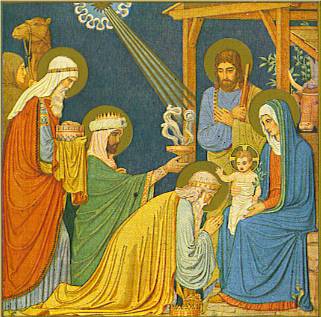
Well, first of all January the 6th commemorates ‘Epiphany’ – meaning revelation, manifestation. This biblical occasion was when the three Kings visited the baby Jesus and declared him to be the son of God. Most of us know this story, they wandered near and far, following yonder star. And it’s not at all surprising that this is celebrated in predominantly religious countries.

But why is it still celebrated in Sweden? It’s a classic example of how cultures develop, how our modern-day traditions grow out of something historical. As time goes on, we still maintain the tradition – but we forget the reason why we do it.

I would venture to say that most Swedes don’t even know why January 6th is a holiday.

Most Swedes are not religious, and ironically, many don’t even like Kings.

For most Swedes, January 6th is just another day off work after all the other Christmas and New Year days off. And instead of bringing gifts, as the three kings did, it’s more often about returning unwelcome Christmas gifts or trawling the bargains at the post-Christmas sales.

I question the value of continuing to have 6 January as a national holiday in Sweden. Since very few know the reason, and not many are religious, wouldn’t it be better to ditch this holiday and replace it with a day off when we all most need it? Like, in the darkest depths of the year when we’re all tried and in need of a break -sometime in November?

Now that would be an epihpany!

Let the light in – Lucia morning in Sweden

A Chinese proverb says this,

‘It’s better to light a candle than to curse the darkness’.

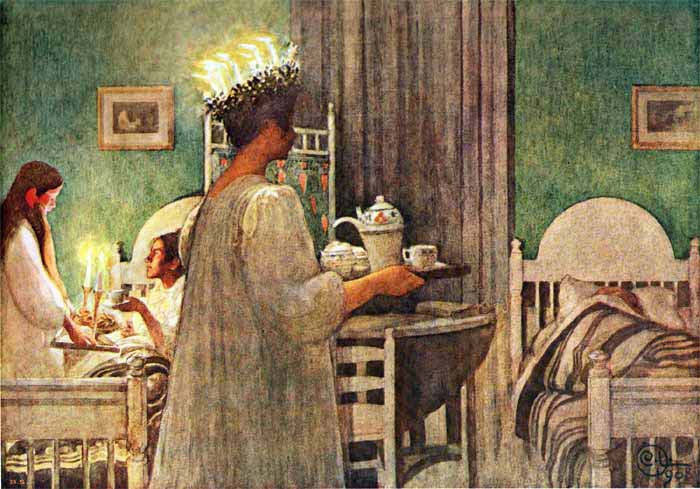
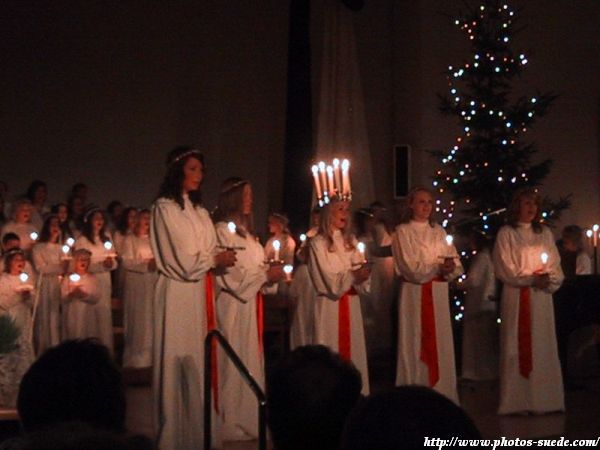
Never was this more true than today. Lucia day. At the darkest time of the year, when we all are drained by the black mornings and afternoons, Lucia pays us a visit. With candles in her hair and surrounded by her handmaidens and boys, Lucia shines light into the dark depths of our spirits. And slowly, slowly, the day awakens.

I love Lucia. Long live Lucia!

Lucia traditions are celbrated in Sweden, Norway, Denmark, Italy, Latvia, Estonia, Finland, Hungary, Malta, Bosnia, Bavaria, Croatia, Slovakia and St. Lucia, West Indies. But where does she come from and why is she one of the few Saint’s days celebrated in Sweden?

Santa Lucia is believed to have been a Sicilian saint who suffered a martyr’s death in Syracuse, Sicily around AD 310. She was seeking help for her mother’s long-term illness at the shrine of Saint Agnes, in her native Sicily, when an angel appeared to her in a dream beside the shrine. As a result of this, Lucy became a devout Christian and refused to compromise her virginity in marriage. Officials threatened to drag her off to a brothel if she did not renounce her Christian beliefs, but were unable to move her, even with a thousand men and fifty oxen pulling. So they stacked materials for a fire around her instead and set light to it, but she would not stop speaking. One of the soldiers stuck a spear through her throat to stop her, but to no effect. Soon afterwards, the Roman consulate in charge was hauled off to Rome on charges of theft from the state and beheaded. Lucia was able to die only when she was given the Christian sacrement.

The tradition of Santa Lucia is said to have been brough to Sweden via Italian merchants and the idea of lighting up the dark appealed so much that the tradition remained. The current tradition of having a white-dressed woman with candles in her hair appearing on the morning of the Lucia day started in the area around Lake Vänern in the late 18th century and spread slowly to other parts of the country during the 19th century.

The modern tradition of having public processions in the Swedish cities started in 1927 when a newspaper in Stockholm elected an official Lucia for Stockholm that year. The initiative was then followed around the country through the local press. Today most cities in Sweden appoint a Lucia every year. Schools elect a Lucia and her maids among the students. The regional Lucias will visit shopping malls, old people’s homes and churches, singing and handing out gingerbread.

So, it might be cold and dark outside, but inside it’s light. And the light is always stronger than the darkness. Keep your light lit, and you will never feel the darkness.

Slobbering and slurping Swedes


So, there were 7 of us. Three Englishmen, one Scot, one American, one Canadian and one South African. But, because we all live in Sweden, we all knew actually what to do.

You see, Sweden is usually associated with reserved behaviour and pleasant manners. However, on several occasions a year, such as tonight, this myth is busted wide open.

I am referring to a traditional get-together where where little food is actually eaten but alcohol consumption is high,where drinking songs are screeched out into the night sky and where audibly slurping and slobbering your food is considered proper etiquette. What event is this? The Swedish crayfish party.

The crayfish party is, as it sounds, a party where Swedes slurp and slobber crayfish. Now, eating crayfish is quite hard work. There isn’t much meat on these crustaceans and the little blighters can be quite tricky to crack open. This small amount of food, coupled with copious amounts of beer and snaps usually leads to a rowdy and boistrous atmosphere.

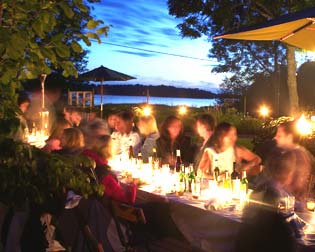
Crayfish parties are generally held during August, a tradition that started because crayfish harvesting in Sweden was, for most of the 20th century, legally limited to late summer. Dining is traditionally outdoors, but in practice the party is often driven indoors by bad weather. Customary party accessories are comical paper hats, paper tablecloths, paper lanterns (often depicting the Man in the Moon), and bibs.

And believe me, those bibs are needed…..

Lucia in the Mile High Club


After so many years in Sweden, I thought I’d seen every type of Lucia celebration there is to see. But, no, this week I experienced something completely new.

Santa Lucia is the saint who wakes Swedes up early in the morning of Dec 13th with candles in her hair. A tranquil tradition, Lucia literally brings the light to the dark country of Sweden.

This December 13th, I was flying back from New York. I, like all the other passengers, was dozing off in my chair when the sun started to slowly peek above the horizon. Then, slowly in the distance I started to hear quiet singing – Santa Lucia’s song. The singing got louder and I opened my eyes. And there she was, Lucia, walking the aisles with her maidens and disciples. All were carrying lights and lightening up the dimness of the cabin.

The cabin crew had dressed in the traditional white robes, and brought Lucia to the sleepy continental travellers, somewhere over the North Sea. Afterwards, they performed ‘We wish you a Merry Christmas’ and served the traditional ginger bisucuits and saffron buns.

Of all the Lucia celebrations I have seen, this has to be one of the most memorable.

Lucia is about lightening up the dark. This one was also about lightening our weary spirits.

How the Swedes contemplate death


It isn’t every day that you are faced with death. It is isn’t every day we contemplate our own mortality. And that’s probably a good thing. Imagine what life would be like if we thought about death all the time.

But today is an opportunity to do just that. Today is All Saints’ Eve. Well, not technically. All Saints’ Eve is actually October 31st. But in Sweden, they are practical and, since 1953, they round it up to the nearest weekend and call it a public holiday.

Legislation aside, today is the day in Sweden when people reflect over life, death and those who have passed away. It is a peaceful time. No fireworks or trick-or-treating here. It is a beautful time. No vampires or zombies populate the graveyards.

Instead, the graveyards twinkle with candle light. Relatives flock to the burial grounds and light candles and lanterns and place them by the graves of their loved ones. It is a miraculous sight to see the dark cemetries twinkling and glowing with bright white lights.

On Österlen in the rural south of Sweden, they have taken it a step further. A festival called ‘Österlen Lyser’ – Österlen shines – starts today. The dark villages and fields are lit up with candles, flares, lanterns and torches. People play lantern-illuminated night time boule by the edge of the sea. Choirs sing, windows glow and open bonfires celebrate this dark time of the year.

It isn’t every day that you are faced with death. Full respect to Halloween, but the less commercial Swedish approach provides a more reflective vehicle for us to contemplate our own mortality.