Concrete blocs


At first glance, Swedish politics can be a bit confusing. Unlike the UK, or the USA, there are 7 major parties all vying for the voters. You’d think with 7 parties, it’d be easy to decide who to vote for. But it isn’t. Apart from the far left and the far right, all the other parties seem very similar.

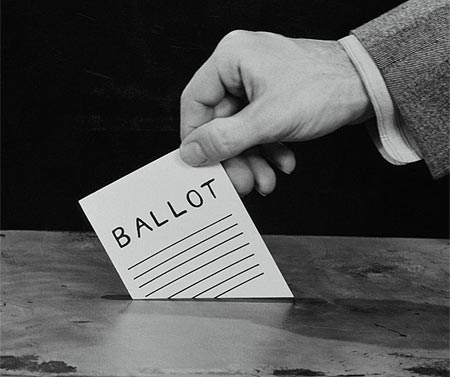
This time round, however, the parties have tried to make it easier for us by forming two blocs: the Alliance to the right, and the Red-Greens to the left. Two concrete blocs to choose from when we are standing in the polling station on September 19th.

Or at least that’s the theory. The trouble is that both blocs are making the same election promises. More money to pensioners. Better schools. Better healthcare. More jobs.

The forming of the two blocs has made the decision even more difficult, and in the end it may become simply a choice between the far left or the far right.

To get clarity, I decided to ask some Swedes what the main ideological difference is between the two blocs. And surprisingly, they couldn’t really tell me. Lots of people couldn’t tell any difference at all. Some people made a brave attempt to explain. I heard things such as,

‘one side wants to reduce tax by 1%, the other wants to increase tax by 1%
‘one side believes in benefits, the other in jobs’
‘one side wants to put more money than the other into the public sector’

None the clearer, I will have to chew over my options. Before election day, I’ll decide. Like millions of other voters. And a new government will be chosen.

And we’ll probably notice very little difference.
Who you gonna call?


In a few weeks, Sweden will be voting for a new government.

One Swedish phenomenon around election time is the ‘valstuga’. The ‘valstuga’ is a little rustic hut placed on squares, in parks, on road junctions, outside shopping centres and erected by one of the many political parties. In these little colourful huts you can find little representatives of the respective party that built the hut. Like in a fairy tale, you can go into the hut and talk to them and ask them questions about why they should get just your vote.

This brings the politicians closer to the people. It also brings the countryside, never very far away in the Swedish pyche, into the cities.

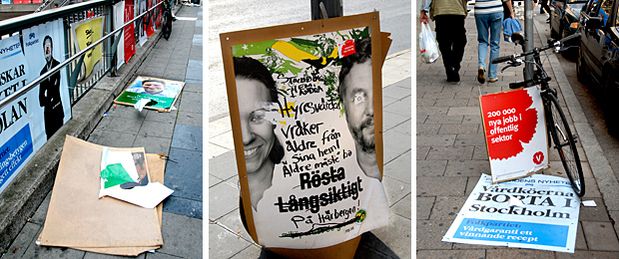
Another phenomena is the ‘valaffisch’, or election poster. As in many other countries, each party has campaign posters on which they promote their main message or their main personalities. In Sweden, these posters pop up overnight. Pasted on fences, walls, lamp posts, doors, walls, they paste the towns with election propaganda. Many posters don’t stay where they have been attached. The wind, or ill-willed opponents, often tear the posters down and throw them into the streets. This year, the environmental message is dominant. A greener Sweden. A more ‘climate smart’ industry. Reduce emissions. ‘We are your green voice’.

All I can think about it is the massive environmental impact of all this printed trash all over the city. Seems like a mixed message to me.

Who do you call to report the political parties for littering?

The decay of Sweden


An interesting article about Sweden in the UK’s Guardian on Sunday describes the decay of Sweden.

Uppsala’s Chief of Police, who was a rabid anti-sexism activist, but who has been found guilty of abusing and raping women and children is central to this portrait of Sweden. The journalist compares him to a character out of Henning Mankell or Stieg Larson’s crime books.

Sweden has an international and domestic image of itself as an equal, modern country with a strong tendency for concensus. According to the journalist, this image is way out of sinc with the Göran Linberg scandal.

He goes on to describe cut-backs in the health care system, political corruption, abuse of power, the assassination of Olof Palme, the submarine scandal, and sex scandals involving MP’s as examples of things that break through the Swedish facade and reflect a society crumbling from within.

To read the article, follow this link:

http://www.guardian.co.uk/world/2010/aug/01/goran-lindberg-sweden-crime-palme

Why can’t it rain?

Why are some people never satisfied?

Sweden is currently experiencing one of the longest and hottest heat waves in history. It has been a fabulous summer so far with temperatures not going below 25 degrees and tropical nights enveloping the country. But some people are complaining about it. It’s too hot. It’s unbearable. Why can’t it rain?

These are probably the same people who complained that it rained too much last summer, that is was too windy and too chilly. The same people who moaned that this past winter was too long and dark, too stormy and enough to drive you mad with the cold. The same people who whinged about spring being late and about the ground being too hard to plant anything. Or the autumn being too wet and too blustery.

Sometimes I think some people are only happy when they have something to moan about.

Think, if they could channel all that energy into something positive instead. Imagine what amazing things they might achieve.

And they’d probably be so busy achieving that they wouldn’t have any time left to complain.

Top 10 Stereotypes about Swedes


In my job as a trainer and lecturer in cultural difference, I have the privilege of travelling all over the world. On these trips, I often carry out informal surveys on the people I meet to try to understand their perceptions of Swedes. These are usually professional people, male and female, who have some experience of working with Swedes in one way or another. Some of them may have a Swedish boss, others may have Swedish colleagues, subordinates or customers. The majority of the people asked are European.

Very often the same perceptions come back, and it’s interesting that some of the old stereotypes of Swedes still hang in there.

Top 10 stereotypes about Swedes

1. Honest (‘can always trust a Swede’)
2. Unemotional (‘don’t know how they’re feeling or if they’re even interested’)
3. Exotic (‘cold, snow, ice, chilly’)
4. Sexually liberated (‘open-minded and have many partners’)
5. Independant (‘men and women in work place and they travel everywhere’)
6. Slow (‘at deciding things, getting things done and in discussions’)
7. Naive (‘easy to manipulate’)
8. Modern (‘adopt new technology, drive new cars, follow latest trends’)
9. Good-looking and health-conscious (still ‘blonde, blue-eyed, tall’)
10. Arrogant (‘think the Swedish way is the best and only way’)

So are these stereotypes useful? Sure, they are. Firstly, they help us understand how others see us and then we have a choice what we want to do about that. Do we want to act in ways which reinforce the stereotype or in ways which contradict it?

Stereotypes also give us a place to start in our communication with people from other cultures.

But there’s one crucial thing to remember. Every person we meet is an individual. They may be typical of their culture or not.

So we should always try to check our assumptions about each individual and not just presume they are their stereotype.

Freedom on Österlen

When visiting the Swedish countryside, tourists are often struck by the little red wooden houses with white corners, the endless forests of evergreen and the omnipresent lakes and rivers.

And quite rightly so. This kind of landscape is ‘typically Swedish’ and is often how Sweden is marketed abroad. As a rural, forested paradise. But there are regions of Sweden which look quite different.

Take Skåne, for example, a county on the southern-most tip of Sweden facing Germany, Poland and Denmark. I am fortunate enough to have a summer place in the eastern part of Skåne – an area called Österlen. This area is as far from the Swedish stereotype as you can get. A flat agricultural countryside of wide open spaces, wild sandy beaches, fruit orchards and endless fields of billowing crops. The stone houses are mostly plastered and painted white. Gardens burgeon with hollyhocks, roses and fragrant lavender.

Being on Österlen feels alive. The place is different. The pace is different.

For me, my mind becomes free when I am here. This is thanks to the lack of oppressive pine trees and the fact that you can see the horizon far, far away. This gives a special kind of light, a bright light that inspires all the artists that have settled here. And it inspires me.

On Österlen, anything seems possible. The people here are amongst the most entrepreneurial in Sweden. All those creative ideas that you have do not get stuck in the overhanging branches of the fir and the birch trees. Instead, ideas can soar into the blue sky and expand.

And they can go all the way over the horizon.

Social outcast


Today I felt like a social outcast.

Sitting in my office, the rooms echoed with their emptiness. Everyone had gone home even though it was only 3 o’clock. Only I sat there – working.

You see, tomorrow is Midsummer’s Eve, possibly the most important celebration in the Swedish calender. And though it isn’t officially a bank holiday, it is a day off.

But the interesting thing is how Swedes always take half a day off the day before a day off in order to prepare. No matter what the holiday. Midsummer being no exception. Only lonely souls and Neil No Friends are left rattling around empty offices like peas in an empty tin can.

But why do Swedes take half a day off before the holiday day? Is it because day care is closed? Is it because the food takes a long time to cook? Is it because people are travelling long distances? Maybe.

But I think the real reason is to do with alcohol. On Midsummer especially, the off-licenses are packed. The day before Midsummer is by far the busiest day of the year for them. This means that it takes such a long time to buy alcohol that they need a good few hours to queue.

Happy Midsummer, wherever you are.

The hottest place on the planet


I was at the Stockholm Jazz fest last night. A mixture of conceptual jazz, jazzfunk and acid jazz was on offer. The festival is held on Skeppsholmen, an island in the harbour. From this island, Stockholm really does show its best side, with its magical mixture of blue water, big sky and lush greenery. But last night, the weather gods were not on our side. Biting winds, black clouds and chilling rain dominated the evening, and festival visitors sat huddled around tables, swathed in blankets and drinking wine out of plastic cups.

In Sweden, when the summer comes, you sit outside even if the weather is appalling. You might need a fleecy jumper, a scarf and a blanket, but it’s the summer. And in the summer you go to festivals, sit outside and enjoy it.

The main artist of the night was rap star Missy Elliot. She bounced onto the stage at around 11.30 with gangster dancers and ‘hiphop hotboys’. The crowd jumped up and down hysterically – mostly to keep warm. And the heavens opened, and the rain came tumbling down.

Missy’s show was great, a real highlight. At one point she shouted in her microphone ‘Someone told me that Stockholm is the hottest place on the planet!!!’

That could only be said by someone who hadn’t sat there shivering for 5 hours.

When the politicians listen


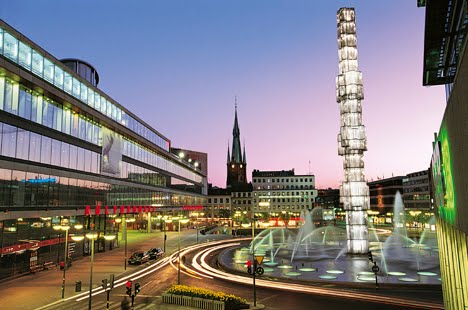
When students graduate from Sixth Form College in Sweden, they go on a procession around the city. Part of the route takes them through Sergels Torg, a heavily-trafficked square in the centre of Stockholm. Politicians decided at the weekend that the students would not be allowed to go through this area this year.

And there was a public outcry. The students started a Facebook group and demonstrated against the decision. And today, the decision was rescinded. The students can go through Sergels Torg as they have always done.

On the tv, they interviewed the 19-year old student who had started the protest. They asked him how he felt. He answered

‘I think this shows that politicians listen. And that we really can influence them and make a difference.’

What a fantastic lesson for a 19-year old boy to learn on the day of his graduation.

Why do Swedes drink so much?


‘Why do Swedes drink so much?’ was a question I recently received in an informal survey on Facebook.

And it’s a revealing question. A common stereotype that other nationalities have of Swedes is that they get rip-roaring drunk – frequently. And it’s easy to understand why this stereotype exists.

Anyone who’s been involved in a Swedish celebration of any kind has experienced the close presence of alcohol. At Midsummer, people get drunk. At crayfish parties, people get slaughtered. At Christmas, the snaps comes out and people end up hammered. In seaside destinations abroad, it’s not uncommon when you see a gang of drunken youngsters that they are Swedish. The beer you buy in pubs might be expensive but it is so strong it’ll make you cross-eyed after three glasses. So it’s easy to form the impression that Swedes are hardened drinkers.

In today’s newspaper, the results of a recent study were published. Swedish consumption of wine has increased 60% in the last ten years. This is easy to measure since all wine is purchased in Sweden through one company – the state-owned monopoly Systembolaget.

In the newspaper article, Swedish citizens were asked why they thought this increase has happened. In other words, why do Swedes drink so much?

Citizen 1: ‘Because we have adapted a more cosmopolitan drinking style. It is no longer shameful to have a glass of wine on a Tuesday after work.’

Citizen 2: ‘Because we are doing so well in Sweden. Everybody is better off so we can treat ourselves a little more.’

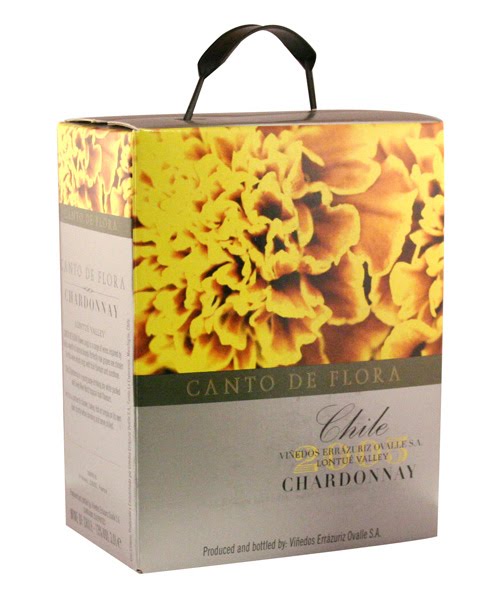
Citizen 3: ‘Because of the introduction of the ‘Bag in Box’ wine. It’s so easy to drink a lot without knowing how much you are drinking. It’s easier to tap a glass of wine than to open another bottle’

I’m sure it is to do with all of these things. Interestingly, I think we are witnessing a cultural rebellion. Society is shifting from the collective to the individual. The old days when the government controlled alcohol consumption for the sake of public health is disappearing. It is being replaced by individual responsibility and individual choice. And the initial reaction is overconsumption.

So, there are lots of reasons why Swedes drink so much.

Now my question is, why do the Brits drink even more?