A Swedish scandal


And so it happens again. A new Swedish exposé on tax evasion.

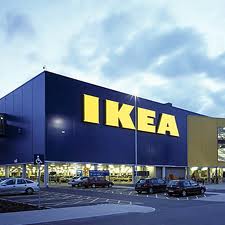
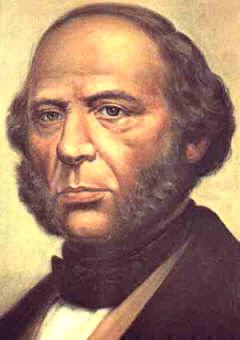
During the week, a well-known documentary series has investigated Ingemar Kamprad, the founder of IKEA. Consistently denying over the years that he has any involvement with IKEA any more, it was revealed that he runs a trust in Lichenstein which, in turn, ‘owns’ the rights to everything IKEA. It was explained that IKEA is run as a kind of franchise system – for every item sold in an IKEA store 3% in ‘royalties’ go tax free to Ingemar Kamprad’s trust. 3% on everything from sofas, to meatballs, to candles. The amount on income has reached something like 100,000,000,000. Now that’s a lot of money.

But the documentary focused on how much tax should Ingemar Kamprad pay on this income. He was wildly accused of tax evasion, tax planning and tax manipulation. He was accused of profiting on the Swedish brand and returning nothing to the system.

This is all very interesting from a cultural perspective. What causes scandal in a society says a lot about the norms and values of the country. In the UK, scandal always revolves around sex. In the USA scandal is often related to misuse of power. And in Sweden, it’s frequently about money and tax. In a country that sees itself as heavily taxed, it is however deemed scandalous when people don’t pay it. It feels like everything from not paying a tv license, to using a government credit card to buy a Toblerone, to tax evasion on a grand scale is given the same room in the media.

What the documentary didn’t take up, however, is the fact that since Ingemar Kamprad doesn’t live in Sweden and hasn’t earned these millions in Sweden, he isn’t liable to pay the tax. For example, I live and work in Sweden. I pay my tax in Sweden. Should I also pay tax in the UK, even when I don’t live there?

The documentary also forgot to mention the amount of job opportunities that IKEA creates in Sweden. Thousands. And all of those people pay income tax. IKEA pays VAT to the governent, pays employment tax, profit tax and corporate tax. All income to the Swedish government.

If IKEA didn’t exist at all, there’d probably be higher unemployment in Sweden. And those of us with jobs would have to pay more tax to support the burgeoning numbers of unemployed.

Now I know it’s not all black and white, but it is fun to play with perspectives. One thing’s for sure though, Ingemar Kamprad has done more for Sweden and the Swedish brand than any of these state-employed documentary film-makers ever will.

New Swedish words


In January, Sweden’s leading newspaper looks back at the year that’s been and selects all the new words that have been created. Swedish media are really good at preserving the Swedish language and creating new words, and this is an important function for all small languages. The varacious apitite of English is slowly devouring small languages around the world.

Some of the new words that came up in 2010:

Sosseväskan – Socialist Designer Handbag
Vabfebruari – February month when most parents stay home from work with sick kids
Köttklister – Glue that holds together bits of meat
Vulkanflyktning – people trapped abroad after the volcanic eruption on Iceland
Playa – to watch a program on the internet that you missed when it was broadcast on the tv
Grogghaggor – Booze bitches – relating to the Sex and the City gang (and the like)
70 percenter – a person who waits to the final week of the sales
Pinjemun – to eat a bad pine kernel and get a bad taste in the mouth for weeks
Fritzla – to hide something or somebody very successfully
Hipsterbuk – the fat that hangs over the top of too-low-cut jeans
Kaffeflicka – a woman who is invited to gentlemen’s dinners to drink coffee (revealed in a scandalous book about the king)

The land of invention


Right now, I’m in an intense period of travelling for work. Backwards and forwards I walk from home to the airport train, out to Arlanda airport and off.

Picture this. Minus 20 temperatures. Snow tumbling down. Pathways covered in deep layers of snow, rutted and ribbed from pedestrians and pushchairs.

There I go. Head, neck, hands, legs, feet freezing because I’m only wearing a thinnish suit under my coat. Behind me, I pull a suitcase. A suitcase on wheels. I drag it, with much effort, through the piles of snow. It gets stuck in a snow-dune. With a wrench, I jerk the suitcase out and continue, head down into the wind and towards the station. I curse the fact that the pavement isn’t ploughed, and that the snow just keeps falling, falling, falling.

Sweden is a country that has fostered many inventors. For having a relatively small population, a very large amount of inventions have come out of this country. The safety match, dynamite, the blowtorch, the AGA stove, the safety belt, the zip, the ballbearing, the pacemaker and dialysis machines. All Swedish inventions.

Now, you’d think in such a small country of big brains, someone would have invented a suitcase on skis wouldn’t you? So many problems would be avoided.

I would definitely buy one.

Curling parents


Last night, on Swedish television, a new programme aired. Called ‘Young and Spoiled’, it is a reality show about a group of young people who are very spoiled by their parents. The programme could easily have been called ‘Spoilt Rotten’. These ‘kids’ are aged between 18 & 24, and have never worked a day in their lives. They are put into a house together to see how they manage fundamentals such as cooking, cleaning and getting up to go to work. Of course, they don’t. And therein lies the entertainment.

I was fascinated less by the kids and more by the parents. Misguided adults who don’t see that they are doing their offspring no favours in life by pandering to their every whim.

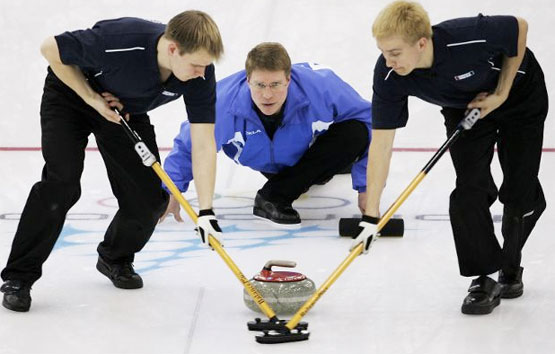
In Swedish, because it is so common, there is a word for these type of parents. They are known as ‘curling parents’ – a reference to the Olympic sport of ice curling. Just like in the icy sport, curling parents smooth the way for their children. They sweep away any obstacles and make life easier. They think they are taking their role as a parent seriously. Life is so difficult anyway that they should try to cushion the blows for their,let’s face it, grown up children. But what they’re really doing is robbing their children of the chance to develop essential life skills and feel a sense of personal responsibility and achievement.

As far as I know, there is no equivalent word in English for ‘curling parents’.

This must be because they don’t exist in the UK. Right?

How the Swedes contemplate death


It isn’t every day that you are faced with death. It is isn’t every day we contemplate our own mortality. And that’s probably a good thing. Imagine what life would be like if we thought about death all the time.

But today is an opportunity to do just that. Today is All Saints’ Eve. Well, not technically. All Saints’ Eve is actually October 31st. But in Sweden, they are practical and, since 1953, they round it up to the nearest weekend and call it a public holiday.

Legislation aside, today is the day in Sweden when people reflect over life, death and those who have passed away. It is a peaceful time. No fireworks or trick-or-treating here. It is a beautful time. No vampires or zombies populate the graveyards.

Instead, the graveyards twinkle with candle light. Relatives flock to the burial grounds and light candles and lanterns and place them by the graves of their loved ones. It is a miraculous sight to see the dark cemetries twinkling and glowing with bright white lights.

On Österlen in the rural south of Sweden, they have taken it a step further. A festival called ‘Österlen Lyser’ – Österlen shines – starts today. The dark villages and fields are lit up with candles, flares, lanterns and torches. People play lantern-illuminated night time boule by the edge of the sea. Choirs sing, windows glow and open bonfires celebrate this dark time of the year.

It isn’t every day that you are faced with death. Full respect to Halloween, but the less commercial Swedish approach provides a more reflective vehicle for us to contemplate our own mortality.

Exactly how corrupt is Sweden?


Evil-doings and corruption is the flavour of the month in the Swedish press.

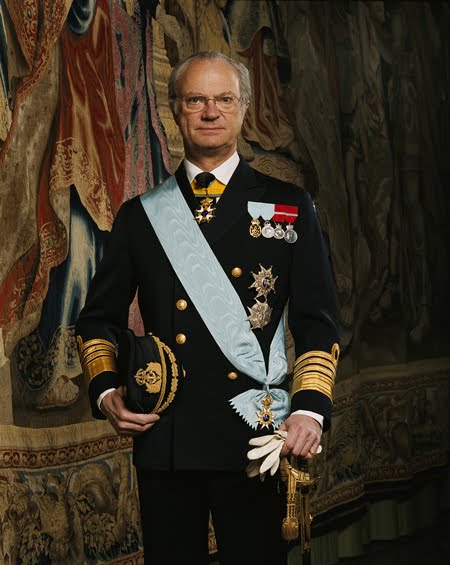
First, we were informed about the deep run corruption relating to public tenders in Gothenburg. Next, we were presented with MPs who had been invited on paid trips by private corporations or given free tickets to go to the Stockholm Open. Yesterday, a new book came out exposing the king’s alleged naughty-doings 20 years ago – naughty-doings that involved gambling, drinking and escort girls.

But just how corrupt is Sweden, in comparison to other countries? Well, first you have to define what corruption is. Is it misuse of power, or public funds, or position? Is it lying to gain public office? Is it prioritising personal progress? Different countries may perceive it differently.

Transparency International(TI) is an organisation that produces the annual Corruption Perceptions Index (CPI). They define corruption as the abuse of entrusted power for private gain. This definition encompasses corrupt practices in both the public and private sectors. The CPI is an index which allows us to compare how ‘corrupt’ countries are.

In the 2010 index, Sweden comes out as the fourth least-corrupt country in the world, a joint position held with Finland. The least corrupt countries are Denmark, New Zealand and Singapore. See http://www.transparency.org

It’s interesting that corruption is what the Swedish media chooses to report at the moment. A quick look around Europe shows a similar phenomenon – in times of recession and economic depression, issues of corruption become more important. When the people are suffering, their tolerance levels fall. The UK’s reporting of the many MP’s who used public funds for private investments is a classic example.

Sweden is in a recession at the moment. And when this happens, people start questioning the behaviours and standards of others. The King’s position becomes a target for public interest. The privileges that leading politicians have starts to be questioned.

As the fourth least-corrupt country in the world, Sweden doesn’t really have much to worry about when compared internationally.

I am sure that once the recession is over, what the king did in the 1980’s will seem irrelevant and unimportant.

A die hard Swedish stereotype


The problem with stereotypes is that they are often out of date and frozen in time. The British stereotype of a polite, thin, uptight man with a bowler hat and brolly still prevails,even though most British men stopped dressing that generations ago.

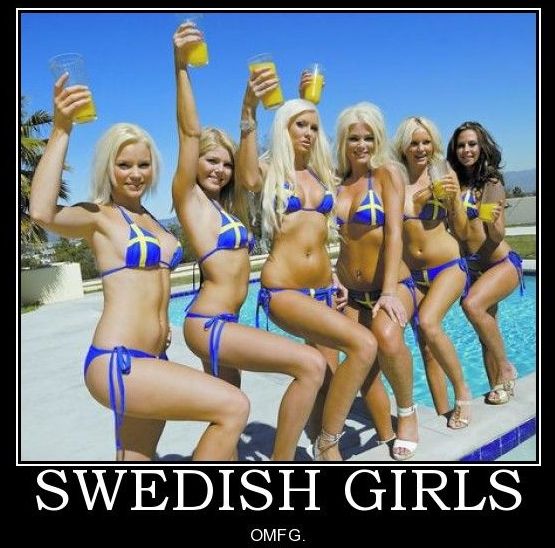
When I googled ‘Sweden pictures’ today, the picture above came up first. It seems like the stereotype of Swedish women as blonde, promiscuous bimbos is still alive and kicking. This stereotype has rooted itself firmly in the international psyche thanks to fleshy films of the 1960’s.

That was 50 years ago and says a lot about other cultures’ prudish attitudes to sex and nudity.

It saddens me that we haven’t moved on since then.

Cultural differences in the laundry


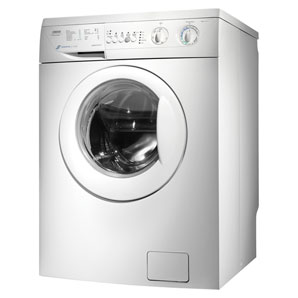
Even though I curse laundry day, I am secretly very thankful of the Swedish solution to washing our smalls.

In the UK, if you don’t have your own washing machine, then you have to trudge down to the nearest laundrette, loaded like a mule with heavy bags of dirty washing, clutching a handful of pound coins and hoping that there aren’t masses of people queueing.

In Sweden, most apartment blocks have their own laundry room. Usually in the cellar or the attic, you book your time on a board on the wall and then it’s just to carry your dirty clothes there when it’s your turn. You don’t even have to take your flipflops off. And it’s free.

And even though laundry day is a drag, you can’t deny the convenience of it compared to the UK.

Nowadays, many people also have their own washer in their apartment or house of course. Some friends of mine were recently planning a refurbishment and were trying to decide where to put the washing machine.

‘Why not put it in the kitchen?’ I said ‘there’s lots of space there’.

You see, in the UK most people have their washing machines in the kitchen. What’s the problem?

‘Uggh! No!’ they whinced. ‘Doing the laundry where you cook food, that’s disgusting!’

In Sweden, people usually put their washing machine in their bathroom.

So, can somebody please explain to me what’s so pleasant about doing the laundry where you crap???!!

A deeply disturbing thing


I am disturbed. Very disturbed. I sit at my desk and should start working. My mind drifts. I can’t focus.

A deeply disturbing thing has happened in Sweden – something that threatens the foundation of society and turns the idea of Swedish tolerance and egalitarianism on it head.

On Election Níght last night it became clear that the Swedish Democrats, a national socialistic, racist party, have been elected into parliament. With just under 6% of the vote (360,000 votes), they have 20 seats.

But that’s not the worst of it. These 20 seats give them the balance of power, since the current government were re-elected, but with a minority.

This is a shock to the other 94% of Swedes who didn’t vote for them. People mention the right-wing gales that are whistling over Europe and that have now reached Sweden. They talk about the xenophobic disease which has infected Swedish politics.

The Prime Minister last night said he will never cooperate with the national socialists. Can we trust him to keep his word when his power is what’s at stake?

There is talk of solving the problem through cooperation across the blocs in order to elbow out the Swedish Democrats and render them impotent. It will be interesting to see what happens.

Can the different parties put aside their prestige and return to their shared basic assumptions about life and people? That we are all equal. Can they work together to uphold democracy as the majority see it?

Today, Sweden became a colder place.

It’s now up to our elected politicians to turn up the heat on the racists that have wormed their way into the Houses of Parliament.

Election Day


And so it’s election day.

All the parties have been campaigning up to the last minute, trying to sway the thousands of voters who still haven’t made up their minds. By the lake today, one party, the currently-reigning Moderates, were offering coffee and cinnamon buns to passers-by in exchange for a little chat about the election.

The tv has been full of election issues. The papers have been packed with it. The streets have been full of campaign workers and, for the first time, the parties have been knocking on doors. Apparently, never before has so much focus been placed on the election and on increasing election turnout.

This interested me. So I checked the IFES Election Guide to see how parliamentary election turnout compares between different countries.

And, to be honest, Sweden does really well already.

In the last election, the election turnout in Sweden was 81.99%

Compare that figure to the UK (65.52%), Switzerland (49%), Czech Republic (39.12%) and Hungary (30.94%).

The best countries are Belgium (91.80%), Malta (93.30%) and, wait for it, Luxembourg (100%!!!)

Of all the 70 countries in the list, only 11 have a higher election turnout than Sweden, many of them only very slightly. That’s not a bad statistic, which reflects that Swedes, in general, take their democratic rights seriously.

In Sweden, voting is not only a right. It is a duty.