Congratulations to Swedish Påls

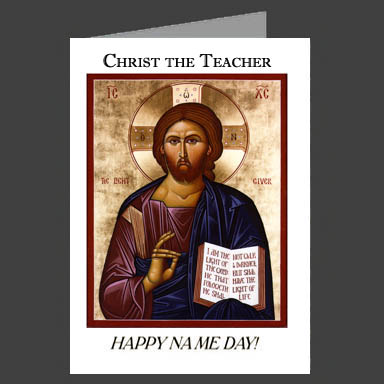
If you’re name’s Paul, or Pål, then today you may well be a very happy man. In Sweden, as in many other countries, each day is associated with a name and the person who has that name is celebrated. It’s called a Name’s Day and today is Paul.

To some Swedes, the Name’s Day tradition is irrelevant but to others it’s still celebrated with cake and even presents.

What I wondered is where the Name’s Day tradition came from. And after some research, I found the answer. It seems like the custom originated with the Greek Orthodox and Roman Catholic calendars of saints, where believers, who were named after a particular saint, would celebrate that saint’s feast day.

During the 18th century in Sweden, names used by the royal family were introduced to the Swedish list of name days, followed by other common names. Then, in 1901 a comprehensive modernization was made to make the list up to date with the names that were current at the time. The Royal Swedish Academy of Sciences had a monopoly on calender production, strangely. And since the Name’s Days were published on calenders, they had a monopoly on them too. However, this monopoly expired in 1972 and various competing Name’s Day lists were released into society.

In 1986 a consensus of a new single list with three names on each day was reached, and then reduced to two names on each day. However, people weren’t happy. This prompted the Swedish Academy to create the list that is used today.

So, what about us foreigners whose names don’t appear on this list? Well, the Centre for Multiculturalism produces their own calender every year with other names on. This is to provide a counter balance to the very Swedish official name list. According to their Multicultural calender, today is Ester’s day. Ester is Persian and means star. So, congratulations to Ester. Yesterday was Estelle’s day and tomorrow is Evren (Turkish for ‘universe’).

And my name then? Neil?

Well, Neil doesn’t appear on the Swedish list or on the Multicultural list. After further scrutiny, I think I’ll have to opt for October 8th. This is when Nils has his day. Neil/Nils, Neil/Nils, Neil/Nils. Yeah, that should work.

That’d be ok wouldn’t it?

Swedish Social Democracy in Crisis


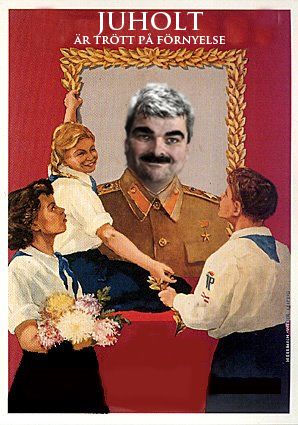
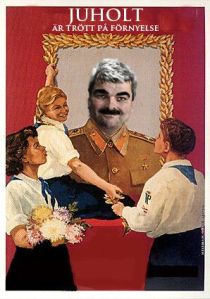
At 15.00 today, Håkan Juholt resigned.

He was the leader of Sweden’s largest and oldest political party – SAP – Swedish Social Democratic Workers’ Party, currently in opposition. After a series of scandals, he decided today that it was too much. With his resigning, he has become historic as the Social Democratic party leader that has sat the shortest period. He sat only for 10 months, but in the end his own behaviour, the general public’s lack of support and the media’s witch hunt became too much for him.

Not only is his resignation historic but also symptomatic of the biggest crisis that the party has ever gone through. The SAP is losing voters faster than the Costa Concordia cruise liner lost its captain. And this reduction in popularity begs a question – is the SAP a party that can understand and represent the needs of modern-day Swedes, or are they stuck in the past? Are they resting on past glories? Are they, in other words, irrelevant?

But first back to origins – how did the SAP party begin? Well, founded in 1889, the party sprang out of the well-organized working class and peasant movements which promoted working class emancipation, temperance, religious observance and modesty. These movements believed in human equality and protested against the unequal spread of wealth and privelege. All of this in a backdrop of a Sweden divided by class and with wide-spread poverty, starvation and disease. These movements were so strong that they successfully penetrated the parliament early on and paved the way for Swedish electoral politics. The Social Democratic Party’s position has a theoretical base within Marxistic socialism: “from each according to his ability, to each according to his need.”

And their ideology has been very successful in Sweden through the last 125 years. The party has held power of office for a majority of terms after its founding. This means that the ideology and policies of SAP have had strong influence on Swedish politics – even on those of the opposing parties. The current ruling government, the rightwing Moderate party, believe in socialised healthcare, free education for all and supportive benefits for parents, for the unemployed and the sick. Compared to other right-wing parties around the world, the Swedish right-wing appear like humanistic pussy cats.

But what about today then? Has the SAP run its course? Are their core questions relevant for a modern Sweden? Is there no longer inequality to challenge? Is there no social injustice worth fighting against? Is there no class divide between the privileged and the poor?

Of course there is.

Like most developed countries in Europe, Sweden is a very segregated society – segregated by education, money and ethnicity.

It might very well be, however, that the majority of Swedish voters simply don’t care about this anymore. Not enough to finance bridging this divide with increased taxes anyway. Very many Swedes have a good standard of living – comfortable. Nice home, good job, foreign holidays twice a year, modern clothes, gym card, summer house, flat screen tv. Sweden today is not that country of 1889 riddled with poverty, starvation and disease.

Whether or not Swedes see the party as irrelevant remains to be seen. First the party must elect a new leader. To succeed, this leader must repair the damage experienced by the party and convince the electorate that the party is modern, forward-thinking and progressive. He or she must convince the people that the social questions they believe in are still important today. The people must be convinced enough to move out of their comfort zones and believe that voting for the SAP can make a difference.

In 2014, during the next general election, we’ll see if he or she has succeeded.

An epiphany in Sweden

In Sweden, like in many other countries around the world, the Christmas celebrations are not over yet. This Friday, January 6th 2012, is also a national holiday.

But why?

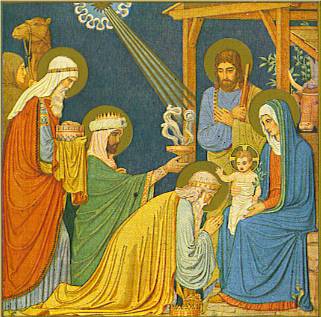
Well, first of all January the 6th commemorates ‘Epiphany’ – meaning revelation, manifestation. This biblical occasion was when the three Kings visited the baby Jesus and declared him to be the son of God. Most of us know this story, they wandered near and far, following yonder star. And it’s not at all surprising that this is celebrated in predominantly religious countries.

But why is it still celebrated in Sweden? It’s a classic example of how cultures develop, how our modern-day traditions grow out of something historical. As time goes on, we still maintain the tradition – but we forget the reason why we do it.

I would venture to say that most Swedes don’t even know why January 6th is a holiday.

Most Swedes are not religious, and ironically, many don’t even like Kings.

For most Swedes, January 6th is just another day off work after all the other Christmas and New Year days off. And instead of bringing gifts, as the three kings did, it’s more often about returning unwelcome Christmas gifts or trawling the bargains at the post-Christmas sales.

I question the value of continuing to have 6 January as a national holiday in Sweden. Since very few know the reason, and not many are religious, wouldn’t it be better to ditch this holiday and replace it with a day off when we all most need it? Like, in the darkest depths of the year when we’re all tried and in need of a break -sometime in November?

Now that would be an epihpany!

Let the light in – Lucia morning in Sweden

A Chinese proverb says this,

‘It’s better to light a candle than to curse the darkness’.

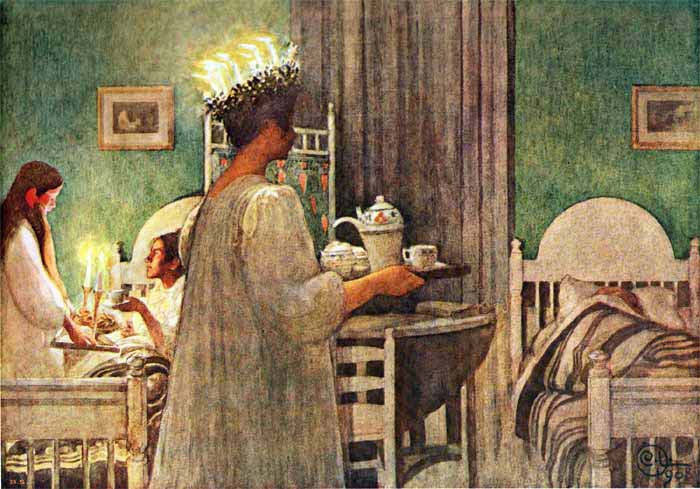
Never was this more true than today. Lucia day. At the darkest time of the year, when we all are drained by the black mornings and afternoons, Lucia pays us a visit. With candles in her hair and surrounded by her handmaidens and boys, Lucia shines light into the dark depths of our spirits. And slowly, slowly, the day awakens.

I love Lucia. Long live Lucia!

Lucia traditions are celbrated in Sweden, Norway, Denmark, Italy, Latvia, Estonia, Finland, Hungary, Malta, Bosnia, Bavaria, Croatia, Slovakia and St. Lucia, West Indies. But where does she come from and why is she one of the few Saint’s days celebrated in Sweden?

Santa Lucia is believed to have been a Sicilian saint who suffered a martyr’s death in Syracuse, Sicily around AD 310. She was seeking help for her mother’s long-term illness at the shrine of Saint Agnes, in her native Sicily, when an angel appeared to her in a dream beside the shrine. As a result of this, Lucy became a devout Christian and refused to compromise her virginity in marriage. Officials threatened to drag her off to a brothel if she did not renounce her Christian beliefs, but were unable to move her, even with a thousand men and fifty oxen pulling. So they stacked materials for a fire around her instead and set light to it, but she would not stop speaking. One of the soldiers stuck a spear through her throat to stop her, but to no effect. Soon afterwards, the Roman consulate in charge was hauled off to Rome on charges of theft from the state and beheaded. Lucia was able to die only when she was given the Christian sacrement.

The tradition of Santa Lucia is said to have been brough to Sweden via Italian merchants and the idea of lighting up the dark appealed so much that the tradition remained. The current tradition of having a white-dressed woman with candles in her hair appearing on the morning of the Lucia day started in the area around Lake Vänern in the late 18th century and spread slowly to other parts of the country during the 19th century.

The modern tradition of having public processions in the Swedish cities started in 1927 when a newspaper in Stockholm elected an official Lucia for Stockholm that year. The initiative was then followed around the country through the local press. Today most cities in Sweden appoint a Lucia every year. Schools elect a Lucia and her maids among the students. The regional Lucias will visit shopping malls, old people’s homes and churches, singing and handing out gingerbread.

So, it might be cold and dark outside, but inside it’s light. And the light is always stronger than the darkness. Keep your light lit, and you will never feel the darkness.

Animal rights

Out in the world, a prevailing stereotype of the Swedes is that they are liberal and sexually liberated. But even sexual freedoms can be too extreme. For example, zoophilia, or bestiality, has been legal in Sweden since 1944. It is also, by the way, legal in Denmark and Finland.

This is shocking information. How can a country like Sweden that fights for the rights of individual expression and rights allow such hanous actions to take place? Is bestiality allowed because Swedes don’t believe it possible? Current laws protect the animal from cruelty, but as long as it is not injured, then sexual activity is allowed.

But now, at last, a new law is being proposed. This new law would solely encompass the sexual abuse of animals for the perpetrator’s own pleasure. I am speechless that it has taken so long to affect a change. Outraged that it occurs in the first place. Thankful that the law is changing. Animals share this planet with us and they are subjugated under our will. They are without voices. This law will give them more rights, but they still do not have a voice. It is up to all of us to respect animals and to not abuse the power we have over these helpless beings.

Shame on you Sweden that it’s taken until 2011 for you to realize this.

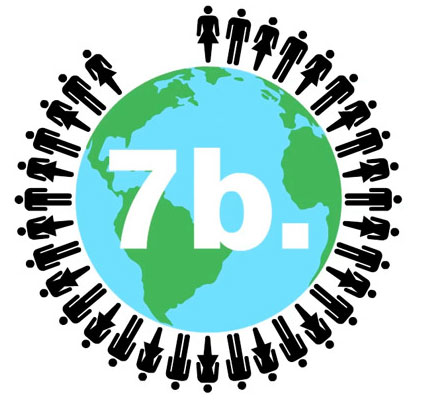
The 7 billionth citizen of the world is not Swedish

In the Phillipines, a little baby was born. But Danica Camacho isn’t any ordinary baby.

This innocent child has become a symbol for what Swedish Professor in World Health Hans Rosling is calling ‘the beginning of the end’. Although impossible to accurately calculate, Danico has symbolically been labelled the 7 000 000 000th citizen of Earth. Today, 31 October 2011, the population of the planet has broken the 7 billion threshold.

Why does Hans Rosling call it the ‘beginning of the end’? According to him, the number of births in the world is decreasing. And with an aging population, it’s only a question of time before the imbalance in generations becomes unsustainable.

And how does this relate to Sweden?

Although an aging population might be a problem in Sweden itself, overpopulation hardly is. According to the UN World Prospects Report, Sweden is one of the countries in the world that has the lowest number of citizens per square kilometer. Sweden has 21 citizens per square kilometer, on average. Compare that to the 18,534 citizens per square kilometer in China, or 16,923 in Monaco. The country with the most space is, as you might guess, Greenland, with 0,026 people per square kilometer. This is closely followed by the remote Falkland Islands and then Mongolia.

These statistics are naturally an avergae of the whole country, and most populations are intensified around their major cities. The most densely populated city is where little Danica Camacho was born today – the Phillipine capital of Manila where staggering 43,079 people occupy one square kilometer. In Europe, the most dense city is the rather obscure French town of Levellois-Perret. Here, 26,126 people squeeze together in one kilometer. And Stockholm’s population density? A measly 3597 people per kilometer.

So next time I’m on the underground and somebody complains about the number of people, or sitting on a bus, they whinge about the annoying amount of traffic, you know what I’m going to say?

‘Try living in Manila, then you’ll really have something to complain about.’

Reality check in Söderköping

Visiting the small town of Söderköping in Östergötland seemed like the perfect romantic and quiet weekend. But, boy, were we wrong.

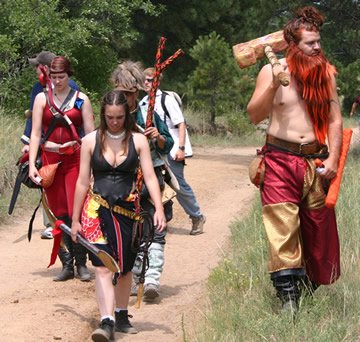
Arriving in the town was initially unspectacular. We parked the car and walked towards the hotel. But on the streets, we noticed something different. All the people of Söderköping were wearing unusual clothes – long cloaks and capes, pointy hats with bells on, baggy linen trousers. They carried staffs and walking sticks. Some of the men had long beards and the women had shawls wrapped around their heads and shoulders. What was this? Is this small town, 2 hours south of Stockholm, stuck in time? It was like walking into a scene from Harry Potter or Lord of the Rings. There goes Gandalf. Oh look, it’s Dumbeldore.

It didn’t take long for us to realize that this particular weekend Söderköping was hosting a Medieval festival. As night fell over the town, torches were lit to mark the dark paths and bonfires were set ablaze. The local park was turned into a muddy arena with jousting, live music and fire dancers. The place would, however, have looked more authentic without the big ‘Sponsored by Swedbank’ sign. This arena was packed with Swedes in their costumes, many really getting into the role. Many of these people were probably what, in Swedish, is called a ‘lajvare’.

‘Lajvare’s are the Swedish equivalent to the English ‘Larpies’ – people who participate in a role-play and physically dress up and act out their character’s actions. These live-action role-playing games (LARPs)are not a new phenomenon, dating back to the late 70’s and gaining popularity through the 80’s and 90’s. LARPs range in size from small private events lasting a few hours to huge public events with thousands of players lasting for days, rather like the one in Söderköping.

Culturally, this phenomena is very intriguing. Traditionally entertainment has meant spectating but participants in a LARP cast off the role of passive observer, and take on new roles that are often outside of their daily life and contrary to their culture. But, why? What’s the attraction?

Is the daily drudge of life in Sweden so tedious that ‘larping’ is the best solution? For some, I guess.

But for me, well, I enjoyed the night in the small Medieval town of Söderköping but I was happy to climb into the BMW, switch on my Ipod and head back to the big city.

Tyranny of the Minority


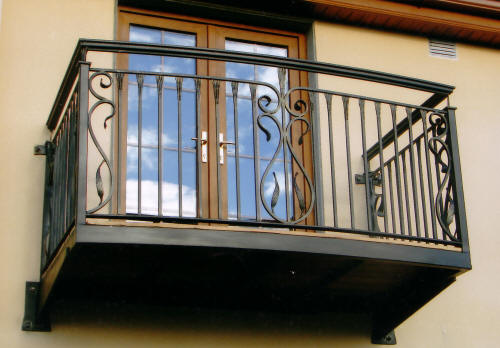
Last night, I participated in a Tenants’ Association meeting. All the owners of the flats were gathering together to vote on whether or not to build balconies on one of the buildings. Now, I happen to live in said building, so I was very interested, and turned up with my voting card in hand and smile on my face at the agreed time.

At best, these kinds of meetings give you an insight into Swedish democracy. At worst, they drag on and on and on with everybody giving their point of view, often irrelevant. Unfortunately, last night’s meeting was of this latter kind. Two and a half hours of discussing the merits of balcony building unfolded before we were able to whip out our cards and vote. I was desparate. I was tired and frustrated. But democracy takes time.

After the long drawn-out discussions, we finally voted. I learned that, in order for one side to ‘win’, there must be a 2/3 or more majority. This meant we needed 63 votes to win. The cards went up, the counting began. And the result?

59 votes for, 20 votes against and several abstentions.

Although there was a clear majority for the building of balconies, we lost. 20 people could prevent it from happening. Now, is this democracy? I wonder.

This is what’s known as Tyranny of the Minority – where a minority of people can block the decision for the majority. It’s very common in Swedish decision and policy making. But is it democracy?

It certainly didn’t feel like it last night.

The most liveable city in the North

In an unusual burst of self-confidence, a few years ago, Stockholm branded itself as the ‘Capital of Scandinavia’. One could expect this to mean that of the Scandinavian and Nordic cities, Stockholm is the most sought-after and popular to live in.

But this, apparently, is not the case.

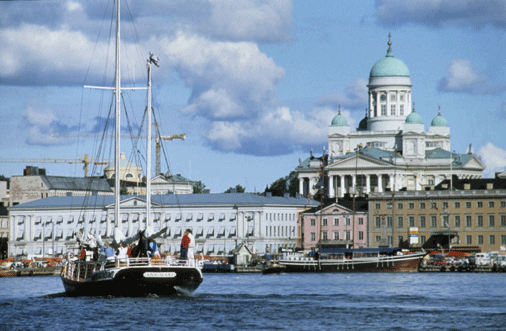
Of all the Nordic cities in the region, the city that people mostly want to live in Helsinki.

In a recent Global Liveability Survey of 140 cities, the Finnish capital comes out as number 7 on the list. The survey looks at criteria such as health care, environment and education.

Melbourne is in the number one position, then Vienna, then Vancouver. The first American citiy to appear on the list is Honolulu – in place 26.

No snoozin’ with ‘snus’ in


Cultural researchers say that you can understand a culture by looking at the products of that culture. For example, the way the houses look, what kind of clothes people wear or the food they eat.

One cultural product to come out of Sweden is a substance called ‘snus’. ‘Snus’ is brown, sticky and can cover your teeth in discoloured drool. Sound attractive? Then read on.

‘Snus’ is a moist tobacco powder, made in Sweden since the 19th century. ‘Snusers’ squeeze the moist substance into pellets or use pre-packed sachets that look like miniature teabags, placing them under their upper lip for up to an hour. In best case, you don’t notice that the ‘snus’ is in the user’s mouth. In worst case, the ‘snuser’ has a very swollen upper lip giving them a slightly retarded look. But where’s the kick? Well, absorbed into the bloodstream through the lip, ‘snus’ has a softer but longer nicotine buzz than cigarettes. No snoozin’ with ‘snus’ in.

Due to health reasons, within the EU, the sale of ‘snus’ is banned, which is odd since cigarettes and other forms of tobacco aren’t. However, in the rest of the world, ‘snus’ is proving a hit, with sales booming in the US and Canada. North Americans are increasingly buying ‘snus’ as a way either to quit or to beat smoking bans.

Nobody knows when the use of tobacco as a stimulant started but Europeans first came into contact with it during the 1400’s when Christopher Columbus landed on Haiti. The tobacco plant was quickly exported to Europe and put into products such as snuff, chewing tobacco and cigarettes.

It was believed at that time that tobacco cured cancer and syphilis.

But users of ‘snus’ don’t have to worry about the latter. ‘Snus’ has a pungent smell making the user’s breath very strong. The chances of catching a sexually transmitted disease are limited when nobody will even kiss you.