The illusion of the collective Swede

welfare state

Is the notion of the collective Swede just an illusion?

Sweden is famous around the world for its welfare state – the system of tax that provides for the country’s citizens from the cradle to the grave. This system was introduced by politicians from Sweden’s social democratic history and I think that it’s great that it exists. Many assume that the Welfare state is the product of collective thinking and solidarity. Maybe it is. But I’d like to offer an alternative perspective.  

In collective-oriented societies, individuals operate within the context of what is best for the group, even if that means surpressing their individual needs. In exchange for this, they receive loyalty and support from the other members of the group.  

In Sweden, it would be easy to look at the welfare state and relate it to the above definition of a collective. In Sweden, citizens comply to the tax laws and in exchange they are taken care of in times of need.

But let’s look at the welfare state through the lens of individualism instead. According to research, Swedes are amongt the most individualistic countries in the world. Individualistic from the perspective of self-development, self-expression, right to live life the way I want to, self actualization,, freedom to make individual choices about my life. Amongst Swedes, it is very important to have individual choice, to the point that some people feel violated if they experience another person has in some way limited their choices, however minor that might seem.

 So what about the Welfare state? In Sweden, the strong individualistic drive of the citizens created a system in which they don’t have to take responsibility for the group. Once tax is paid, the state takes care of the unemployed, the sick, the elderly so the citizens don’t have to, and consequently people can go about their lives fulfilling their individual dreams and satisfying their individual needs.

When you look at it this way, Sweden’s Welfare state is not an exercise in social solidarity. It’s an exercise in pure individualism.

So is the notion of the collective Swede just an illusion?
No religion please – we’re Swedish

svantesson_1081428c

When comparing religious/traditional values with secular/non-traditional values, Sweden always comes out of research as amongst the most secular, non-traditional countries in the world. The low voting frequency in the recent Church elections reflects this. Basically, many people in Sweden don’t want religion to have anything to do with politics and Sweden is one of the few countries in the world that has separated religion and politics from each other.

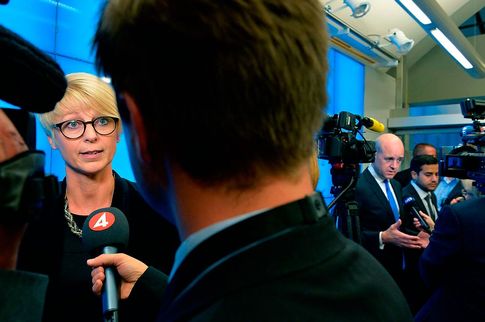
This is clearly shown in the latest outrage to appear on social media in Sweden – the appointment of the new Employment Minister, Elisabeth Svantesson. Ms Svantesson comes from the Swedish Conservative Party – the Moderates – and has recently been given this high profile position in the Cabinet. Where this becomes interesting is what is causing the outrage. It seems that Ms Svantesson holds a religious belief and belongs to a radical Christian organisation which, amongst other things, condemns abortion and homosexuality.

Voices have been risen for her immediate resignation.

This is so different from most other countries around the world. Take a country like the USA -nobody gets to become President there without mentioning God. Many countries are theocracies, where the political leaders and the religious leaders are the same. In most other countries, believing in a religious deity is an advantage, if not a necessity, for a public figure to be taken seriously.

But in Sweden, believing in a God is a rarely an advantage for a public figure. They are often ridiculed and their credibility is challenged by the general public and the press.

And this makes me think…..just when did religion become a liability in Sweden?

Swedish Social Democracy in Crisis


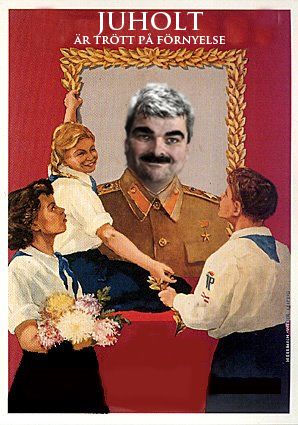
At 15.00 today, Håkan Juholt resigned.

He was the leader of Sweden’s largest and oldest political party – SAP – Swedish Social Democratic Workers’ Party, currently in opposition. After a series of scandals, he decided today that it was too much. With his resigning, he has become historic as the Social Democratic party leader that has sat the shortest period. He sat only for 10 months, but in the end his own behaviour, the general public’s lack of support and the media’s witch hunt became too much for him.

Not only is his resignation historic but also symptomatic of the biggest crisis that the party has ever gone through. The SAP is losing voters faster than the Costa Concordia cruise liner lost its captain. And this reduction in popularity begs a question – is the SAP a party that can understand and represent the needs of modern-day Swedes, or are they stuck in the past? Are they resting on past glories? Are they, in other words, irrelevant?

But first back to origins – how did the SAP party begin? Well, founded in 1889, the party sprang out of the well-organized working class and peasant movements which promoted working class emancipation, temperance, religious observance and modesty. These movements believed in human equality and protested against the unequal spread of wealth and privelege. All of this in a backdrop of a Sweden divided by class and with wide-spread poverty, starvation and disease. These movements were so strong that they successfully penetrated the parliament early on and paved the way for Swedish electoral politics. The Social Democratic Party’s position has a theoretical base within Marxistic socialism: “from each according to his ability, to each according to his need.”

And their ideology has been very successful in Sweden through the last 125 years. The party has held power of office for a majority of terms after its founding. This means that the ideology and policies of SAP have had strong influence on Swedish politics – even on those of the opposing parties. The current ruling government, the rightwing Moderate party, believe in socialised healthcare, free education for all and supportive benefits for parents, for the unemployed and the sick. Compared to other right-wing parties around the world, the Swedish right-wing appear like humanistic pussy cats.

But what about today then? Has the SAP run its course? Are their core questions relevant for a modern Sweden? Is there no longer inequality to challenge? Is there no social injustice worth fighting against? Is there no class divide between the privileged and the poor?

Of course there is.

Like most developed countries in Europe, Sweden is a very segregated society – segregated by education, money and ethnicity.

It might very well be, however, that the majority of Swedish voters simply don’t care about this anymore. Not enough to finance bridging this divide with increased taxes anyway. Very many Swedes have a good standard of living – comfortable. Nice home, good job, foreign holidays twice a year, modern clothes, gym card, summer house, flat screen tv. Sweden today is not that country of 1889 riddled with poverty, starvation and disease.

Whether or not Swedes see the party as irrelevant remains to be seen. First the party must elect a new leader. To succeed, this leader must repair the damage experienced by the party and convince the electorate that the party is modern, forward-thinking and progressive. He or she must convince the people that the social questions they believe in are still important today. The people must be convinced enough to move out of their comfort zones and believe that voting for the SAP can make a difference.

In 2014, during the next general election, we’ll see if he or she has succeeded.

Swedish protection in Addis Abeba

And so the Swedish journalists in Ethiopia got prison. 11 years for illegal entry and terrorism. I feel sorry for them and their families. ‘Merry Christmas’.

The outrage in Swedish media, however, is interesting from a cultural perspective. The trial has been called ‘unfair’, the case condemned as ‘political’ and the African system as ‘corrupt’. Is this true or is it a case of Swedes taking the moral high ground?

Anthropologists are yet to find a culture that thinks their way is wrong. And judging by this case, this is a very relevant discovery for Swedish culture. It seems very often in Swedish media, and even amongst Swedes themselves, that no other legal system is as honest and fair as the Swedish one. All African and Asian judicial systems are deemed unjust, as are most European – and the American system is seen as flawed.

Is this the reason why Sweden has given itself the role of the social and political conscience of the world? The neutral, peacekeeping and mediating nation? Because at heart Swedes think they’re right and the others are wrong?

My recurring feeling is that this belief gives some Swedes a false sense of security. Wherever they are in the world, they feel protected by the superiority of Swedishness.

The particular case in Ethiopia is, of course, a tragedy all round. And although the perpertrators may very well not be terrorists, they certainly did enter the country illegally. As journalists, they saw it as their duty to report on one of the most closed regions in the world. But they got caught.

And, although they might think so, I’m afraid being Swedish won’t protect them in Addis Abeba.

Swede Talk, Swede Talk

A few random notes from a blog by Nobel Prize Winner, Paul Krugman:

1. Stockholm isn’t perfect. Even in August, it can rain cats and dogs — which is why I’m still sitting in the lounge blogging over my coffee and herring.

2. More seriously, I wouldn’t want to live here — because I’m not Swedish! Culturally I’m very much an American, Northeast Corridor edition, and even the Swedes tell me that their society can feel a bit claustrophobic. Fundamentally, my home is in the real real America — the multicultural, multiracial, freewheeling society that is built around the American idea. Of course, the “patriots” of the right hate that America.

3. Of course the point is not that Sweden is perfect, it’s the fact that it works and thrives despite high taxes and a strong welfare state — which isn’t supposed to be possible according to conservative dogma.

An anecdote here: Robin and I were talking yesterday with an eminent American financial economist, and said something about tax levels here. He said, “Well, that’s why all the young people are leaving.” Except, you know, they aren’t. But never mind — that’s what’s supposed to be happening, and it must be happening.

The Swedish summer shut-down


Summertime, and the living is easy.

Swedish culture and lifestyle is very much structured around having long vacations during the summer (and preferably also in the winter). Foreign companies who work with Swedish companies are often dismayed by the ‘Swedsih shutdown’ from the end of June to the middle of August when everybody seems to be on holiday. To the outsider, this seems very inefficient.

Swedes love their long vactions. In fact, it is legislated that an employer has to allow an employee four weeks holiday in a row, unless something else is otherwise contracted between the parties. It’s hardy surprising with the deep, cold winters, that Swedes want to make the most of the long, light and hopefully warm days. It provides an opportunity to totally relax, to stay at the country house, to go out in the boat, or to travel.

But is it effective or even good for us to be off work for so long? Well, if we are to believe some recent research, the answer is no. This research out of Holland shows that the benefits of being on holiday radically reduce after the first week. What this leads them to conclude is that there is no apparent benefit on our health to being off work for longer than 1-2 weeks at a time.

So let’s see if the Swedish government considers these findings. Will we see a change in holiday legislation? My guess is that any party that wants to be re-elected will stay away from this particular hot potato.

Politics week Swedish style


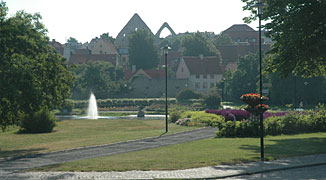
Once a year, at the beginning of August, there is a politics week in Sweden. The week takes place in an open-air park called Almedalen on the Baltic island of Gotland, and attracts heavy media coverage. Every day of the week belongs to a specific party that has a seat in the parliament. Quite conveniently there are 7 parties.

The Alemdalen politics week all started 40 years ago when legendary Swedish Prime Minister Olof Palme spoke publicly. It was at the end of the 60s and the Social Democrats on the island took the initiative and asked Olof Palme to make a speech in Almedalen. Palme and his family had spent their summer holidays on the neighbouring island of Fårö for many years. The stage was a lorry platform at Kruttornet and there was an audience of a few hundred people.

Now Almedalen politics week attracts thousands of participants and is intended to involve the man on the street in politics and to protect the strong Swedish value of democracy. However, the concept of democracy has never been so strongly challenged as it is this year. Right wing, national socialist party Sweden Democrats won seats in the the Swedish parliament last year. This entitles them to their day at Almedalen. Despite strong criticism and outcry, today is their day.

Although giving a free platform to racists is a difficult thing to stomach, the act strongly reflects the Swedish belief in democracy. Although we don’t all agree with each other, we have to defend the right for each other to think differently. If we don’t do that, what’s left? What kind of a society do we have then? I am sure it would be a society that we wouldn’t want to live in.

At Almedalen politics week, we meet each other in debate. And in debate and discussion, we influence each other and our environment. And it is then, and only then, we can possibly change our society.

Exactly how corrupt is Sweden?


Evil-doings and corruption is the flavour of the month in the Swedish press.

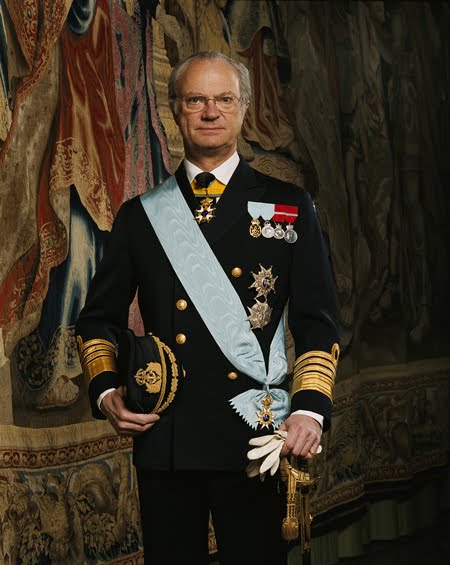
First, we were informed about the deep run corruption relating to public tenders in Gothenburg. Next, we were presented with MPs who had been invited on paid trips by private corporations or given free tickets to go to the Stockholm Open. Yesterday, a new book came out exposing the king’s alleged naughty-doings 20 years ago – naughty-doings that involved gambling, drinking and escort girls.

But just how corrupt is Sweden, in comparison to other countries? Well, first you have to define what corruption is. Is it misuse of power, or public funds, or position? Is it lying to gain public office? Is it prioritising personal progress? Different countries may perceive it differently.

Transparency International(TI) is an organisation that produces the annual Corruption Perceptions Index (CPI). They define corruption as the abuse of entrusted power for private gain. This definition encompasses corrupt practices in both the public and private sectors. The CPI is an index which allows us to compare how ‘corrupt’ countries are.

In the 2010 index, Sweden comes out as the fourth least-corrupt country in the world, a joint position held with Finland. The least corrupt countries are Denmark, New Zealand and Singapore. See http://www.transparency.org

It’s interesting that corruption is what the Swedish media chooses to report at the moment. A quick look around Europe shows a similar phenomenon – in times of recession and economic depression, issues of corruption become more important. When the people are suffering, their tolerance levels fall. The UK’s reporting of the many MP’s who used public funds for private investments is a classic example.

Sweden is in a recession at the moment. And when this happens, people start questioning the behaviours and standards of others. The King’s position becomes a target for public interest. The privileges that leading politicians have starts to be questioned.

As the fourth least-corrupt country in the world, Sweden doesn’t really have much to worry about when compared internationally.

I am sure that once the recession is over, what the king did in the 1980’s will seem irrelevant and unimportant.

My letter from the Greens


Well, I got a response from the Green party yesterday. And here it is.

Hej, och tack för ditt mejl.

Miljöpartiet kommer inte bli något stödparti åt Alliansen, Miljöpartiet kan inte heller ingå i en regering som bedriver en politik där de mest utsatta i samhället, kommande generationer och människor på andra sidan jorden får betala för vårt samhälles kortsiktiga tänkande. Vi gör bedömningen att vi inte fått mandat från våra väljare att inleda några förhandlingar med Alliansen vare sig om att bilda regering eller att inå i något närmare samarbete.

Sverigedemokraterna har kommit in i riksdagen och fått en relativt stark ställning. Sverige har inte blivit främlingsfientligt, men vi har fått in ett främlingsfientligt parti i riksdagen och det är djupt beklagligt.

Om det oklara parlamentariska läget kvarstår efter sluträkningen på onsdag så anser vi att det naturliga vore att Fredrik Reinfeldt tar kontakt med de rödgröna partierna för att diskutera situationen.
Ansvaret för att hantera läget gäller för sju partier, inte bara för ett. Det vore konstigt om inte Socialdemokraterna, som riksdagens största parti fanns med i en sådan diskussion.

Vänligen, Gabrielle
Miljöpartiet de gröna

As a brief translation for you non Swedish speaking people, the answer was no. The Green party will never cooperate with the minority centre-right government to keep out the racists. That’s me told.

Watch this space.

My letter to the Greens


If, like me, you believe that the Green Party should cooperate with the minority government in the name of democracy, then I urge you to send them an email declaring this. This has even more impact if you are a member of the Green Party. Rarely before has it been so important to take your citizenship, or residency, seriously and communicate what you feel. Send your comments to service@mp.se

Here is the mail I sent yesterday. I apologise to those of you who don’t speak Swedish. And to those of you who do, I apologise for my Swedish.

Jag heter Neil Shipley och jag blev svensk i juni i år. Detta val var mitt första riksdagsval. Jag tog uppgiften på största allvar och läste på de olika partiernas mål innan jag bestämde mig för att rösta. Jag känner mig stolt med mitt beslut.

Nu har vi situationen som vi har med ett främlingsfientligt parti i riksdagen. Som invandrare själv tycker jag att det är av yttersta vikt att våra folkvalda representanter hittar ett sätt att lösa detta. Den toleranta Sverige som jag älskar ska inte gå förlorad.

Fredrik Reinfeldt har sagt att han vill gärna öppna diskussioner med er för att skapa ett eventuellt samarbete och på så sätt slipper beroende på rasisterna. Jag uppmanar er att gör detta i demokratins namn. Det är upp till er. Om ni inte gör det så ökar chansen att regeringen är tvungna att samtala med SD. Och det skulle vara förödande för svensk politik och samhället. Vi måste visa omvärlden hur vi hantera situationen på ett mänskligt och moget sätt och inte gå samma väg som Danmark till exempel.

Jag hoppas att de flesta av era väljare inser hur viktigt detta är. Det är inte att bara visar avsky för främlingsfientlighet, det är även att agera. Och ni har alla möjligheter att göra detta. Även om det inte är det mest önskvärd situation måste vi göra någonting av det. Dessutom är det även en möjlighet att få fram Miljöpartiets hjärtfrågor ändå och påverkar.

Så av alla de röster som ni fick, här är min. Prata med Fredrik Reinfeldt. Lös detta. Och gör mig och Sverige stolta.