Stockholm A-Z: Balloons


Balloons

You might not know this but I am an aristocrat. Yes, it’s true, I am titled. I am a Count. My official title is Balloon Count of Barkaby. I was given this title in a champagne ceremony a few years ago.

The title of Count or Countess is something that everybody is given after they carry out a journey in a hot air balloon over Stockholm. Where you land dictates where you become a Count or Countess of. I landed on a not-so-glamorous air strip in Barkaby, a not-so-attractive suburb outside the city.

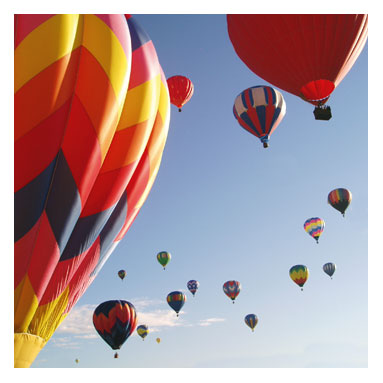
Hot air ballooning is synonymous with the summer skyline of Stockholm. Every evening, weather permitting, the sky fills with a mass of brightly coloured balloons with baskets of gleeful passengers hanging beneath them. The growl of the flame can be heard on street level as the balloons sail gently across the evening sky.

From up there, you get a fantastic view of the city. You see clearly how Stockholm is built on islands and how bridges form a network of communication. You see the houses shining in shades of ochra, amber and gold. You see people busy in parks, on the water and in the squares.

In these days where the sky is filled with ash clouds and planes can’t take us where we want to be, perhaps it will become the era of the hot air balloon.

I wonder how long it’d take to get to England?
Stockholm A-Z: Archipelago


Archipelago
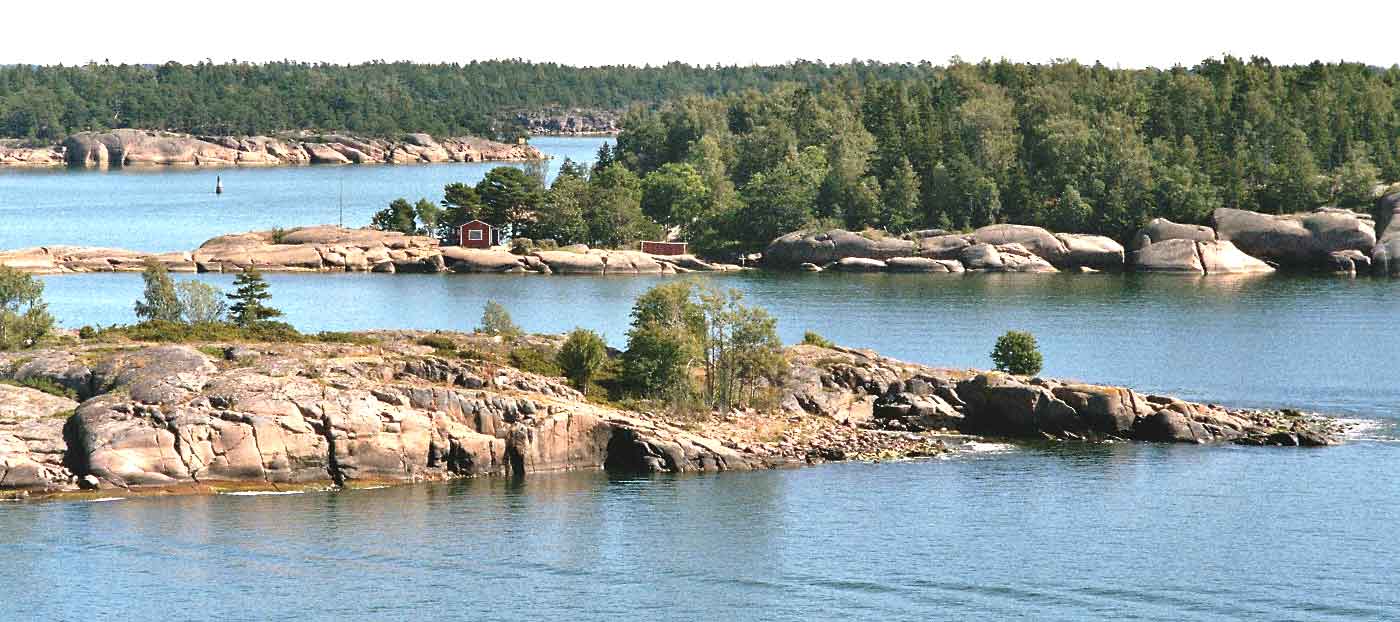
One of the Stockholmers favourite summer retreats is the archipelago outside of the city. The archipelago consists of over 20 000 islands. The islands are mostly flat and usually covered in greenery. They are various sizes ranging from the smallest of cobs and skerries to large islands with roads and villages. From the air it looks like God has broken digestive biscuits into different sized pieces and scattered them into the Baltic Sea.

Many of the islands are inhabited by permanent residents and a boat service carries residents to and from Stockholm in anything from one to six hours. Most islands, however, are not permanently inhabited, some having space only for a few wooden holiday cottages dotted about.

Many Stockholmers boat out to the archipelago in the summer months. They take picnics with them and munch on sour dough bread, quinoa salad and sip rosé wine. They sunbathe and swim from the rocks, often exotically naked. If the water temperature is over 17 degrees celsius they are happy. They glide in kayaks through calm, glistening water. They convene with nature.

I remember the first time I went out to the archipelago as a hardened Londoner. When we arrived at our island destination, all I could see was rocks and trees. I remember wondering where the pub was and how the hell anyone could spend a whole day sitting on a rock. But Stockholmers do just that.

For Swedes, the natural environment is very important whether it’s the archipelago, the woods or the mountains. It is as if many Swedes long to get away from their cosmopolitan lifestyles and retreat to their little red cottages deep in the woods. Or go fishing in fresh-water lakes. Or spend weekends picking wild berries. And mushrooms.

As little as a century ago, Sweden was an agrarian country with many of the people living under impoverished conditions. This heritage is still apparent in the Swedish mentality and could be one explanation for the sentimental relationship to nature.

Nature is an integral part of the Swedish lifestyle and Stockholm’s archipelago is the ultimate manifestation of this.

How to spot a Swede on the beach

Just got back from a few days at the beach. 33 degrees in the water and blistering sun. The resort we were at was run by an organisation called Cabbages and Condoms that donates money to family planning and hiv prevention. Amongst other things they fund a school for needy children. Very worth a visit.

The resort wasn’t very, very busy – even though it’s Thai New Year at the moment. There were some Thai guests, French guests, English, American, Chinese.

Oh, yes and some Swedes. The Swedes, however, didn’t need to open their mouths for me to understand they were Swedish. No, it was something else.

Three Swedish guys on the beach, with three Thai women. How did I know they were Swedish? How do you spot a Swede on the beach?

Was it the fact that they were all blonde? No.
Was it the fact that they were tall and trendy? No.
Was it the pale skin? The quiet demeanour? No, no.

It was the pair of Björn Borg underwear sticking out over the top of the swimming trunks. Yes, knickers under a swimming costume. That’s how you spot a Swede on the beach.

A nation of hard workers


According to statistics from the Swedish Statistical Office, unpaid overtime in Sweden increased by 40% last year. It was a majority of men who worked additional overtime and it is believed that this is the result of the financial crisis.

Ask most Swedes how hard they work, and the majority of them would say they work extremely hard. Unfairly hard, some of them may even say.

And yes, they do work hard. As long as it’s not before 9am or after 3pm of course, since they have to go to day care to pick up the kids. And not between 11.30 and 1pm because that’s when they eat lunch and exercise. Nor should it be mid-morning or mid-afternoon because that’s the coffee (fika) break. And as long as it’s not on a Friday afternoon because then they’re winding down for the weekend.

Nor should it be anywhere between the end of June and the second week of August because that’s the summer.

And as long as it’s not on a bank holiday (of which there are many), or a day between a bank holiday and a normal weekend, or the day before a bank holiday.

Yes, apart from that, they work very hard.

Reflections over a frozen canal


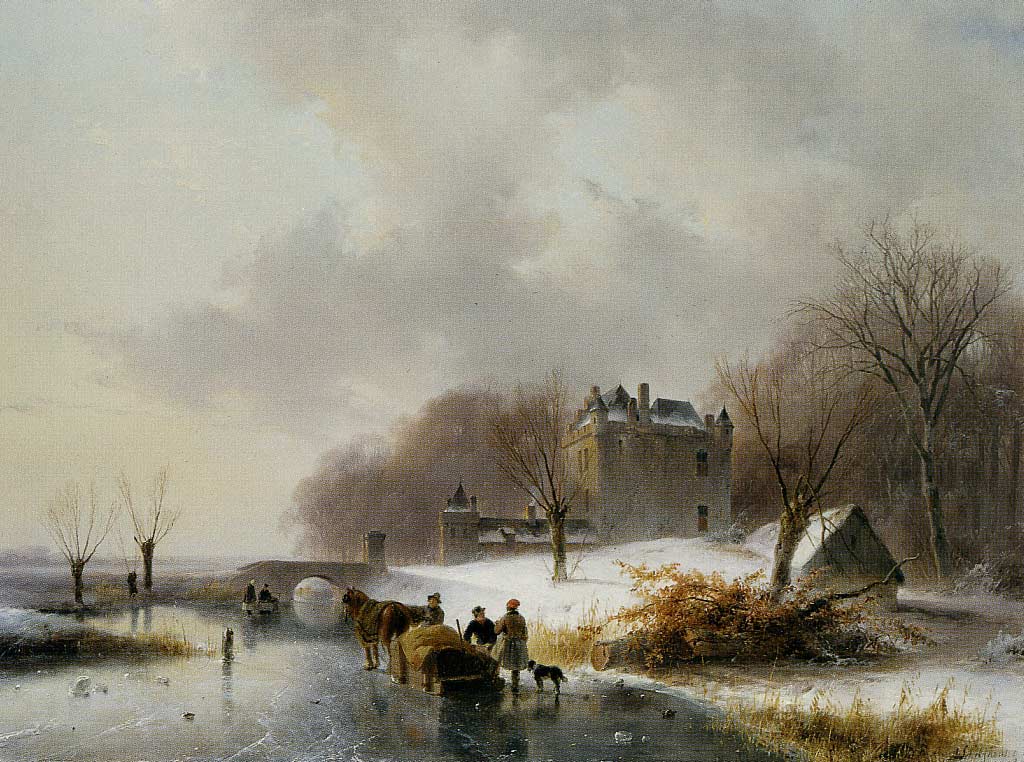
Walking over the bridge on the way home from town today, I looked down at the frozen canal which is now in the process of thawing. Pools of water lay here and there on the surface and ducks were happily bobbing around in the open areas under the jetties.

I lingered for a while and looked down over the canal and over towards the city hall.

On the ice, I noticed thin track lines. The evidence from people on cross-country skis was now melting into the slushy surface. I also noticed footprints. Remnents of Stockholmers out for a walk one winter Sunday on the ice. The footprints had lost their sharpness, they had become diffuse, blurred at the edges. Slowly, slowly, they were disappearing as the canal reclaimed its watery surface.

I was struck by how temporary things are. Soon all proof of those skiers and those Sunday strollers will be gone. Any trace of their activities melted away.

Is this how it is for all of us? Our lives are temporary. We are only here for a fleeting moment. With all our activity, we leave a mark. And then gradually that mark dissipates and nothing is left to show we were ever there.

Are we all Sunday strollers on a frozen Swedish canal?

Pancake Thursday


In all cultures, there is an element of predicatability. Some things that you can feel will always happen. Things that give you a sense of security because you can depend on them.

In Sweden, it’s pancakes.

Today is Thursday. In every lunch restaurant and every staff canteen that sell Swedish food, pancakes are on the menu. You can rely on it. It feels dependable. The pancakes are served in a particular way – with whipped cream and jam – and always, always served together with a bowl of steaming pea soup and bread.

It’s fun to watch Swedes on Thursdays. In the staff canteen, grown men queue up to ladle their soup into their bowls and pile pancake after pancake onto a plate like a Scooby snack. Then they gleefully paste on the jam and smother it with whipped cream. It’s like watching a jelly and ice cream party for 10-year olds.

Pancakes on Thursdays is especially interesting for us Brits. You see, we are deprived. We only get to eat pancakes once a year – on ‘Pancake Day’. ‘Pancake Day’ as it happens was last week, Shrove Tuesday. And on this day, when Swedes traditionally tuck into Lent buns, we Brits make pancakes and cover them with sugar, lemon juice and chocolate sauce.

But only once a year.

It’s not always that easy to understand how the rules of different societies work, especially when it comes to food. A Swedish customer of mine once told me a story about some Japanese visitors to Sweden that he was responsible for looking after.

The Japanese were visiting on a pancake Thursday. At lunch time, the Swede took the Japanese visitors to the company restaurant. Unsure of what to do when faced with the lunch time food, the Japanese took a bowl each and filled it with pancakes. They then spooned on jam and cream. And finally, they poured pea soup over the whole lot. They were left with an unholy mess seaping over the edges of the bowl.

The Swede saw what his Japanese visitors had done and was unsure of how to handle the situation. He could tell them they had made a mistake by not putting the soup in a bowl and the pancakes on a separate plate. But he felt this could potentially embarrass them and force them to lose face. This could be devastating to them and their business relationship.

So, he did the only thing he thought an adaptive, culturally-sensitive person should do. He took a bowl, filled it with pancakes and cream and then he smothered it with soup. He sat down with his Japanese visitors and slowly forced down the soggy contents of the bowl with a spoon.

It’s nice to know that however dependable and reliable a tradition is, it is not so rigid that it can’t be adapted if the circumstances decree.

And, in this case, those circumstances are known as hospitality.

Swedes and Ralph Lauren


Just come back from a long weekend in London where I was visiting family and friends. On Saturday, I was trying to persuade my 23-year old nephew to come to Stockholm for a visit. Appealing to his interests, I mentioned how beautiful Swedish girls are.

My sister, who has been to Sweden several times, pipes up.

‘Oh, yes! They’re all really beautiful. Everyone is beautiful! So healthy and well-off looking. They’re all so well-dressed and trendy. Even the pensioners. They all walk around with glowing skin and lovely teeth. They’ve all got jumpers thrown over their shoulders. They all look like models. Yes, all Swedes are Ralph Lauren models!’

Now, there’s a positive stereotype to reinforce!

Feeling foreign


Yesterday I felt very foreign.

It was the day of the ‘Vikingarännet’, the world’s longest skating competition on natural ice. The track is a total of 80km, ending in the centre of Stockholm. My partner had signed up for the ordeal and headed off at 6.30 in the morning to catch the bus to the starting line. My job was, 6 hours later, to go down to the finish line and cheer and applaud and welcome him back.

At 2pm, I headed down to the lakeside. I passed a few weary-looking ice skaters on the way. Eventually, I arrived at the finishing line. A few tents were set up around a little podium for first, second and third place. A man with a microphone was walking around interviewing contestants who had finished and made it up the slope to the tent area. His voice echoed around the lakeside from strategically-placed loudspeakers. As I stood and waited, he approached one of the contestants who turned out to be an Australian. The Australian was exhausted. It was only the 5th time he had ever ice-skated.

Jokingly, he said to the interviewer, ‘there’ll be no Valentine’s Day romance today’.

‘Oh’ said the interviewer with typical direct Swedish communication style, ‘you mean you have no energy left for the bedroom?!’

The Australian looked a little embarrassed and said as he cringed, ‘Well, I guess that’s one way of putting it.’

I decided to move away from the tent area and proceeded down the slope and across the frozen lake to the finishing area. A large, inflatable archway marked the end of the 80km race. Lots of people huddled around waiting. Silence prevailed.

As exhausted racers lumbered across the finishing line, the crowd did nothing. No reaction. No cheering. No bravos. No clapping mittens. Nothing. Just staring with blank expressions. The silence was almost oppressive. How does that feel, I wondered, to have acheived such a magnificent feat and to come back to this? 80 km is a very long way! And nobody showed any appreciation! Not outwardly anyway. The Swedish value of modesty was very clear at that moment.

As I saw my partner approaching across the ice, I started waving my arms and jumping up and down. Perhaps I overcompensated somewhat.

I clapped my gloves and, with steamy breath, I shouted ‘Yeah! Come on! Bravo! Well, done! Keep going!’

I shouted ‘Brilliant! Looking good! Yeah!’

My voice echoed out over the lake and was suspended in the air like an embarrassment.

Now, I am not an over-expressive type. But compared to the Swedes I experienced yesterday, I was positively Italian.

Yes, yesterday, I felt very foreign indeed.