Sweden, it’s time for ‘fredagsmys’

Bild

Soon it’s the weekend! A collective sigh of relief falls over the Swedish population, at least those who are not forced to work Saturdays and Sundays of course.

A weekend means relaxation and family time. It means late nights and parties. It means sports activities with the kids. It means sleeps-in and late breakfasts. It means cultural activities. It means computer game or TV series marathons. It means sledging and skating, drinking hot rose-hip soup.

Weekends mean so many different things to different people.

And it means a very Swedish concept: Fredagsmys

‘Fredagsmys’ loosely translated as ‘Friday Cosying’, is a modern ritual in Sweden. It is when friends and families gather together to mark the end of the working week and get ready for the approaching week. Traditions are different depending on if children are involved but one common denominator seems to be that food is easy and quick to make. Friday night is a big taco and pizza night in other words. 

Gathering around food for cosy family evenings has a long tradition in Sweden. In the 1800’s and 1900’s something called ‘Söndagsfrid’ (Sunday peace) was popular. Then in the 1970’s ‘kvällsgott’ (Evening Goodies) became a concept.

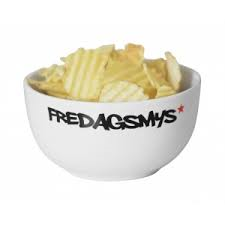
The concept ‘fredagsmys’ became popularised in a high-profile advertising campaign for crisps. With the perky slogan ”Now it’s the end of the week, it’s time for Friday cosying”, (really, it’s perky in Swedish), they captured the Swedish market and encouraged the consumer to devour potato chips on Friday nights.

So how does your Friday night look? What kind of cosying are you planning?

Are Swedes always off work?

keep-calm-its-nearly-holiday-time

‘Swedes never work, they’re always on holiday’

This is a frequent comment I hear when I work internationally. Colleagues and sometimes customers abroad, are irritated by the fact that they can’t get in touch with Swedes from, for example, the end of June to the second week of August. Sweden seems to be shut down! ‘Swedes never work, and are also lazy’ – they say.

I, of course, defend Sweden’s holiday structure by emphasizing that people work longer hours in the winter to compensate for shorter hours in the summer time. Or that the winters are so long here, it’s only natural that people want to be off work during the warmest, brightest time of the year. Or that thanks to advances in technology, Swedish employees are often still accessible though they might not be at the actual workplace. Or I even try the argument that Sweden has a healthy work-life balance.

These arguments however often fall on stony ground and I am often disbelieved. People shrug their shoulders, shake their heads and roll their eyes. From their perspective, Swedes are spoiled.

I try to encourage cultural understanding, I really do. But sometimes it’s not that easy. For example, situations like this Christmas and New Year don’t help me to be more persuasive. While most Americans got 3 days off work and many Brits got 5 days of work, Swedes frolicked in the free time they were able to access. This festive period was commonly referred to as an ’employees’ Christmas’ meaning it was good for the employees and not for the employers. Many Swedes (and me too) are back to work for the first time today, and have been free since the 23rd December 2013. That makes a total of 12 days off work – 16 days if you also count the weekends.

You see Swedes don’t only take the national holidays off – they also take off the ‘Eve’. So although ‘Christmas Eve’ and ‘Midsummer’s Eve’ are technically not national holidays, they are celebrated as though they are. And then it’s also considered a right to be able to take off a half a day before the ‘Eve’ just in order to get ready for the approaching celebrations. If a national holiday falls on a Thursday or a Tuesday then there’s also something called a ‘Bridge day’. It’s not officially a holiday but most people take it off because there’s no point in going in to work for just one day is there? This Christmas season had a couple of bridge days in it to pad out the time taken off work and required only a little bit of personal holiday leave to be taken.

So the question becomes are Swedes happy that they got 16 days off work? I think most are. But on social media, in the office and on public transport, others complain that it wasn’t long enough, that they’re exhausted or that they need a break.

Mmm, maybe there’s something in the perception of the spoiled Swede?

The top 5 most disgusting Swedish foods

Swedish cuisine in later years has acheived critical aclaim and is considered trendy, healthy and modern by many foodies around the world. But, like every kitchen, the Swedish kitchen has some real humdingers lurking behind the trendy facade of smoked slmon, creme fraiche and fresh dill. Here, in reverse order, is my list of the 5 most revolting foods that Sweden has produced. Yuck!!
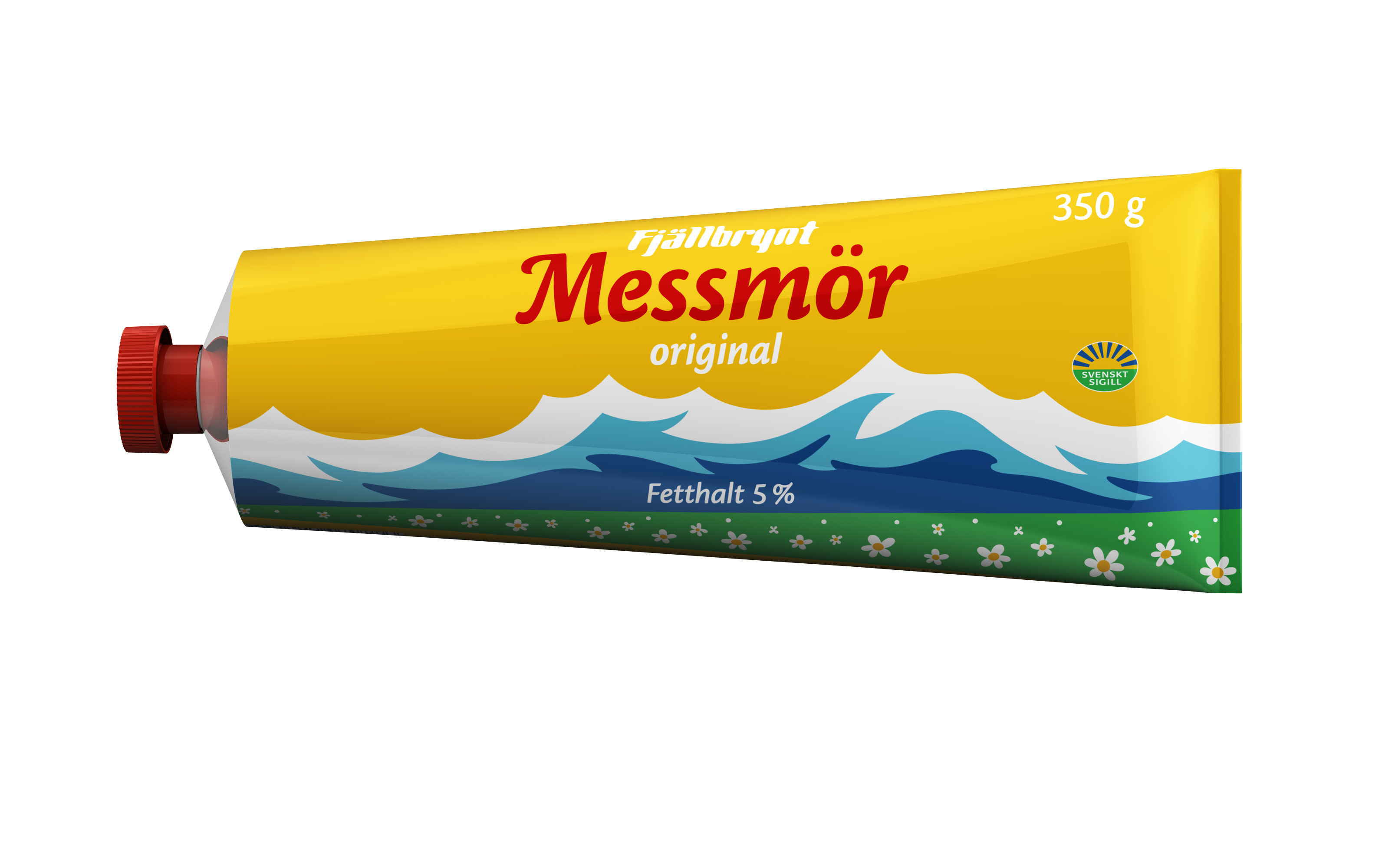
messmor_350g_original_front 5: Messmör – Soft whey butter

Translated as soft whey butter, this disgusting sandwich topping and comes in two delightful choices: goat milk-based and cow milk-based. Whey is pressed out from cheese and then boiled until it caramlises and gets an unappetising brown colour. It looks nasty and tastes revolting.
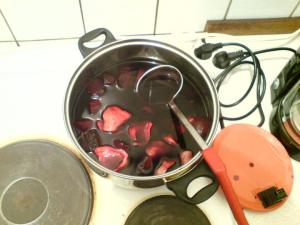
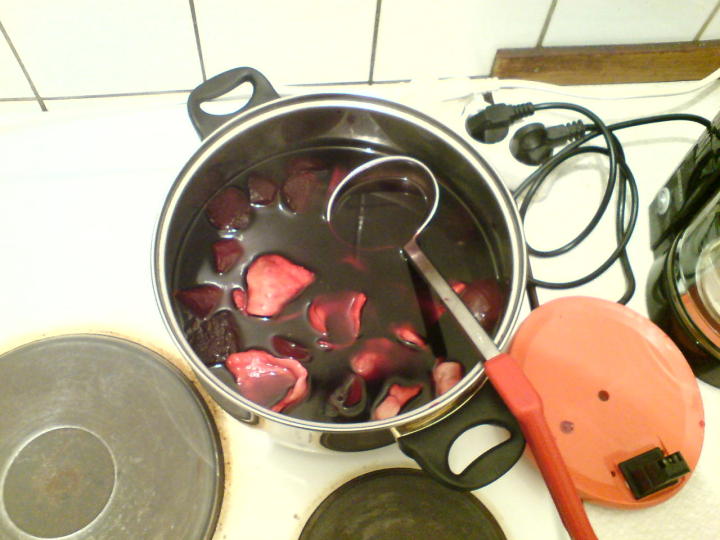
blodspoppa 4. Blodsoppa – Blood soup

Blood soup is a soup made of stock and goose blood which is thickened and flavoured with syrup, wine, cognac, vinegar, cloves, ginger and pepper. It is traditionally eaten with a roast goose dinner and it dates back to the Renaissance period. Historically, probably it was a useful source of iron, but in modern Sweden it just feels babaric and, well a little vampire-like. Maybe this is how Swedes get through the long, dark nights without biting each other’s necks?

palt 3. Palt – Potato and pork dumplings

Palt is a kind of gross potato dumpling stuffed with boiled pork. The dumpling is boiled in very salty water. It is normally eaten with butter and lingonberry jam and Swedes drink milk when they eat it just in case it doesn’t already slink down the throat. It is similar to another dish that Swedes eat called ‘body cakes’ which are just as nasty as they sound.
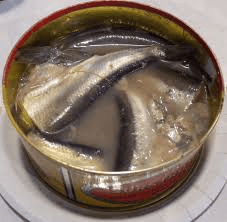
surströmming 2. Surströmming – fermented Baltic herring

This offensive dish consists of herring that is caught just prior to spawning and packed into a tin of brine to ferment. The fermentation starts from an enzyme in the spine of the fish, together with bacteria. Hydrogen sulphide is produced in the tin. Sounds appetizing? The salt in the brine allows the bacteria responsible for rotting to thrive. This bacteria prospers and decomposes the fish, making it sour. When the tin is opened, the contents release a strong and sometimes overwhelming odour which smells like human excrement. The dish is ordinarily eaten outdoors as the reek will fill out an entire building if eaten indoors. The fish is usually eaten on crispbread, or rolled in thin bread, with potatoes and sour cream. This way of preparing food was historically a process of preserving food in order to survive through the winter. But in modern-day Sweden, it is so unnecessary – now we have fridges!!!

lutefisk-akta 1. Lutfisk – Sodium Hydroxide fish

Imagine your mouth full of jelly. Wobbly, quivering jelly. Now add a creamy sauce to that consistency. Slush it round in the mouth. Now add the flavour of fish! And there you have it! Lutfisk! This revolting food is a dish consisting of dried whitefish prepared with lye (deadly sodium hydroxide) and a sequence of particular treatments. The first treatment is to soak the dried stockfish in cold water for five to six days. The saturated stockfish is then soaked in cold water and lye for an additional two days. The fish swells during this soaking, and produces a jelly-like consistency. When this treatment is finished, the fish (saturated with lye) is caustic and therefore poisonous. To make the fish edible, a final treatment of yet another four to six days of soaking in cold water is needed. Eventually, the lutfisk is ready to be boiled and then served with a creamy spiced white sauce and potatoes. This has to be the most vile thing I have ever eaten, it is truly repugnant. The good news is however that Lutfisk is a Christmas dish, so it only ever gets dumped infront of you once a year! Thank Santa for small mercies!

Swedish pollen attack!

Image

You see them everywhere around town, with their red eyes and runny noses. Your hear them around you as they try to unblock the nasal congestion that is driving them to insanity. These poor people suffer from pollen allergy and, at this time of the year, just want to curl up and die, as the tree pollen assaults their noses, throats and airways. According to statistics 2 million Swedes suffer from pollen allergy, mostly related to the treachorous birch trees. These lovely trees that signal the arrival of the spring, also torture more than a quarter of the population.

Apparently, not since 2006 has the pollen assault been as bad as it has this year. So much so that the chemist shops are rapidly running out of allergy medicines and there is apparently none left to order.

So what should these poor people do? Stay inside is the cruel advice from the government.

But if 2 million people stayed indoors, then there would be nobody left to fuel the Swedish economy through work and consumption. Wouldn’t it be better just to produce more medicine? It would boost production, boost the economy and boost the poor sufferers who collapse under the anslaught of thesepollen invaders.

Swedes in Euphoria


Last night, Sweden selected its representative for the Eurovision Song Contest. It’s an understatement to say that the process to find the winner is popular in Sweden. After 5 heats, the finalists are selected, and a winner is voted in – partly by 10 international juries and partly by the Swedish public.

Usually after the competition, discussion and debate begins – did the right song win? No! The wrong song won! It’s like a national chant for a few days after the final.

But this year seems different – everyone seems to be in agreement that the right song actually won. The whole nation seems convinced. Is that what makes a success at Eurovision?

The winner, an artist called Loreen, sings a fantastic house/pop song called ‘Euphoria’ and has a show combining ballet, yoga, expressive dance and Kate Bush. Loreen seems to have captured Sweden’s hearts – euphoria!

But Loreen is no ordinary representative. Already, she has made a political comment about the democratic rights and rights of women in Azerbaijan. In a media circus such as the Eurovision Song Contest, this is a refreshing element. Anyone who claims that politics has no place in the event is misguided – it always has been and always will be highly political.

So let’s happily send Loreen – not only because she’s a great artist with a great song, but also because she’s a modern, politically-aware self-declared feminist who wants to make a difference.

http://www.youtube.com/watch?v=g3sztAoMBtI

Battle in the laundry room


Most Swedes have never visited a public laundromat. Never had to carry their laundry on the bus to get to the nearest one. Never had to stand in line to wait for a machine. Never had to remain in the laundromat with the loaded machine for fear that the clothes might get stolen.

This is because, as a fantastic standard, all Swedish apartment blocks have their own laundry room and many Swedes also have a washing machine in their apartment. The communal laundry room is included in the service charge that each resident pays and, in most places, is a constant source of irritation and discussion. Typical bones of contention are:

– that it’s difficult to get a wash time
– that people steal each others was times
– that people use/borrow/steal washing powder
– that people don’t empty the driers of their clothes
– that people are noisy
– that people don’t clean up after themselves

There’s a lot to get irritated about and people really seem to enjoy fighting over the laundry room.

Swedes in general strike me as a cleanly people. It seems like the washing machines are in constant use and the driers are always humming. But sometimes this can go a bit over the top.

A family in the town of Karlstad have recently been in court because their neighbours complained they were too clean. Apparently, the couple were regulars in the laundry room – as much as 11 times per month. This created a lot of noise and made it difficult for the other residents to get access to the washing machines. The court ruled against the happy washers – in the eyes of law, they had washed too often.

It’s amazing what people take to the courts. And it’s even more amazing that there is a ‘law’ about what’s an appropriate amount of times to do the laundry in a communal laundry room.

I guess if you’re a clean freak and you live in Sweden, the conclusion is obvious – get your own washing machine!

Oh, those beautiful Swedes


Good news to all Swedes!

A recent survey was carried out by Travellers’ Digest about where the world’s most beautiful men and women reside. Their conclusion? The most beautiful men are in Stockholm! Stockholm’s women came in second position, beaten only by the lovely ladies of Kiev. Alexander Skarsgård, from True Blood, was provided as a classical example of the ‘hot Swedish guy’.

This is what Traveller’s Digest writes about Swedish men:

‘Swedish men have long been misunderstood. Case in point: they are often stereotyped as cold, emotionally distant loners and inexplicably mistaken for Swiss guys. On the plus side, they are also generally considered aesthetically pleasing due to their fine-boned Nordic attributes and exceptional height advantage. Although there always seems to be some truth to these types of classifications, in the case of these Scandinavian studs, the deeper reality is quite a pleasant surprise. Your average man in Stockholm is an impeccably-dressed clotheshorse that truly indulges in the enjoyment of the finer things in life: from food to fashion, culture to hearth. But what really makes them unique? Despite the fact that one must practice patience when engaging in the slightly bizarre ritual known as the Swedish courting process, once you have captured the heart and imagination of your elegant gent he will be devoted to you for life. What’s more irresistible than that?’

And for women, they write:

‘What you have seen on the beer commercials is true; Sweden really does have some of the world’s most beautiful women. The streets of Stockholm are literally packed with these gorgeous women, who are as tall as they are luscious. Even better, is that Scandinavians are world renowned for their friendliness, so there’s a good chance that the girl you’re eyeing is actually a sweet and down to earth person.’

But, don’t be dismayed, Swedish women actually topped the list of the world’s most beautiful women – this is what they wrote:

‘Sweden is firmly in first place on this list. The first time you visit Sweden is an unreal experience as you realize that everything you have ever heard is, in fact, true! The women are tall, blonde-haired, blue-eyed goddesses whom are friendly and educated to boot. There must be something in the air.’

I guess I’m lucky to live in Stockholm!!

Body beautiful?


I was at a health assessment today, where I was factually informed I am overweight. Not much, but I am nearing a risk zone for a gentleman in his 40’s. A machine measured my height, fat percentage, muscle mass and age and came up with this unwelcome conclusion. So it’s time to start eating healthier and start exercising again.

This got me thinking – why are we so interested in losing weight and achieving ‘the body beautiful’? One thing’s for sure – this interest is certainly a conditioned attitude.

One of the biggest ‘conditioners’ of our time is the media – the tabloids. You can’t walk around the central areas of most towns in Sweden without being bombarded with messages about weight-loss, new diets or shocking stories about fat people.

Today’s Aftonbladet: ‘She lost 15 kilos – in 3 months!’
Today’s Expressen: ‘Lose weight guarantee’

It’s no surprise that people feel anxious about their body image and that young people suffer from bodily identity issues. The pressure for body beautful is very strong in Sweden.

However, as we know, Sweden’s not the only country with these issues. I’d venture to say it’s the same in most western countries. And anything Sweden can do, Britain can do better?

Today’s Sun newspaper: ’58 stone man eats 8 hotdogs for breakfast’
Today’s Mirror. ‘How a talking plate can help you lose weight’
Today’s Daily Mail: ‘Meet the world’s fattest man who lives in London’

It’s depressing how manipulated we are, isn’t it?

Think I’ll go get a bar of chocolate.

An announcement that shook Sweden

Recently, the winners of the Nobel prize for Literature was officially announced. This sombre occassion is avidly followed by the media from around the world. Who will win? A Swede? A European? The favourite….?

Yesterday, another announcement was made in Swedish media. Not quite of the same calibre as the Nobel prize for Literature, and not as interesting for international media, but none-the-less it was an announcement that created a lot of reaction in many Swedish households.

Who will lead 2012’s Melodifestivalen? Who will indeed be the host for the Swedish version of the Eurovision Song Contest qualifiers?

Late yesterday, the announcement came. Film actress Helena Bergström, singer Sarah Dawn Finer and blogger Ana Gina were the ‘lucky’ winners. Not many people reacted to Sarah Dawn or Ana, but the choice of Helena Bergström caused a storm on websites, in coffee rooms and on social media networks.

According to one net survey, 32% were angry at the choice of Helena Bergström. Others wrote acidic comments such as ‘She’s just going to cry all the time’, ‘she has no business being there’ and ‘she’s probably going to get her tits out like she always does.’

Think how powerful it would be if people could channel all this energy into something meaningful and positive instead of focusing on who hosts a music competition to select a bad Swedish song that never wins the international competition anyway?

5 tips for spotting Swedes at an airport

If, like me, you like guessing peoples nationalities at airports, here are a few simple tips to help you spot the Swedes:

1) Small children running seemingly out of control around Duty Free shops, seating areas and restaurants? Always Swedish.

2) People forming a long queue at the gate 1-2 hours before boarding is about to commence? Swedish.

3) Laden down with heavy shopping bags full of tax-free alcohol? Swedes.

4) Wearing trendy clothes and designer glasses from Efwa Attling or the like? Yes, Swedish.

5) Still wearing flip-flops from their holiday in a hot country, even though they’re currently in Frankfurt? Yes, you guessed it. Swedish.