Globally Innovative Sweden

zipper

For being a relatively small country, Sweden is very creative.

The Global Innovation Index 2012 ranked Sweden as the most innovative country within the European Union and many inventions have sprung out of this Nordic country. A quick browse on the website http://www.sweden.se lists a few of these inventions.How many of them sid you know were Swedish? 

THE ZIPPER The modern-day zipper that we know today was improved by Swedish-American Gideon Sundbäck. His invention was called the seperable fastener and featured interlocking teeth pulled together and apart by a slider for, as the picture demonstrates, ease of access.

AIS Getting completely lost nowadays is difficult thanks to global positioning systems (GPS) which are now an essential part of our daily lives; embedded in various technologies from smartphones to in-car navigation systems. Swedish inventor Håkan Lans is credited with taking GPS technology one step further to create automatic identification systems (AIS) now widely used in the shipping industry for tracking ships and vessel traffic.

THE ADJUSTABLE WRENCH A staple in many toolboxes, the adjustable wrench or spanner, also popularly called “Monkey wrench” or “English key,” often comes in very handy during do-it-yourself (DIY) projects. While the first iteration of this spanner was originally invented in 1842 by British engineer Richard Clyburn, today’s adjustable wrench, the “Swedish Key,” is attributed to Johan Petter Johansson, a Swedish inventor who improved upon Clyburn’s original concept and patented it in 1891.

THE HIV TRACKER A recent addition to the list of Swedish inventions is the HIV tracker: a sensitive device used for mapping out and detecting the spread of HIV and other viruses. Conceptualized by Doctor of Biotechnology Martin Hedström and his team at Lund University, the device can detect extremely low concentrations of poisons, viruses or other substances in liquids — which also makes it potentially invaluable for fighting bioterrorism.

SPOTIFY is a commercial music streaming service providing content from a range of major and independent record labels. Launched in Sweden in October 2008, the service had approximately ten million users as of 15 September 2010 (2010-09-15)about 2.5 million of whom were paying members.Total users reached 20 million by December 2012, 5 million of them paying monthly either $4.99 or $9.99.As of February 2013, the service is available in Andorra, Australia, Austria, Belgium, Denmark, Faroe Islands, Finland, France, Germany, Ireland, Italy, Liechtenstein, Luxembourg, Monaco, the Netherlands, New Zealand, Norway, Poland, Portugal, Spain, Sweden, Switzerland, the United Kingdom and the United States

THE PACEMAKER In 1958, Rune Elmqvist developed a battery-run artificial pacemaker, which was used for the very first pacemaker operation done by surgeon Åke Senning at Karolinska University Hospital in Stockholm. The pacemaker is placed under the heart patient’s skin and the electrical pulses it generates ensure that muscles expand and contract normally, regulating the heart.

POWERTREKK PowerTrekk is a portable charger that uses eco-friendly fuel cell technology to convert hydrogen into electricity. By adding one tablespoon of water along with the fuel pack to the charger, you can connect any compatible electronic device — mobile phones, GPS, laptops, digital cameras — to the PowerTrekk to instantly charge it.

TETRA PAK Thanks to the revolutionary paper-based packaging system called Tetra Pak we can now carry our milk home from the grocery store in cartons instead of glass bottles. Conceptualized in 1946 by Erik Wallenberg and produced by Ruben Rausing, Tetra Pak’s technology is used for storing and distributing liquids, semi-liquids and dairy products.

THE THREE POINT SEATBELT Now a standard requirement in every passenger vehicle saving around one life every six minutes, the three-point seatbelt was developed by Swedish inventor and safety engineer Nils Bohlin in 1959 for Volvo. It’s designed with a Y shape to spread out energy across a moving body during an accident.

ULTRASOUND / ECG Ultrasound is so integral to healthcare today that remembering a time when it didn’t exist is difficult. Along with German researcher Carl Hellmuth Hertz, Swedish physician Inge Edler devised the modern day echocardiograms — a Doppler ultrasound of the heart — that are integral to monitoring cardiovascular health. This invention netted both Hertz and Edler a highly coveted Albert Lasker Clinical Medical Research Award in 1977.

SKYPE Skype was founded in 2003 by Niklas Zennström from Sweden.The Skype software was developed by the Estonians Ahti Heinla, Priit Kasesalu, and Jaan Tallinn, who together with Friis and Zennström were also behind the peer-to-peer file sharing software Kazaa.In August 2003, the first public beta version was released.
The Karlberg Serpent

Long, long ago when Stockholm was a town under development, there lived a little boy called Ossian. And Ossian was a scared little boy.

Ossian’s father worked in central Vasastaden as a labourer, helping to build new houses and buildings.

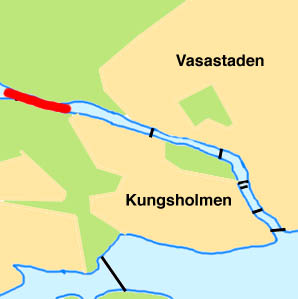
Ossian and his family lived on the rural outpost island of Kungsholmen. Between Vasastaden and the island of Kungsholmen ran a canal, which had been dug out by hand not many years previously. Over the canal stretched a rickety old bridge.

The people of Kungsholmen lived in fear of what was in the murky canal water. It was said that as soon as the canal was built a huge serpent had slipped in from the lake Mälaren. The serpent was as long and as wide as the canal itself and it would eat children trying to cross the bridge.

One dark November day, Ossian’s father had gone to work and mistakenly left his napsack containing lunch on the kitchen table. Ossian ran quickly after him through the streets with the food. Eventually he got to the edge of the canal. His father was nowhere in sight. He put a foot on the bridge as if to cross.

‘If you walk over the bridge’, bellowed a voice, ‘I will eat you alive!’

Ossian looked into the canal and saw the giant snake rising up. Terrified, he threw the napsack at the serpent and ran as fast as the wind back through the streets and home.

A few weeks later, his father forgot his napsack again. This time Ossian tiptoed quietly through the streets until he reached the bridge. Fearfully, he slowly placed a timid foot on the first wooden tread.

No sound.

He took a few extra steps. The serpent reared up infront of him. ‘You again! I will eat you if you go any further’

‘But I have to give my father his food’ stuttered Ossian

‘You will be my food’ hissed the snake as he opened his mouth wide.

Ossian dropped the bag and sprinted for his life back home.

The weeks went by and Ossian’s father didn’t forget his bag again. Until one day in January. The snow had come and the trees were laden with heavy frost. Once again, Ossian fearfully waded through the snow to the canal’s edge.

He looked into the water. But instead of a serpent, he saw ice. The water was frozen solid. On the surface of the water, he could see the distinct scales of the serpent. A patchwork of frozen scales like a honey comb filled the length and the width of the canal. The serpent was stuck. Confident that the serpent couldn’t move, Ossian ran across the bridge to the other side.

Centuries later, there are many of us who cross the canal. What we don’t realise is that the Karlberg serpent is still there. Oh, he doesn’t eat children anymore but satiates himself on rodents, birdlife, city waste and unfortunate kajakers. But in the winter, just like every year when the canal freezes, he can be seen.

You might think the scaly surface of the water is just ice patched together like a jigsaw puzzle. But no, it is the scaly skin of the Karlberg serpent.

It’s been rumoured that where the ice is thin, the occasional ice skater might just disappear, devoured by the hungry snake.

Dare you go ice skating on Karlberg canal this winter?

Swedish legends by the motorway

Sweden is a country full of myths and legends. Like other rural countries, many of these myths and legends are based around the dark woods, or rugged hilltops or deep lakes. These legends are passed on verbally down through the generations, and some are considered so important that the region builds a statue or another kind of monument in its honour.

One such statue, built in 1969, can be seen from the motorway just outside of Jönköping, in the town of Huskvarna. At this point, the motorway separates the town from the vast lake Vättern. On the town side, on the grass verge, a giant is standing. This giant is clutching a clump of grass in his arms and gazing beyond the motorway to the other side of the lake.

Of all the people who have driven past this place, I wonder how many have seen this giant? And I wonder how many know of the legend surrounding him?

The giant’s name is Vist. And the story goes like this. Long ago in the area of lake Vättern lived the giant Vist and his wife. Every day, they would wander around the lake looking for food. It wasn’t unusual that on their walks, they would end up on the opossite side of the lake from their home. But this wasn’t a problem for Vist. With one giant step, he could stride across the lake and be home in no time. His wife, however, who had smaller steps than him, couldn’t manage this and had to walk back home around the shore’s edge.

One day, Vist was at home and his wife was wandering the countryside. She ended up on the opposite side of the huge lake. Hungry and weary, she realised she was too tired to walk all the way home so she shouted out to Vist across the lake. She told him to grap a clump of earth and throw it into the lake so she could use it as a stepping stone to get home quicker. Vist grabbed the earth and threw it into the lake and his wife came home.

We know this story to be true because the piece of earth remains today in Lake Vättern in the form of an island. The island of Visingsö – Vis’s island.

Sweden’s most famous saint

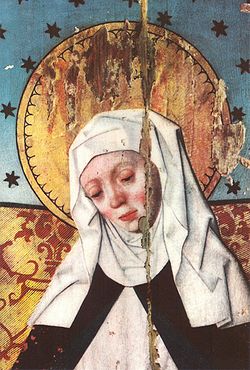
I was yesterday in an area of Sweden some 50km north of Stockholm on event where we drove rally cars and shot clay pigeons. Although it was a lot of fun, it was something else that actually caught my fantasy. Something completely different. The venue we were at was next to a small village called Finsta. And it was in Finsta that Sweden’s most famous saint – Saint Brigitte or the Holy Birgitta was born.

I became so interested in this fact that I did some research into who this woman actually was. Born in Finsta in 1303, Birgitta Birgersdotter bore 8 children and, after her husband’s death, dedicated herself fully to religion.

She had visions, her earliest visions being of the virgin Mary placing a crown on her head and of Jesus dying on the cross. Birgitta started a religious order with its main base in Vadstena and eventually moved to Rome where she died in 1373. She was canonised in 1391 for her good works.

And today, The Holy Birgitta is one of the six patron saints of Europe intended to protect the european land mass.

I wonder what she would think of loud rally cars violently tearing up the earth not far from her place of birth?