The democracy of snow

Today the first major snow storm of the winter hit Stockholm. Roads were closed off, buses were cancelled, the tube was chaotic. During all this mayhem, I was reminded of an old realisation I had years ago.

Normally, I find snow in the city irritating. Your shoes get ruined, you slip and slide unelegantly around, your face gets battered, your hair gets mushed. In general, very irritating. But today, my perspective changed. As the snow tumbled down, I realised that snow is all about democracy.

No matter how ugly something is, when it is covered with snow it is beautiful.
No matter how dirty something is, when it is covered with snow, it is clean.
Now matter how shabby something is, when it is covered with snow, it gets a new, fresh start.

The snow kind of evens everything out.

Now if that’s not democratic, I don’t know what is.

5 things that are wrong with Sweden

When you’ve lived in a foreign country as long as I have, you become blind to the differences that were so obvious when you first moved here. That’s a natural development I guess. Call it emersion, or integration, or adaptation, or assimilation. Or in my case, Swedification.

However, there are still some differences in Sweden that I notice on a regular basis. Things so deeply ingrained in me from my cultural background that they still feel wrong in Sweden. Here are my top 5:

1) Front doors open the wrong way. Doors open outwards, instead of inwards. That means if you are visiting someone, ring their doorbell and stand on the landing, there is a big risk that you get smacked in the face as they open the door outwards, towards you. It’s just wrong!

2) Plumbing is often on the outside of the walls. Especially in bathrooms, and around radiators, ugly pipes are not hidden behind the plaster in the wall. They run up and down and side to side along the outside of the wall, visible to everybody. So ugly, and just wrong!

3) Driving. Swedes drive on the right side of the road. It’s just wrong.

4) The ‘tunnelbana’. On the underground (tunnelbana) in Stockholm, most people don’t wait for passengers to get off the train before trying to get on. As soon as the doors open, people pile in. At the same time people are trying to get out. The resulting caffuffle in the door opening is so unnecessary and just wrong!

5) Celebrating the Eves, instead of the Days. I’ll never get used to it. Especially at Christmas. Santa coming in the afternoon on Christmas Eve instead of the night between the Eve and the Day, is just wrong!

I know what you’re thinking. How unimportant all of this is.

And you’re not wrong.

I’m happy to live in a place where the only things that seem off to me are so minor. When it comes to values, structures, systems, behaviours, lifestyle and attitudes so much about Sweden is, for me, just right.

So, what is wrong with the Swedes?

perfection

Dipping into a book about Swedish culture, the opening paragraph starts this way…

‘In the world at large, especially in the English-speaking world, the Swedes seem to be universally popular. Their clean-cut profile as honest, caring, well-informed, efficient plodders who produce quality goods delivered on time sits well with their frequently well-groomed appearance, good sense of dress and (forgive the stereotyping) blond hair and blue eyes. Their English, grammatically proficient, is clean and crisp, like that of Scots who went to Oxford. They have impeccable manners and say all the right things – for the first 15 minutes. It is somewhat surprising, therefore, to discover that they are unpopular inside the Nordic area. The fact that none of the Swedes’ neighbors – Denmark, Norway, Finland – have any undue reputation for aggressiveness makes their antipathy all the more unexpected. What is wrong with the Swedes?

This is a question which the Swedes themselves have been trying to answer over the last few decades.”

So I am handing the question over to you, my dear readers.

Now’s your chance! What is wrong with the Swedes?

Please post your answers in the comments below, or on my Facebook page. Feel free to also share this blog and spread the question to a wider audience.

Swedes, and non-Swedes, are all welcome to comment! But please keep a respectful tone!

A casebook example of civil courage

baudin-jpg

Sometimes the best thing we can do is protest with our wallets.

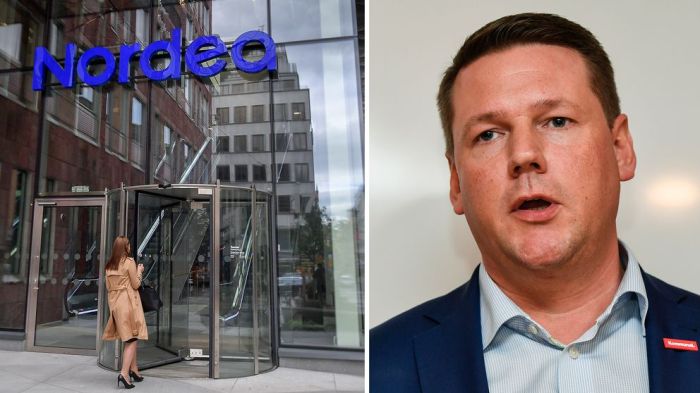
Swedish bank giant Nordea announced recently that they are moving from Sweden to Finland because of a new bank tax that the Swedish government is planning to put in place. The final decision will be made at an annual meeting next year. The threat to move has caused a lot of hoo-ha from both sides of the equation – those who criticise the bank for tax evasion and greed, and those who criticise the government for forcing companies to leave Sweden due to unattractive taxation laws.

Criticising the banks is Sweden’s largest trade union ‘Kommunal.’ – the union that represents council and municipal workers. Just today they announced that if the move happens, they will remove all their money from the bank. We are not talking about a small amount of money either. The amount is one billion Swedish crowns.

‘ We choose banks that reflect our morals and values and who act responsibly. Neither Nordeas MD or board do this,‘ says Kommunal’s chair Tobias Baudine

Kommunal joins other trade unions ‘Handels’ and ‘Seko’ who have also decided to leave Nordea and take with them investments to the value of half a billion Swedish crowns respectively.

Agree or disagree, this is definitely a great example of moral and civil courage. Sometimes as consumers, the best thing we can do is protest with our feet and our wallets.

  • If a business is acting in a way that is contradictory to our values and beliefs then leave them as a customer.
  • If a newspaper is spreading lies and hate, do not buy it or go to its website.
  • If an industry is employing dubious methods, then stop consuming their product.

Do not fund hate. Do not fund greed. Do not fund unethical behaviour (whatever that means for you).

By taking a stance, we have the power to change the world around us. If only we would realise it.


Starving children in a Stockholm museum 

Stockholm’s Photography Museum is, in my opinion, one of the world’s best museums for seeing photographic art. If you haven’t been, I recommend one of the current exhibitions called ‘What’s on the Plate’ by Magnus Wennman and Erik Wiman. I saw it today and it is no easy exhibition to see. In fact it is very difficult to stomach. 

In picture and text, you see very recent depictions of starving children around the world and what they are forced to eat in order to survive. The exhibition asks for donations towards Save the Children. It is well worth a visit and runs until 13 August 2017. 

It is a sobering and humbling experience and a reminder of the overindulgence of our daily lives and the vast gap between the ‘haves’ and the ‘have-nots’. 
For more information: http://www.fotografiska.eu

Bringing politics to the people


politikerveckan

If the election in the UK and USA has shown us anything, it is this. Bring politics closer to the people and you will win.

In the USA, it meant successfully manipulating the beliefs of the disillusioned and the sceptical.

In the UK, it meant focusing on the issues closest to people’s hearts and putting a fire under the asses of young voters.

Politicians in Sweden are, in my opinion, too often remote from the electorate and their reality. This is with one notable distinction in a quickly-growing, right-wing, populist party. This party has now taken the position as the second largest party in Sweden and poses a real threat to the other established parties and their ability to form governments in the future.

Every summer in Sweden, politicians hold a politics week on the island of Gotland in the Baltic Sea. This week brings together all the parties and they discuss and debate the current issues at hand, all televised to a broader Swedish public. I am all for politics and media debates but recently the Gotland Politics Week sits a little uneasy with me. In many ways, it is fantastic but it has moved far from its initial intention of putting politics in focus for the ordinary person. Today, it is more of an elitist gathering of lobbyists, journalists, aides and corporate partners standing in tents sipping free rose wine and partying until the early hours. How can people of the electorate relate to this? How can they even participate when, for example. it costs a lot to travel to remote Gotland and is difficult to find affordable accomodation?

As an alternative to this, a new Politics Week has risen. Initiators from the Stockholm suburbs have decided to bring politics to the people and have arranged a week of political debate and discussion on a football field.

On their website, they write:

‘The purpose of Järva Politics Week is to reduce the distance between politicians and citizens, create better conditions for ordinary people to engage themselves in politics, and put the issues of the local residents on the political agenda. This week gives politicians the opportunity to put forward their policies on exclusion, education, security and marketplace integration directly to the groups who are most impacted.’

It seems like all of the parties have accepted the invitation and most of the party leaders will attend this event to hold a speech.

Hopefully, in the suburbs, looking the real electorate in the eyes, they will realise what is needed to create positive integration, positive change and a positive future for everybody in Sweden.

What the f***! Was moving to Sweden a mistake?


I clearly remember thinking this to myself on May 13th 1995.  

I was at the airport waiting for a flight to London – my first visit home after moving to Sweden the previous autumn. 
Over the loudspeaker I heard an announcement. My flight was delayed. Due to snow. Yes, snow! Outside the window, snow billowed down on the runway and visibility was limited. In May! ‘What the f***!?’ I recall thinking. ‘Is this what it’s like here? I think I might have made a massive mistake moving here’. Eventually the flight took off and I landed two hours later in the British capital. There, in London, the sun was shining and people were walking around in shorts, t-shirts and shades. This, of course, cemented my concern. 

Now it seems as if history might be repeating itself. Yesterday it snowed in Stockholm. And haled. In May. Ok, not May 13th. But May 9th! Today more snow is forecast. And I am wondering if we’re going to break my 1995 record for the latest snowfall in Stockholm!? (Although the actual record seems to be June 12th in 1982). 

But I have learned something after 20 years in Sweden. If there is one thing we can rely on, it is that the weather does change. Have faith! The claws of winter are soon released and spring will finally and definitively be upon us. 

What kind of streets does Sweden want?

majority-rule--1

Yesterday, hundreds of people gathered for a peaceful manifestation in the centre of Stockholm. They listened to live music and speeches and they sang and danced. The manifestation was being held to shine a light on the rights of unaccompanied refugee children in Sweden.

About 30 people from a right-wing group decided to attack the demonstrators with verbal abuse, threats, kicks and punches. Many of the victims were teenagers who were left shocked, scared and even more isolated from the society that is hosting them.

Is this what we want the streets of Sweden to be like? Groups of thugs attacking peaceful demonstrators and youngsters? In my world, this is totally unacceptable.

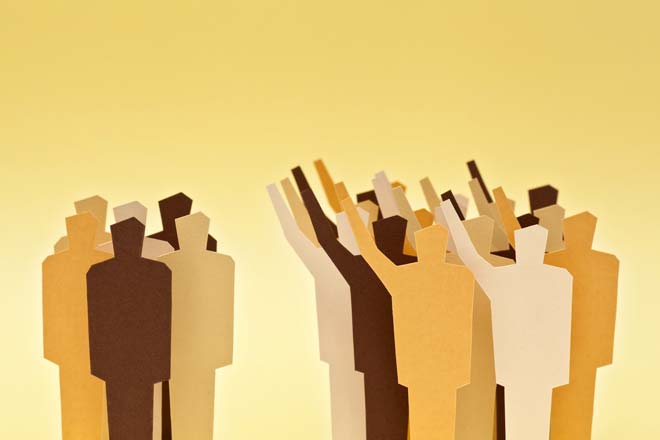
Democracy in Sweden is about having the right to express your opinion, whatever the political colour. It is about creating change through dialogue and activism. It is about getting involved and giving your opinion. It is not about employeeing violent methods to subdue and placate contradicting points of view. It is not about threatening and trolling and spewing hate. It is not about spreading fear in others just because I am fearful myself.

As members of an open, democratic country, each and every one of us should verbally and actively condemn what happened yesterday in Stockholm. A few short weeks after the love manifestation that filled the streets of the capital, we should not accept this attempt to drag our democracy into the shadows. This is not what we want on our streets, in our homes or in our society.

Yesterday, after the attack was over, people stayed behind to console and comfort the teenagers who has been brutally attacked. According to a witness, one of the teenagers found a thread of strength from within. He stood up and held a heartfelt, dignified speech – in Swedish. And he finished with a song – ‘Sverige’ (Sweden) by pop group Kent. One of the lines goes something like this:

‘Welcome, welcome here. Whoever you are, wherever you are.’

In that one song, this teenager showed us all what is means to be dignified and strong in the face of adversity. Violence and hate is not welcome here.


Terror on the streets of Stockholm 


At 2.30pm yesterday, a masked man stole a delivery truck from outside of a restaurant. The delivery man tried to stop the thief by standing in front of his truck.  However, the thief pushed over the driver, picked up speed and proceeded to drive zig zag down Stockholm’s main pedestrian shopping street, ploughing into people as he went. The truck’s final destination was one of Sweden’s largest department stores, into which it smashed in a billowing cloud of smoke. 

Like everybody else I was really shaken up by this act of violence.  I, and my nearest and dearest, were all in safety and my phone rang and beeped frenetically as we contacted and reassured each other. 

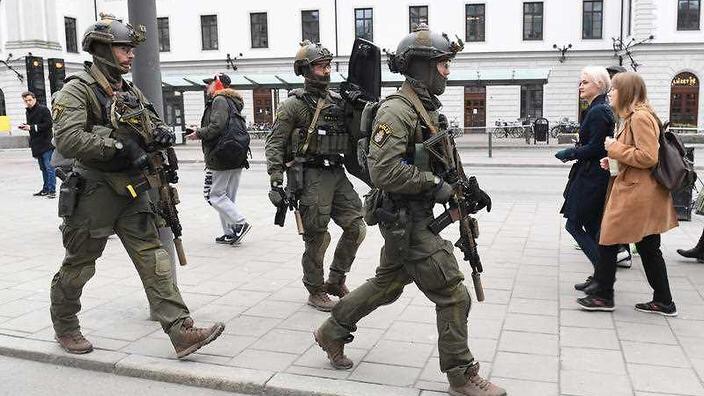
Stories reached me about friends being locked into their offices or hiding out in shops and restaurants. The streets were awash with armed police, and the whole city was shut down within 20 minutes – trains, buses and the underground were all stopped and roads were cordoned off as residents and tourists were rapidly ushered out of the city center. 

In the midst of the chaos, Stockholmers reached out to each other in support. People opened their homes to provide sanctuary to each other, cafes provided food and beverages, social media was flooded with people offering to help and offering protection. In this emergency, love prevailed – which was moving and heart-warming. I myself was in a gym, and the doors were locked. The staff went straight to action providing us with support and offering food and drink and unscheduled training classes for those who wanted a distraction. 

The latest news at time of writing this blog is that 4 people and 1 dog were killed, and 15 seriously injured. The driver has been arrested.  Another person is in custody believed to have some connection to the driver. Border control has been tightened up and there are still disturbances in local traffic. 

Stockholm now joins the long line of cities such as London, Berlin, St Petersburg, Paris and Nice, who have suffered under terrorist attack. 

No matter who is responsible for this act of violence, be it an organisation or an individual, we must never give into them.  The nature of terrorism is to spread fear by using intentionally indiscriminate acts of violence. It’s its indiscriminate approach that makes it difficult to predict and we are often powerless to influence it. Therefore we should do what we do best – not bow down to it but stand up and keep going. It is by living our lives in our open, democratic societies that we win.

I sincerely hope that Stockholm does not become a fearful, suspicious, closed city. This place that I love is a target because of its freedom and that is a freedom we should protect by continuing to live our lives. 

Terror will never win. It is designed to exploit our human fear. It is the ultimate act of intimidation. We must not let it win. My heart goes out to the victims and their families. Yesterday, we showed love to each other. Let’s continue to do that. We do not need more hate. 

We must prevail. 

Segregation on a Swedish school bus

school bus

In Sweden, the school system contains many independant schools run with a specific focus such as music, sport, art or specific religions. They should all follow the national curriculum and, in the case of religious schools, they should teach but not preach.

Yesterday, it was revealed that a Stockholm junior school with an islamic orientation has been segregating children on the school bus – boys go through the front entrance and sit at the front, girls go in the rear entrance and sit at the back of the bus. The headmaster of the school has claimed to be unaware of this. This act of segregation has caused a hot debate in Sweden about the ‘islamifying of Sweden’, ‘gender apartheid’ and comments such as it being ‘unSwedish’.

The Swedish Schools Inspectorate are planning on investigating the school further to see if any other ‘undemocratic activities’ are taking place. The Inspectorate has previously allowed segregated classrooms and gender-separated sport lessons.

What can we learn from this?

When this kind of occurance happens in society, it is a great opportunity to reflect on what we learn from it. What is our immediate reaction when we hear examples like this?

  • Do we run straight to the barracades and start defending our cultural heritage?
  • Do we condemn the occurance as, for example, undemocratic or unacceptable?
  • Do we weigh up the pros and cons and try to arrive at a balanced conclusion?
  • Do we think people are allowed to do whatever they want, so anything goes?

All of these are perfectly normal reactions, and one is not better than the other. Obviously, we react in different ways.

I think that these occurances in society provide us with a great opportunity to discuss intercultural competence. Being interculturally competent is generally defined as having an open mindset and the cultural sensitivity to see different perspectives so that one is able to flexibly adapt ones behaviours accordingly. But that doesn’t necessarily mean it’s about accepting that anything is ok. Intercultural competence can also mean balancing up the various perspectives and standing up for what one thinks is acceptable.

Intercultural competence differs significantly from racism and nationalism. Racism and nationalism focus on others being of lower value than myself or the place I come from. Intercultural competence is about accepting everybody’s perspectives are equally as valid – no matter how tough they are and even if I personally don’t agree with some of them.

So how do we arrive at this place of understanding that all perspectives are equally as valid? We can ask ourselves a simple, but complex, question:

‘What do they think is good about segregating boys and girls on a school bus?’

If we can arrive at the answer(s) to that question, we are becoming more interculturally aware and more interculturally competent. We are seeing the situation from their perspective and not only our own. We are presuming they have a good reason, from their perspective, for their behaviour, rather than immediately judging or condemning it.

Once we have reflected over that, we can decide what we personally think. Does it change our point of view? Can we accept their behaviour more easily? Or does it make me hold my view even more stongly? In that situation, we can say something like:

‘I understand why you think it’s good to segregate boys and girls. I understand your perspective. However, I disagree with it. And here in Sweden, we believe in equal treatment of all regardless of their gender, which is why that behaviour is not something we as a society can accept.’

Compared this to the more reactionary ‘the Islamists are trying to take over Sweden!’ and ‘this country is going down the drain’, you see how the ability to perspectives-take creates a more open, less fearful debate.

It is my belief that if we approach occurances like this in a more interculturally competent way, and try to perspectives-take, we can create a society built on mutual understanding and respect for prevailing values rather than a society built on fear and suspicion.

And that has to be a good thing moving forward, doesn’t it?