Royal Imported Snow


And so the snow has gone. We can see the pavements once again. Patches of green grass smile at us after several months’ absence. The sky is blue. The sun is shining. And spring, maybe, yes, spring is here.

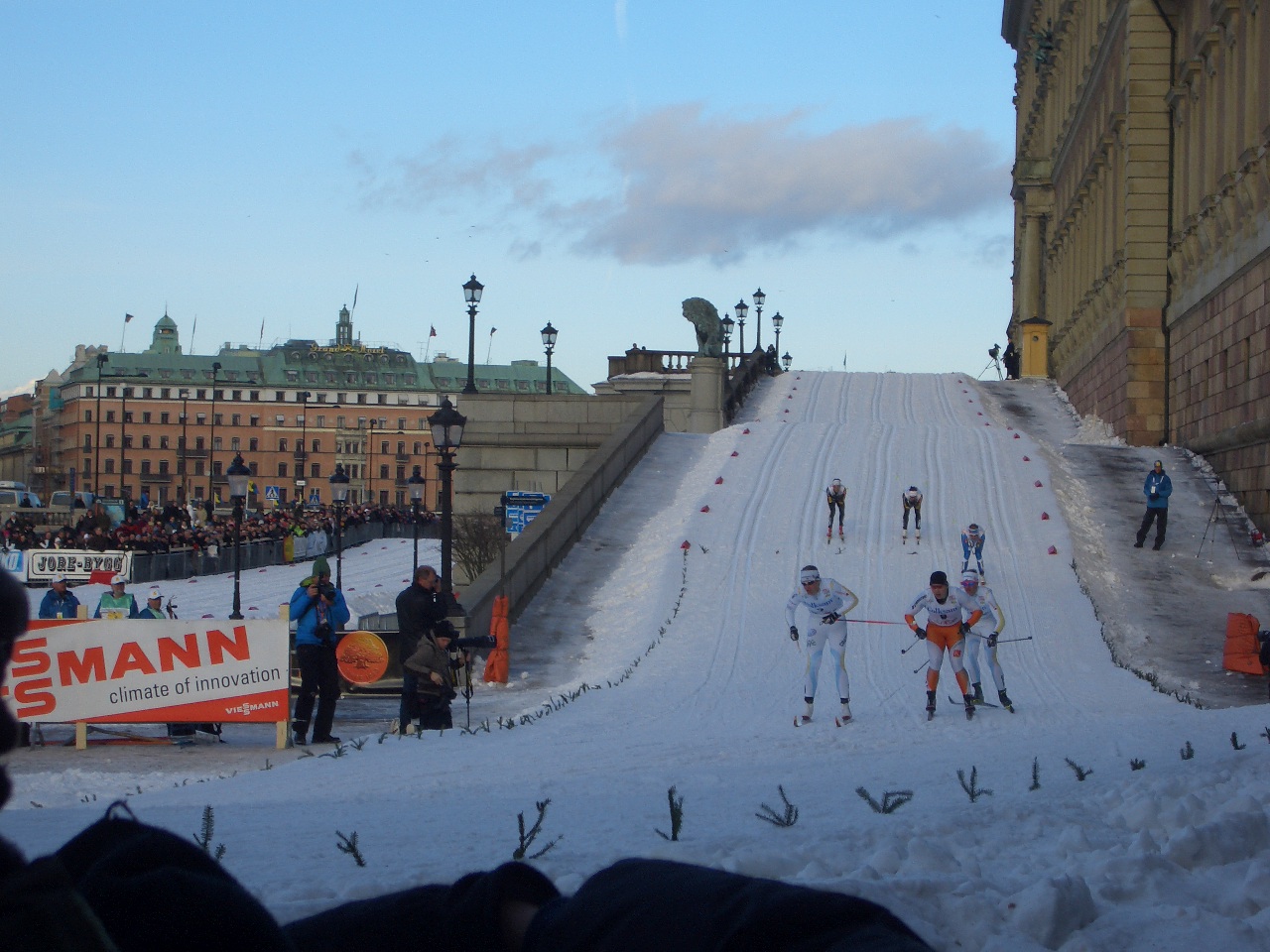
But not at the palace. Tons of snow has been shipped in and placed around the outside wall of the royal palace in central Stockholm. Not because the King has a particular penchant for snow, but because the Royal Palace sprint is taking place today. A world championship race, this sprint is, of course, on skis and the keen participants skirt the monarch’s outward rim in a sweaty, delirious blur of colour.

It seems to me like the transporting of snow into the city when the snow has gone is a strange idea. It seems expensive and not very environmentally friendly.

Why not schedule the race earlier in the year?

Like, in the winter, perhaps, when we have 4 months of natural unloved snow?

Cream buns for the girls


On International Women’s day this week a primary school on the Swedish island of Gotland came upon a good idea. They decided that, at the morning break, all of the boys would get crisp bread as their usual snack. But to celebrate International Women’s day all the girls would get a cream bun. Little did they know that this would create a parental and media storm to liken the Suez crisis.

At the end of the day, the kids went home and some of the boys complained to their parents that they also would have liked a cream bun. The parents were up in arms! How disgraceful! How terrible! What were they thinking?? How could they violate the rights of the boys and not give them the same as the girls?

This reaction made me think.

While admittedly the primary school maybe didn’t make a clever move, they did provide parents with an opportunity. Thinking parents should have sat their boys down and explained why the girls were given a special treat and why they have a special day. Thinking parents could have explained that girls around the world do not have the same access to education, or that they are married against their will, or that they are killed for speaking up against their fathers etc, etc, etc.

What an opportunity for the thinking parent.

Equality does not start with who gets a cream bun or not. It starts in the home, at the kitchen table, in dialogue between children and their parents.

Gay Swedish footballers

The image of Sweden as a liberal and open-minded country took a bashing this week. In comparison to many other countries in the world, Sweden is liberal. It is a place where, relatively speaking, minority groups can live safe in the knowledge that they are free from attack and protected by the law.

However, earlier this week, a popular young football player came out about being gay in the national press. The news was extra tantalising because the footballer in question is the son of a Swedish football legend from decades back. Many Swedes reacted neutrally to the news, not realy seeing any big issue around the fact that someone is gay – even if they are an elite sportsperson. But not everyone reacted in this fashion.

In the comments box on the football website http://www.fotbollskanalen.se, hate and homophobia flourished. In the end, the comments were so many, and so vile, that the website’s editor shut down the comments box. The hate that was spewed out had gone way over the limit.

This type of reaction indicates precisely why it is so good that footballers and other sportspeople come out. The macho culture, especially in football, means that many gay sportspeople are afraid to come out because they are afraid that their career will suffer or they will lose sponsors and fans. And as long as this fear exists, different sexual preferences will never been treated as equal, even in the democratic countries around the world.

So, in liberal Sweden, homophobia still exists. There is still work to be done.

The land of the lagom


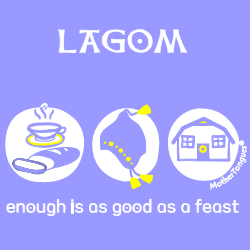
One of the first words you learn as a foreigner in Sweden is ‘lagom’. In English, there isn’t one word to sum it up. Roughly translated it means ‘enough, sufficient, adequate, just right’. Lagom is widely translated as ‘in moderation’, ‘in balance’, ‘optimal’ and ‘suitable’. While words like ‘sufficient’ suggest some degree of abstinence or scarcity, ‘lagom’ carries the connotation of appropriateness.

Similar to the concept of the middle path in Eastern philosophy, or Aristotle’s ‘golden mean’ of moderation in Western philosophy, it is said that the concept of lagom penetrates the Swedish way of life. Indeed the word lagom can be used in many situations to describe something that is ‘just right’.

Living in Sweden, you hear the word ‘lagom’ often. And just when you think you’ve understood it, something happens that makes it clear that you haven’t understood it at all.

For example, a person can be ‘lagom tall’ or ‘lagom short’ but that is not necessarily the same height.

Things can be ‘lagom funny’. Although said with some irony perhaps, what does this actually mean? That something is funny – but not too funny?!?

Lagom can also be used as an adjective – ‘that jacket is lagom on you’. Does this means it fits perfectly? Or does it mean it looks good enough – perhaps even mediocre?

And finally, things can be ‘precis lagom’, or precisely lagom. A concept that is so fuzzy for those of us not indoctrinated into it, can also be really exact.

The word lagom is generally believed to stem from the days of the vikings. When the vikings would pass around the mead to be drunk, it was important to take enough but not too much. The mead should last for the whole crew (in Swedish ‘lag’ + around ‘om’ Lagom = round the whole crew). Other etymologists claim that it comes from the Swedish word for law – lag – and means according to the folk law, or ‘according to common sense’ as we would say in English.

Whatever the origin, there is a meaningful cultural significance of the word lagom. The value of “just enough” is seen favorably in society as a sustainable alternative to the hoarding extremes of consumerism. But it could also be viewed as repressive – for example, it’s less ok to be too showy about wealth and power.

In a single word, lagom is said to describe the basis of the Swedish national psyche, one of consensus and equality. Despite a shift towards individualism and risk-taking in recent years, it is still widely considered ideal to be modest and avoid extremes.

But is Sweden really as lagom as it thinks in comparison to other contries? There are research databases that claim otherwise. I’ll talk about these in a later blog.

Right now, this amount of text feels, well,….lagom.
Swedish sex bombs


The myth of the Swedish sexbomb has been proven in the latest statistics from the Central Statistics Office.

The recently-released figures show that the population of Sweden is rapidly approaching 9.5 million. At the end of 2010, it was 9 415 570 people. This is an increase of 74 888 people since 2009. More people got married, more got divorced and birth rates are increasing.

I reckon it’s all thanks to the long, cold winters under the duvet and the wonderful, light, summer nights in the forest.

The definition of rape


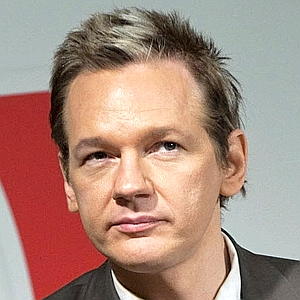
The current trial in the UK against Wikileak’s Julian Assange has cast the light on cultural attitudes to rape. The Swedish prosecutor is demanding that Julian Assange is returned to Sweden to face two counts of rape. His UK defense lawyer is trying to ridicule the Swedish definition of rape in order to prevent this from happening. In other words,saying what he did is not counted as rape in the UK and therefore he shouldn’t be extradited.

One of the women accusing Assange of rape has alleges that he used his body weight to pin her down. In the UK, the lawyer refered to this as simply ‘the missionary position’.
The other women accuses Assange of penetrating her when she was asleep/semi asleep and without a condom. The UK lawyer interpreted this as ‘half awake’ and if you’re ‘half awake’ you are consenting apparently.

The Swedish rape laws are amongst the toughest in the world, and I think that’s a good thing. In a country that believes in equality and integrity, I would expect nothing less. The attitude towards rape in Sweden – informed by a strong sense of women’s rights – means that it is more likely to be reported to police.

Some 53 rape offences are reported per 100,000 people in Sweden, the highest rate in Europe according to European jutice statistics.

The figures may reflect a higher number of actual rapes committed but it seems more likely that tough attitudes and a broader definition of the crime are more significant factors

Under Swedish law, there are legal gradations of the definition of rape.

There is the most serious kind, involving major violence.

But below that there is the concept of ‘regular rape’, still involving violence but not violence of the utmost horror.

And below that there is the idea of ‘unlawful coercion’. Talking generally, and not about the Assange case, this might involve putting emotional pressure on someone.

The three categories involve prison sentences of 10, six and four years respectively.

So, whatever Mr Assange did, it is in Sweden that he should face the courts. If it is a conspiracy, and he is innocent, it is terrible. But if he is guilty and protected by the UK lawyers, it is even more terrible.

No rapist should walk free. Ever.

Swearing till you’re blue in the face


Any foreigner arriving in Stockholm yesterday would have been surprised to see the tons of snow that were dumped on the city from the heavy sky. Even though they couldn’t speak Swedish, they would have picked up on one expression – a word that was heard on everybody’s lips. A word that had to be the most commmon word of the day yesterday.

The word? Fan!

The meaning? Something like fuck/shit/damn and used in this case in disappointment and dismay as the snow lashed down.

Swearing in Swedish is usually something I try to avoid. I think it’s difficult to swear in a foreign language because you don’t really understand the nuances and strength of the word in question. It’s easy to cause offence.

A recent article in a newspaper took up this issue of swearing in different cultures. All cultures have swear words and most of them are connected to what is considered taboo in that culture. Common themes are religion, genitals, toilet, sex and mothers.

In the Nordic countries, ‘mother’ isn’t such a loaded theme and therefore doesn’t feature in the common swear words. The strongest swear words are those connected to genitals, usually the female.

If you know more Swedish words than ‘fan’ and you’re interested in reading more, here’s the link:

http://www.svd.se/nyheter/idagsidan/samhalle/han-ar-expert-pa-svarande_5929059.svd

A Swedish scandal


And so it happens again. A new Swedish exposé on tax evasion.

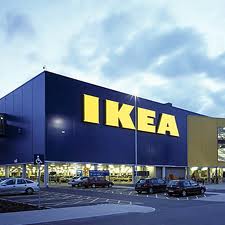
During the week, a well-known documentary series has investigated Ingemar Kamprad, the founder of IKEA. Consistently denying over the years that he has any involvement with IKEA any more, it was revealed that he runs a trust in Lichenstein which, in turn, ‘owns’ the rights to everything IKEA. It was explained that IKEA is run as a kind of franchise system – for every item sold in an IKEA store 3% in ‘royalties’ go tax free to Ingemar Kamprad’s trust. 3% on everything from sofas, to meatballs, to candles. The amount on income has reached something like 100,000,000,000. Now that’s a lot of money.

But the documentary focused on how much tax should Ingemar Kamprad pay on this income. He was wildly accused of tax evasion, tax planning and tax manipulation. He was accused of profiting on the Swedish brand and returning nothing to the system.

This is all very interesting from a cultural perspective. What causes scandal in a society says a lot about the norms and values of the country. In the UK, scandal always revolves around sex. In the USA scandal is often related to misuse of power. And in Sweden, it’s frequently about money and tax. In a country that sees itself as heavily taxed, it is however deemed scandalous when people don’t pay it. It feels like everything from not paying a tv license, to using a government credit card to buy a Toblerone, to tax evasion on a grand scale is given the same room in the media.

What the documentary didn’t take up, however, is the fact that since Ingemar Kamprad doesn’t live in Sweden and hasn’t earned these millions in Sweden, he isn’t liable to pay the tax. For example, I live and work in Sweden. I pay my tax in Sweden. Should I also pay tax in the UK, even when I don’t live there?

The documentary also forgot to mention the amount of job opportunities that IKEA creates in Sweden. Thousands. And all of those people pay income tax. IKEA pays VAT to the governent, pays employment tax, profit tax and corporate tax. All income to the Swedish government.

If IKEA didn’t exist at all, there’d probably be higher unemployment in Sweden. And those of us with jobs would have to pay more tax to support the burgeoning numbers of unemployed.

Now I know it’s not all black and white, but it is fun to play with perspectives. One thing’s for sure though, Ingemar Kamprad has done more for Sweden and the Swedish brand than any of these state-employed documentary film-makers ever will.

New Swedish words


In January, Sweden’s leading newspaper looks back at the year that’s been and selects all the new words that have been created. Swedish media are really good at preserving the Swedish language and creating new words, and this is an important function for all small languages. The varacious apitite of English is slowly devouring small languages around the world.

Some of the new words that came up in 2010:

Sosseväskan – Socialist Designer Handbag
Vabfebruari – February month when most parents stay home from work with sick kids
Köttklister – Glue that holds together bits of meat
Vulkanflyktning – people trapped abroad after the volcanic eruption on Iceland
Playa – to watch a program on the internet that you missed when it was broadcast on the tv
Grogghaggor – Booze bitches – relating to the Sex and the City gang (and the like)
70 percenter – a person who waits to the final week of the sales
Pinjemun – to eat a bad pine kernel and get a bad taste in the mouth for weeks
Fritzla – to hide something or somebody very successfully
Hipsterbuk – the fat that hangs over the top of too-low-cut jeans
Kaffeflicka – a woman who is invited to gentlemen’s dinners to drink coffee (revealed in a scandalous book about the king)

Dreaming of a white Christmas


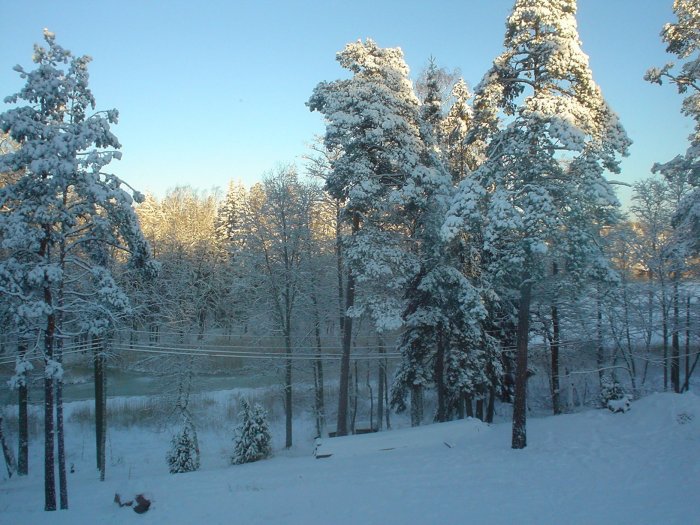
It’s snowing again. Yes, it is. It’s snowing. In fact, it’s been snowing since November so the chances of us not having a white Christmas this year are very slim. At Christmas, it should be snowy I think. It’s all part of the romanticism. But I can happily skip it the rest of the winter. Swedes will tell you that it’s better than rain. I disagree. They often justify it by saying that snow brightens up the darkness. True but I’m still not a big fan.

It’s no suprise that Sweden is a snowy country and this close relation to snow is reflected in the language. The eskimos have, apparently, 40 words for ‘snow’. I’m not sure how many words in Swedish there are for snow, but there are many. There’s just ‘snow’, then there’s ‘wet snow’ (blötsnö), ‘snow-blended rain'(snöblandad regn), ‘powder snow’ (pudersnö), ‘slush’ (slask), ´corn snow´ (kornsnö), snow hail'(snöhagel) and loads more.

And then there are fabulous words such as ‘skare’ which means snow crust and, my personal favourite, ‘dagsmeja’. This is snow that is melting on a sunny day even though it’s below freezing. Above freezing is thawing. ‘Kramsnö’ is the type of snow perfect for snowballs and ‘isnålar’ are small snow crystals that seem to float in the air.

I wonder how many words we have in English for rain?