Swedish protection in Addis Abeba

And so the Swedish journalists in Ethiopia got prison. 11 years for illegal entry and terrorism. I feel sorry for them and their families. ‘Merry Christmas’.

The outrage in Swedish media, however, is interesting from a cultural perspective. The trial has been called ‘unfair’, the case condemned as ‘political’ and the African system as ‘corrupt’. Is this true or is it a case of Swedes taking the moral high ground?

Anthropologists are yet to find a culture that thinks their way is wrong. And judging by this case, this is a very relevant discovery for Swedish culture. It seems very often in Swedish media, and even amongst Swedes themselves, that no other legal system is as honest and fair as the Swedish one. All African and Asian judicial systems are deemed unjust, as are most European – and the American system is seen as flawed.

Is this the reason why Sweden has given itself the role of the social and political conscience of the world? The neutral, peacekeeping and mediating nation? Because at heart Swedes think they’re right and the others are wrong?

My recurring feeling is that this belief gives some Swedes a false sense of security. Wherever they are in the world, they feel protected by the superiority of Swedishness.

The particular case in Ethiopia is, of course, a tragedy all round. And although the perpertrators may very well not be terrorists, they certainly did enter the country illegally. As journalists, they saw it as their duty to report on one of the most closed regions in the world. But they got caught.

And, although they might think so, I’m afraid being Swedish won’t protect them in Addis Abeba.
Let the light in – Lucia morning in Sweden

A Chinese proverb says this,

‘It’s better to light a candle than to curse the darkness’.

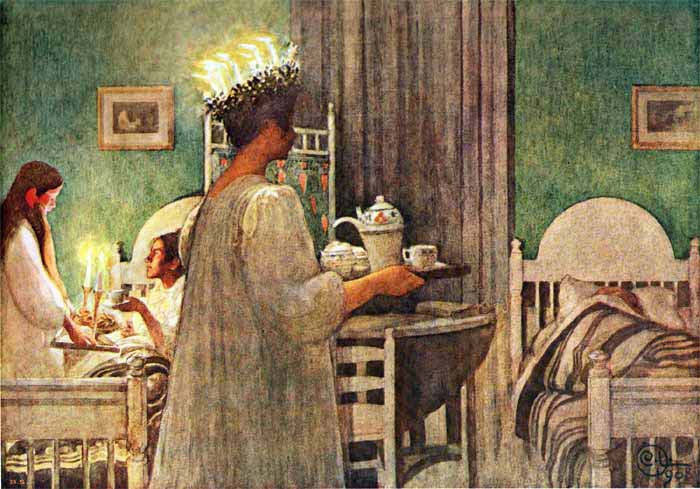
Never was this more true than today. Lucia day. At the darkest time of the year, when we all are drained by the black mornings and afternoons, Lucia pays us a visit. With candles in her hair and surrounded by her handmaidens and boys, Lucia shines light into the dark depths of our spirits. And slowly, slowly, the day awakens.

I love Lucia. Long live Lucia!

Lucia traditions are celbrated in Sweden, Norway, Denmark, Italy, Latvia, Estonia, Finland, Hungary, Malta, Bosnia, Bavaria, Croatia, Slovakia and St. Lucia, West Indies. But where does she come from and why is she one of the few Saint’s days celebrated in Sweden?

Santa Lucia is believed to have been a Sicilian saint who suffered a martyr’s death in Syracuse, Sicily around AD 310. She was seeking help for her mother’s long-term illness at the shrine of Saint Agnes, in her native Sicily, when an angel appeared to her in a dream beside the shrine. As a result of this, Lucy became a devout Christian and refused to compromise her virginity in marriage. Officials threatened to drag her off to a brothel if she did not renounce her Christian beliefs, but were unable to move her, even with a thousand men and fifty oxen pulling. So they stacked materials for a fire around her instead and set light to it, but she would not stop speaking. One of the soldiers stuck a spear through her throat to stop her, but to no effect. Soon afterwards, the Roman consulate in charge was hauled off to Rome on charges of theft from the state and beheaded. Lucia was able to die only when she was given the Christian sacrement.

The tradition of Santa Lucia is said to have been brough to Sweden via Italian merchants and the idea of lighting up the dark appealed so much that the tradition remained. The current tradition of having a white-dressed woman with candles in her hair appearing on the morning of the Lucia day started in the area around Lake Vänern in the late 18th century and spread slowly to other parts of the country during the 19th century.

The modern tradition of having public processions in the Swedish cities started in 1927 when a newspaper in Stockholm elected an official Lucia for Stockholm that year. The initiative was then followed around the country through the local press. Today most cities in Sweden appoint a Lucia every year. Schools elect a Lucia and her maids among the students. The regional Lucias will visit shopping malls, old people’s homes and churches, singing and handing out gingerbread.

So, it might be cold and dark outside, but inside it’s light. And the light is always stronger than the darkness. Keep your light lit, and you will never feel the darkness.

Animal rights

Out in the world, a prevailing stereotype of the Swedes is that they are liberal and sexually liberated. But even sexual freedoms can be too extreme. For example, zoophilia, or bestiality, has been legal in Sweden since 1944. It is also, by the way, legal in Denmark and Finland.

This is shocking information. How can a country like Sweden that fights for the rights of individual expression and rights allow such hanous actions to take place? Is bestiality allowed because Swedes don’t believe it possible? Current laws protect the animal from cruelty, but as long as it is not injured, then sexual activity is allowed.

But now, at last, a new law is being proposed. This new law would solely encompass the sexual abuse of animals for the perpetrator’s own pleasure. I am speechless that it has taken so long to affect a change. Outraged that it occurs in the first place. Thankful that the law is changing. Animals share this planet with us and they are subjugated under our will. They are without voices. This law will give them more rights, but they still do not have a voice. It is up to all of us to respect animals and to not abuse the power we have over these helpless beings.

Shame on you Sweden that it’s taken until 2011 for you to realize this.

Swedish legends by the motorway

Sweden is a country full of myths and legends. Like other rural countries, many of these myths and legends are based around the dark woods, or rugged hilltops or deep lakes. These legends are passed on verbally down through the generations, and some are considered so important that the region builds a statue or another kind of monument in its honour.

One such statue, built in 1969, can be seen from the motorway just outside of Jönköping, in the town of Huskvarna. At this point, the motorway separates the town from the vast lake Vättern. On the town side, on the grass verge, a giant is standing. This giant is clutching a clump of grass in his arms and gazing beyond the motorway to the other side of the lake.

Of all the people who have driven past this place, I wonder how many have seen this giant? And I wonder how many know of the legend surrounding him?

The giant’s name is Vist. And the story goes like this. Long ago in the area of lake Vättern lived the giant Vist and his wife. Every day, they would wander around the lake looking for food. It wasn’t unusual that on their walks, they would end up on the opossite side of the lake from their home. But this wasn’t a problem for Vist. With one giant step, he could stride across the lake and be home in no time. His wife, however, who had smaller steps than him, couldn’t manage this and had to walk back home around the shore’s edge.

One day, Vist was at home and his wife was wandering the countryside. She ended up on the opposite side of the huge lake. Hungry and weary, she realised she was too tired to walk all the way home so she shouted out to Vist across the lake. She told him to grap a clump of earth and throw it into the lake so she could use it as a stepping stone to get home quicker. Vist grabbed the earth and threw it into the lake and his wife came home.

We know this story to be true because the piece of earth remains today in Lake Vättern in the form of an island. The island of Visingsö – Vis’s island.

An announcement that shook Sweden

Recently, the winners of the Nobel prize for Literature was officially announced. This sombre occassion is avidly followed by the media from around the world. Who will win? A Swede? A European? The favourite….?

Yesterday, another announcement was made in Swedish media. Not quite of the same calibre as the Nobel prize for Literature, and not as interesting for international media, but none-the-less it was an announcement that created a lot of reaction in many Swedish households.

Who will lead 2012’s Melodifestivalen? Who will indeed be the host for the Swedish version of the Eurovision Song Contest qualifiers?

Late yesterday, the announcement came. Film actress Helena Bergström, singer Sarah Dawn Finer and blogger Ana Gina were the ‘lucky’ winners. Not many people reacted to Sarah Dawn or Ana, but the choice of Helena Bergström caused a storm on websites, in coffee rooms and on social media networks.

According to one net survey, 32% were angry at the choice of Helena Bergström. Others wrote acidic comments such as ‘She’s just going to cry all the time’, ‘she has no business being there’ and ‘she’s probably going to get her tits out like she always does.’

Think how powerful it would be if people could channel all this energy into something meaningful and positive instead of focusing on who hosts a music competition to select a bad Swedish song that never wins the international competition anyway?

The 7 billionth citizen of the world is not Swedish

In the Phillipines, a little baby was born. But Danica Camacho isn’t any ordinary baby.

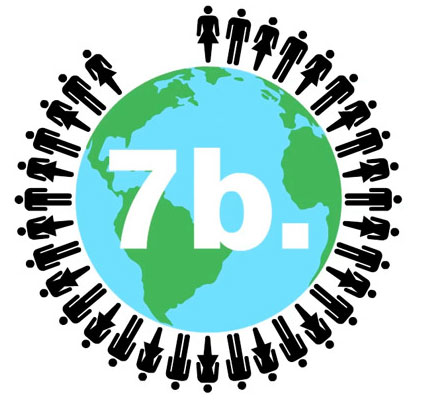
This innocent child has become a symbol for what Swedish Professor in World Health Hans Rosling is calling ‘the beginning of the end’. Although impossible to accurately calculate, Danico has symbolically been labelled the 7 000 000 000th citizen of Earth. Today, 31 October 2011, the population of the planet has broken the 7 billion threshold.

Why does Hans Rosling call it the ‘beginning of the end’? According to him, the number of births in the world is decreasing. And with an aging population, it’s only a question of time before the imbalance in generations becomes unsustainable.

And how does this relate to Sweden?

Although an aging population might be a problem in Sweden itself, overpopulation hardly is. According to the UN World Prospects Report, Sweden is one of the countries in the world that has the lowest number of citizens per square kilometer. Sweden has 21 citizens per square kilometer, on average. Compare that to the 18,534 citizens per square kilometer in China, or 16,923 in Monaco. The country with the most space is, as you might guess, Greenland, with 0,026 people per square kilometer. This is closely followed by the remote Falkland Islands and then Mongolia.

These statistics are naturally an avergae of the whole country, and most populations are intensified around their major cities. The most densely populated city is where little Danica Camacho was born today – the Phillipine capital of Manila where staggering 43,079 people occupy one square kilometer. In Europe, the most dense city is the rather obscure French town of Levellois-Perret. Here, 26,126 people squeeze together in one kilometer. And Stockholm’s population density? A measly 3597 people per kilometer.

So next time I’m on the underground and somebody complains about the number of people, or sitting on a bus, they whinge about the annoying amount of traffic, you know what I’m going to say?

‘Try living in Manila, then you’ll really have something to complain about.’

Happy Leaders’ Conference

I participated in a very interesting conference today.

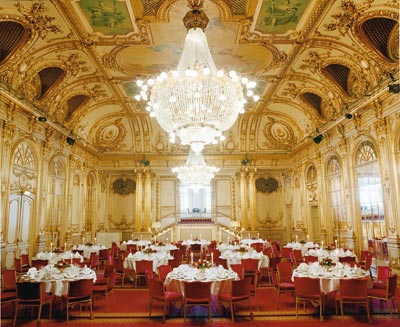
Arranged by the newspaper ‘Chef’, the conference gathered 200 managers from around Sweden at the Grand Hotel in Stockholm. The aim of the day was to listen to interesting and inspiring leaders and the day did in fact offer a variety of people and opinions.

SKF’s CEO Tom Johnstone talked about the importance of accessibility. Marie Louise Ekman, head of the Royal Dramatic Theatre stressed the skill of creativity. And Jens Henriksson, Managing Director of Stockholm Stock Exchange emphasised loyalty.

But perhaps the most provocative and ‘news-worthy’ guest was the leader of the major political oppposition party Håkan Juholt. Currently in hot water due to scandal around fraudulent housing benefits, everyone listened to Håkan with bated breath. What would he say about the scandals? Would he announce his resignation?

The theme of the conference was ‘Happy and a Manager – yes, it’s possible’ and Håkan Juholt reinforced several times that, despite his current situation, he is happy. So no juicy gossip and no resígnation. Just the usual political rhetoric.

As I sat and listened to the guests talking about what makes them happy as bosses, I was struck by the Swedishness of the entire theme. Would you find the same theme at a conference in Nigeria or in Russia? Probably not. In many other countries, the focus of leadership rests on efficiency or productivity or results. Of course, it does in Sweden too, but here we also have the luxury to reflect over our happiness also. We don’t have to worry so much about where the next meal is coming from or if our job is secure or our health insurance is enough. We’ve solved many of the issues of survival and can focus our energies on something else. Ourselves. And how we feel.

But does the opportunity to reflect over our happiness actually make us any happier?

Now that’s worth thinking about.

5 tips for spotting Swedes at an airport

If, like me, you like guessing peoples nationalities at airports, here are a few simple tips to help you spot the Swedes:

1) Small children running seemingly out of control around Duty Free shops, seating areas and restaurants? Always Swedish.

2) People forming a long queue at the gate 1-2 hours before boarding is about to commence? Swedish.

3) Laden down with heavy shopping bags full of tax-free alcohol? Swedes.

4) Wearing trendy clothes and designer glasses from Efwa Attling or the like? Yes, Swedish.

5) Still wearing flip-flops from their holiday in a hot country, even though they’re currently in Frankfurt? Yes, you guessed it. Swedish.

Sweden’s most famous saint

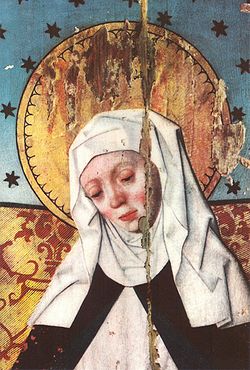
I was yesterday in an area of Sweden some 50km north of Stockholm on event where we drove rally cars and shot clay pigeons. Although it was a lot of fun, it was something else that actually caught my fantasy. Something completely different. The venue we were at was next to a small village called Finsta. And it was in Finsta that Sweden’s most famous saint – Saint Brigitte or the Holy Birgitta was born.

I became so interested in this fact that I did some research into who this woman actually was. Born in Finsta in 1303, Birgitta Birgersdotter bore 8 children and, after her husband’s death, dedicated herself fully to religion.

She had visions, her earliest visions being of the virgin Mary placing a crown on her head and of Jesus dying on the cross. Birgitta started a religious order with its main base in Vadstena and eventually moved to Rome where she died in 1373. She was canonised in 1391 for her good works.

And today, The Holy Birgitta is one of the six patron saints of Europe intended to protect the european land mass.

I wonder what she would think of loud rally cars violently tearing up the earth not far from her place of birth?

Favourite Swedish expressions

I have a Swedish expression that I really like – ‘Inget ont som inte har något gott med sig’. With every bad thing, there’s always something good. It’s a little like the English ‘every cloud has a silver lining’.

A couple of days ago I asked people on Facebook to let me know their favourite Swedish expression or words and, why. This is what some of them said:

‘Skit gott’ (Shit good)- What a contradiction of words…Poop good???
onsdag kl. 06:52 · Gilla.

‘Nu går skam på torra land’ – (shame walks on dry land???) – Jättekul uttryck 🙂 used when somebody has done something he/she should be ashamed of
onsdag kl. 07:05 · Gilla.

‘Skamlös’ – (Shameless)- A wonderful word if you think about it.
onsdag kl. 07:27 · Gilla.

‘Jag älskar dig…’ – (I love you) – Because it is fantastic when you can say it to somebody. I get warm inside everytime I say it.
onsdag kl. 07:31 · Gilla · 1 person.

‘Det fixar sig” – (It’ll all work out) – Either exaggerated belief in the future or the irresponsible abandonment of your own fate into the hands of another.
onsdag kl. 08:00 · Gilla.

‘When people mix up phrases and don’t react themselves, such as “jag har många bollar i luften” + “jag har många järn i elden” = “jag har många bollar i elden”
(I have many balls in the air + I have many irons in the fire = I have many balls in the fire.)
onsdag kl. 21:08 · Gilla · 1 person.

What’s your favourite Swedish expression, and why?