Oh, those beautiful Swedes


Good news to all Swedes!

A recent survey was carried out by Travellers’ Digest about where the world’s most beautiful men and women reside. Their conclusion? The most beautiful men are in Stockholm! Stockholm’s women came in second position, beaten only by the lovely ladies of Kiev. Alexander Skarsgård, from True Blood, was provided as a classical example of the ‘hot Swedish guy’.

This is what Traveller’s Digest writes about Swedish men:

‘Swedish men have long been misunderstood. Case in point: they are often stereotyped as cold, emotionally distant loners and inexplicably mistaken for Swiss guys. On the plus side, they are also generally considered aesthetically pleasing due to their fine-boned Nordic attributes and exceptional height advantage. Although there always seems to be some truth to these types of classifications, in the case of these Scandinavian studs, the deeper reality is quite a pleasant surprise. Your average man in Stockholm is an impeccably-dressed clotheshorse that truly indulges in the enjoyment of the finer things in life: from food to fashion, culture to hearth. But what really makes them unique? Despite the fact that one must practice patience when engaging in the slightly bizarre ritual known as the Swedish courting process, once you have captured the heart and imagination of your elegant gent he will be devoted to you for life. What’s more irresistible than that?’

And for women, they write:

‘What you have seen on the beer commercials is true; Sweden really does have some of the world’s most beautiful women. The streets of Stockholm are literally packed with these gorgeous women, who are as tall as they are luscious. Even better, is that Scandinavians are world renowned for their friendliness, so there’s a good chance that the girl you’re eyeing is actually a sweet and down to earth person.’

But, don’t be dismayed, Swedish women actually topped the list of the world’s most beautiful women – this is what they wrote:

‘Sweden is firmly in first place on this list. The first time you visit Sweden is an unreal experience as you realize that everything you have ever heard is, in fact, true! The women are tall, blonde-haired, blue-eyed goddesses whom are friendly and educated to boot. There must be something in the air.’

I guess I’m lucky to live in Stockholm!!

Swedes love their cakes


Swedes love their cakes.

And this week has been a major cake week that has given the economy a real boost. First on Tuesday, people stuffed down the creamy, marzipany lent buns known as semlas. And today, local bakeries around the country are reporting that a certain item is sold out. The shelves are empty. And what might this item be?

Prinsesstårta, or Princess Gateux, of course.

A new princess was born in the night, so today everybody wants Prinsesstårta.

Why? Group think.

Group think is a very interesting cultural and psychological phenomenon that occurs within groups of people or whole societies. It is the mode of thinking that happens when the desire for harmony and belonging to a group overrides individuality. It creates a positive feeling in the group or society as it provides ‘social glue’. However, the negative cost of groupthink is the loss of uniqueness, and independent thinking.

So, princess born = princess cake for many people in Sweden.

Let’s hope they christen her Princess Mazzarin or Princess Tosca. That should boost the economy even more.

(Note: Mazzarin and Tosca are other popular cakes in Sweden)

A new Swedish princess is born


In the middle of the night, Sweden got a new Princess. She has no name as yet, so right now she’s Princess Thing. Not only has her mother, Crown Princess Victoria, given birth to her first child but she has also provided Sweden with the next monarch.

Unlike many other countries in the world, Sweden’s line of succession to the throne goes to the first born, not necessarily the first son. Sweden adopted this equal progmeniture in 1980 when the current king had his first child, which happened to be a girl. Up until 1980, the throne went to the first-born son. For example,the king himself is the youngest child with several elder sisters.

This change on the law reflects clearly the Swedish belief in gender equality even up in the higher echelons of society. Nowadays, it sounds ridiculous to us in Sweden that elder sisters would forgo their right to inheritence/title/estate just because they are female and have younger male siblings. It feels dusty and old-fashioned.

Only in 2011, was there an agreement in the UK to change the law in a similar way. Any future child of William and Kate, regardless of gender, will be heir to the throne after William.

Communist warning on the streets of Stockholm


The other day, I couldn’t believe my eyes. My chin nearly hit the floor with what I saw on one of the busiest streets in central Stockholm.

Sweden is, for many, associated with socialism, even ‘communism’, depending on your particular political leaning. And what I saw in central Stockholm really reminded me of the stereotypical images we have of the communist USSR.

In Sweden, the government has an alcohol monopoly, which means you can only buy wine and spirits in certain shops called Systembolaget. These shops are dotted around city centres and have restricted opening hours. Obviously, they’re very popular because Swedes are not known for their reservedness when it comes to alcohol consumption.

Anyway, in central Stockholm, next to the main railway station there is a Systembolaget. The other day, I needed to buy two bottles of white so I decided to go to this particular branch. As I approached it, I couldn’t believe my eyes. This is when my chin nearly hit the floor. I saw something I’ve never seen before. Outside the shop, there was a long queue to get in. A bouncer on the door was letting customers in gradually. People were queueing up to buy alcohol. Hello! Communist warning!

Now, I happen to be a fan of Systembolaget. Often, there’s a very good range of quality products, the price of wine is very competitive and it’s a way of supporting improved public health. The main argument against it, of course, is the questionable ethics of a monopoly and the fact that it is a clear example of state control over individual freedom and choices. I haven’t really prioritized the latter in this case – up until now. Seeing the queue of people freezing in the snow until they could get in to buy a bottle of wine seemed somehow very wrong. It was really a kick back to times that most people would rather forget.

So, anyway what happened?

Of course, I got in line and stood at the back of the queue and shuffled along slowly with the rest of the drones until I was allowed in to purchase my two bottles of Chardonnay.

Gloria and the giant egg


Long, long ago in the southern lakes of Stockholm, there lived a duck called Gloria and Gloria was a special duck indeed. Sure, she had white feathers, a yellow beek and big webbed feet. But it was something else that made her special.

Gloria was a giant duck. She was, to put it simply, huge. She was so huge that she towered above the tree-tops.

The townspeople at that time didn’t know about Gloria. She kept herself to herself far away from civilisation and deep in the forests to the south of the town. She fed off fish, but they were so small that she had to eat tons and tons of them to feel full. She was eating all of the time. And the more she ate, the more she grew.

Now it just so happened that one day a group of townspeople were riding through the forest along a wide river. As they approached the lake known as Flaten, they saw something curious on the ground – a giant webbed footprint. They looked quickly around and noticed that the footprints led deeper into the forest. Slowly, they followed the trail until they arrived at a big pile of sticks in a circular form – some kind of nest. They climbed up the outside of the nest and peeked over the top. And there in the centre of the nest they saw a big, white egg.

‘Oh my’ they thought, ‘that egg would feed the people of Stockholm for many months’
‘We have to take it back to town’ said one of the men in the group.
‘But how does one carry such a big egg to town?’ asked another

The giant egg was certainly too massive to carry. Rolling it might break it. They looked around the forest for inspiration.

‘I have an idea’ said one of the men, ‘if we can break the side of the nest, we can roll the egg down to the lake and float it on the river all the way back to Stockholm’.

What a brilliant idea! And this is exactly what they did. Soon the giant egg was bobbing along the wide river on its way to the town.

A short while later, Gloria returned from a day eating fish from another lake. When she saw her empty nest and the missing egg, she quacked inconsolably. Seeing the broken sticks on the ground she understood what had happened. Thieves! They were taking her egg to the town to eat. Angrily, she dove into the lake and swam towards Stockholm as fast as her webbed feet could paddle.

Soon in the distance she saw her egg, floating on the river. And she saw the townspeople with ropes and sticks urging it along. ‘I’ll teach them not to steal’ she quacked, and she swam towards them.

The egg might have been in water but it was still heavy. The group of men were struggling to make it move and making slow progress. Suddenly, from behind them, they heard an angry quacking. They turned around but before they knew what had hit them, Gloria had lifted the giant egg on her beak and rolled it to the bank of the river. Then, with a horrifying screech, she ate up every single man.

Gloria climbed up to the bank to her egg. The bottom of it had flattened out with the speed that it had hit the ground. It wasn’t round any more, so she couldn’t roll it. She tried to push it back into the water but it was stuck fast to the earth. Realising moving the egg was an impossible task, Gloria sat down on the grass beside the egg and hung her head in sorrow. And there she stayed for many many years, protecting her giant egg from any townspeople that might want to steal it again.

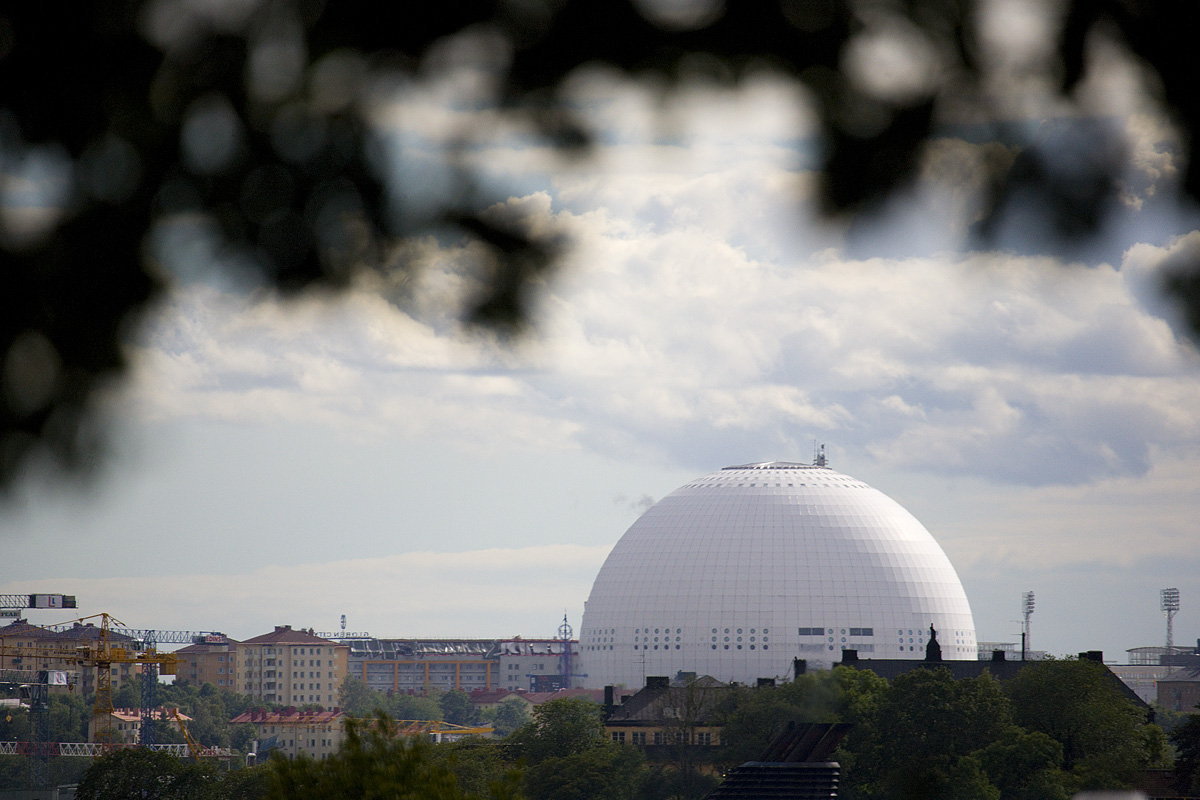
Nobody knows what happened to Gloria. She probably got very old and disappeared into the forest to die. But her egg is still there. Just to the south of Stockholm, you can see it towering above the treetops. A long time ago, the townspeople hollowed it out and used it as a shelter. Now, we use it as a place of entertainment.

We call it Globen, but we should really call it Gloria.

All we need is love


Today is Valentine’s Day in many countries around the world, including Sweden. Many Swedes embrace the celebration with flowers, chocolates, dinner dates. Other Swedes react negatively to it as it is an ‘imported tradition’ – an Americanisation. But what Swedish tradition isn’t imported? They all are, we’ve just forgotten where from.

I understand the anti-commercialism arguments, the same resistence that arises around Halloween. But the way I see it is this. We live in a globalised world, with global influences. This means that there are flows of people, products, beliefs and traditions. Of course, globalisation brings with it negative aspects, and also positive things.

A celebration such as Valentine’s day is about celebrating love.

And love is something that, in a seemingly harsher world, we could all do with a little more of.

Body beautiful?


I was at a health assessment today, where I was factually informed I am overweight. Not much, but I am nearing a risk zone for a gentleman in his 40’s. A machine measured my height, fat percentage, muscle mass and age and came up with this unwelcome conclusion. So it’s time to start eating healthier and start exercising again.

This got me thinking – why are we so interested in losing weight and achieving ‘the body beautiful’? One thing’s for sure – this interest is certainly a conditioned attitude.

One of the biggest ‘conditioners’ of our time is the media – the tabloids. You can’t walk around the central areas of most towns in Sweden without being bombarded with messages about weight-loss, new diets or shocking stories about fat people.

Today’s Aftonbladet: ‘She lost 15 kilos – in 3 months!’
Today’s Expressen: ‘Lose weight guarantee’

It’s no surprise that people feel anxious about their body image and that young people suffer from bodily identity issues. The pressure for body beautful is very strong in Sweden.

However, as we know, Sweden’s not the only country with these issues. I’d venture to say it’s the same in most western countries. And anything Sweden can do, Britain can do better?

Today’s Sun newspaper: ’58 stone man eats 8 hotdogs for breakfast’
Today’s Mirror. ‘How a talking plate can help you lose weight’
Today’s Daily Mail: ‘Meet the world’s fattest man who lives in London’

It’s depressing how manipulated we are, isn’t it?

Think I’ll go get a bar of chocolate.

Eldvind and the iron steeple

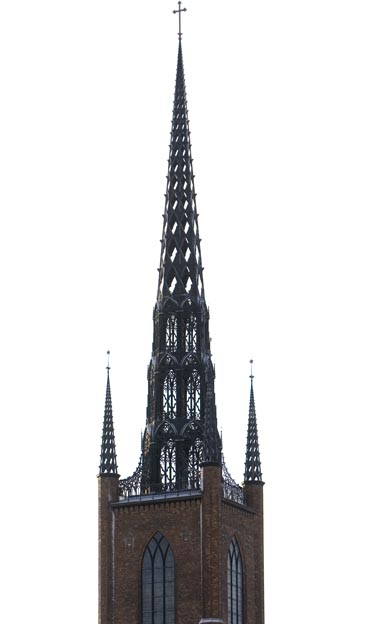
Long, long ago the city of Stockholm wasn’t as big as it is today. In fact, it was comprised only of two small islands surrounded by sea on one side and a lake on the other. One of the islands, known today as Gamla Stan, where the city people lived and worked. On the other island, known as Riddarholmen, there was a monestry and a church, with a large iron steeple.

Now, the people of Gamla Stan had a problem. Every day, from the southern forests, a large dragon called Eldvind would come flying and swooping over them. He would screech and breathe fire and, if you were unlucky, he would grasp you in his mouth and swallow you up. Eldvind the dragon always circulated over Gamla Stan a few times before he landed on the steeple of the church on Riddarholmen. Then, perched up high, he would breath fire on the steeple until the iron melted. Opening his jaws, he would take a huge bite and swallow a bit of iron in a loud gulp. And then, with a screech, he would take off and fly away over the water to the southern forests.

This went on day after day, week after week.

But after a while, the people of Gamla Stan started to notice something odd. Eldvind seemed to be flying lower in the sky like he was heavier. He seemed to be slower and more tired. Could the iron he was eating be making him heavier? Yet still Eldvind would continue perch on the church, melt some iron, eat a big piece and then disappear across the water.

Time went on and soon the church steeple had hardly any iron left on it.

One day, it was in early spring, Eldvind appeared again. He flew so low that he skirted the top of the water, he couldn’t lift any higher. He landed at the bottom of the church, too heavy to climb to the roof. Blowing fire upwards, he melted the remaining iron and opened his mouth to catch the last drops as they fell to the ground.

Heavy stomached, Eldvind turned to fly back over the water. With great effort, he lifted and flew in the direction of Gamla Stan. Huffing and puffing, he tried and hard as he could to reach the forests but the iron he had eaten had made him too heavy and he sunk lower and lower until he crash- landed on his stomach in the middle of the town. The townspeople watched with amazement as the dragon tried to get to his feet and fly away, but he couldn’t.

Suddenly, a knight on horseback came riding through the town to slaughter the injured dragon. He raised his sword. But then he stopped. He watched as Eldvind’s feet turned to iron. Then his legs, his body, his tail, his wings and finally his head and jaws stiffened and became iron.


If you look over the water at Riddarholmen you can still see the church with the curious steeple there today. It looks like a skeleton, but once upon a time, it was covered in iron. Until the dragon devoured it.

And if you walk through Gamla Stan you can still see Eldvind.

Most people think that it’s a statue of St George fighting a dragon – but it’s not. It is really Elvind – the frozen dragon that terrorized the people of Stockholm long, long ago.

Hello world!

Welcome to WordPress.com. After you read this, you should delete and write your own post, with a new title above. Or hit Add New on the left (of the admin dashboard) to start a fresh post.

Here are some suggestions for your first post.

  1. You can find new ideas for what to blog about by reading the Daily Post.
  2. Add PressThis to your browser. It creates a new blog post for you about any interesting  page you read on the web.
  3. Make some changes to this page, and then hit preview on the right. You can always preview any post or edit it before you share it to the world.

The legend of Huskahinni the ogre


Long, long ago in Stockholm there was an ogre called Huskahinni. Huskahinni was a friendly but rather arrogant ogre with one eye in the middle of his forehead. But Huskahinni thought, quite simply, that he was the best ogre in the whole of the land of Norden.

Huskahinni lived in the tower that stretched above the city hall. From his viewpoint, he could look out over the whole city, the waterways and the islands. Every morning, he would lean out of the tower and shout out over the city, ‘I am Huskahinni, King of the Mountain!’

Now, at that time, the land of Norden had a real King and he didn’t take at all kindly to the ogre’s claim. He called his advisors to him and aksed how to stop Huskahinni’s jeering from the top of the city hall.

‘We could shoot him’, said one advisor. The King said no.
‘We could send soldiers up and bring him down’. The King said no,no.
‘We could burn down the tower’, said another. No, said the King, no, no, no.

Finally, a fourth advisor stepped forward. Clearing his throat, he announced that the best way to silence the offensive ogre was to ridicule him into silence. To make fun of him. The King seemed interested in this idea. Yes, the best way to shut someone up is to make them feel silly.

‘Quite right,’ he said. ‘If he claims to be the king, let’s make him the king’.

The next day, the King called to him the city’s goldsmith. He ordered him to forge three large crowns out of gold.

The weeks went by, the goldsmith forged, the King waited and Huskahinni kept peering out from his tower and claiming he was the king of the mountain.

Finally, the day arrived when the three golden crowns were ready. The King arranged for the goldsmith, and the rest of the townspeople, to meet him by the city hall. When everyone was gathered the King looked up at the enormous tower, and shouted, ‘Huskahinni, Huskahinni, who are you?’. The ogre popped his head over the edge of the tower and shouted ‘I am the king of the mountain!’. ‘Well’. said the King, ‘you deserve a crown’. At this moment, the King signalled to his soldiers to catapult one of the crowns up to the top of the tower. Hitting Huskahinni in the head, the ogre yelped and fell backwards. And the townspeople laughed and laughed and laughed.

The next day, the crowd gathered again at the base of the city hall tower. And once again, the King called, ‘Huskahinni, Huskahinni, who are you?’. The ogre popped his head over the edge of the tower again and shouted ‘I am the king of the mountain!’. ‘Well’. said the King, ‘then you deserve another crown’. Once again the soldiers catapulted the second of the crowns up to the top of the tower. Hitting Huskahinni in the eye, the ogre screamed in pain and fell backwards. And the townspeople laughed and laughed and laughed.

The third day came and the King shouted for the ogre again.’Huskahinni, Huskahinni, who are you?’. ‘I am the king of the mountain!’. ‘Well’. said the King, ‘a king should have a crown’. And yet again, a golden crown was catapulted one to the top of the tower. Hitting Huskahinni in the neck, the ogre fell backwards, bleeding. And the townspeople laughed and laughed and laughed and laughed.

‘That should do it,’ thought the King, ‘that stupid ogre’.

The townspeople danced back to their homes laughing at the hilarious way in which the King had tricked the ogre. High up in the tower, Huskahinni looked down. His head and his eye were hurting and his neck was bleeding. And all alone, at the top of the city hall, he started to cry.

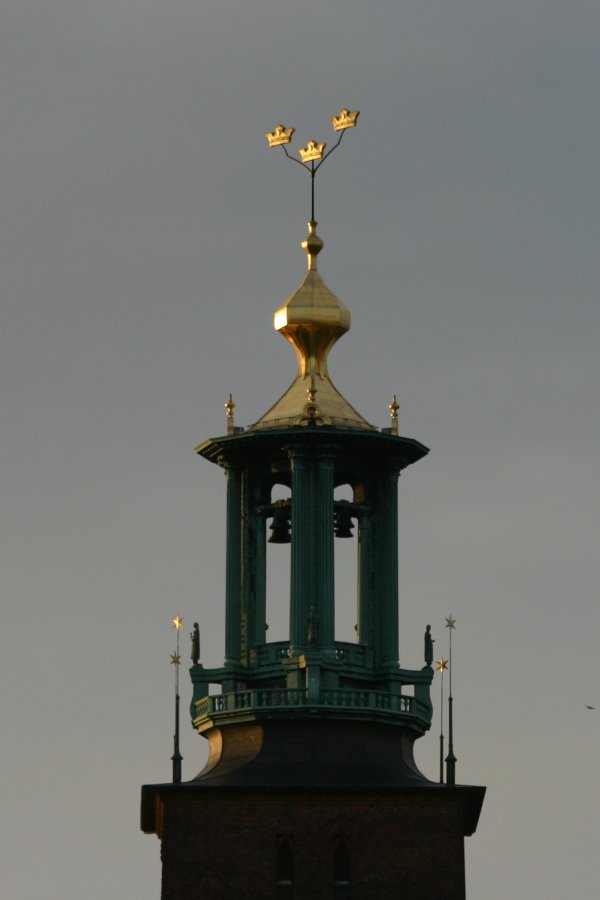
The next day, the townspeople went about their work as usual, laughing at the memory of what had happened to the stupid ogre the days before. Suddenly a little girl pointed to the top of the tower – ‘Look!’ she shouted. The townspeople looked up and couldn’t believe their eyes. High up at the top of the tower, there was a golden pole. And stuck to the top of the pole were the three shiny golden crowns, glistening in the sun for all to see.

Today, Huskahinni is long gone. But his crowns are still there, perched on the top of the city hall.

A reminder to us all that, once up on a time, Huskahinni was king of the mountain.