Stockholm A-Z: Hipsters

IMG_4386.JPG

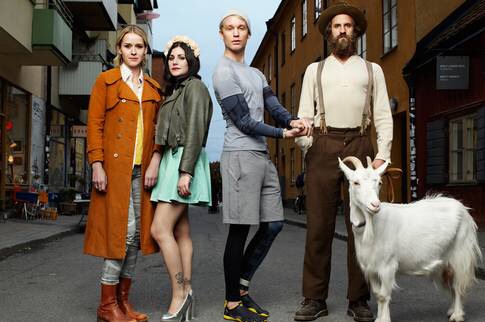
When you understand the definition of hipster as middle-class young bohemians residing in gentrifying areas with an interest in alternative music, vintage, progressive politics, organic, artisanal foods and alternative lifestyles, there’s one neighbourhood in Stockholm that stands out. Recently voted in Vogue magazine as one of the coolest city areas in the world, the island of Södermalm lives up to its reputation as a hipster heaven. Divided into distinct areas, the island offers lots to see and do. On the western side of the island, is Hornstull. Here you will find groovy restaurants, shops, a vibrant music scene, a craft market, an independent cinema, bathing areas and Tantolunden – a popular green area for hanging out in. In the centre of the island, you will find Medborgarplatsen – or ‘Citizen square’. Hipster life is non-existent in this area but the square offers lots of mainstream cafés and restaurants and late night bars. Political rallies are often held here. On the eastern side, you will find an area known as Sofo, the birthplace of the hipster movement in Sweden, which has become such an identifiable brand it has even been ridiculed in a TV comedy based in the area. Sofo is packed with bars, restaurants, cafés, butique shops, vintage places and artisan fooderies. It’s well worth a visit and a stroll about on a sunny day. Much of the life circulates around the few streets between Nytorget, Götgatan and Folkungagatan. On some Saturdays, there is a farmer’s market lining one of the main arteries. For an alternative music and theatre scene, it’s worth visiting the venue Mosebacke with its outside terrace and view over Stockholm.

Stockholm A-Z: Gondolen

IMG_4385.JPG

If you want to experience a breathtaking view of Stockholm, while enjoying a fantastic cocktail or meal, very little beats Gondolen. Perched 33 meters above Slussen in a glass tongue, the restaurant serves critically acclaimed food and offers sweeping vistas of the lake Mälaren to the left, the city and the Baltic Sea to the right. Gondolen is a perfect location in the winter months, when the cold winds and icy temperatures envelop Stockholm. From inside, you can look out over the glittering winterscape while sipping on an elegant Rasperritini and tucking into a bleak roe toast.

The restaurant has historical merit, as it was inaugurated in 1935 as part of an inner city generation project. And history tends to repeat itself. The area where Gondolen is positioned is being heavily renovated again with a lot of demolition and remodelling. However, I believe this Stockholm classic will remain a jewel in the city’s crown for many many years to come.

Stockholm A-Z: Ferries

IMG_4382.JPG

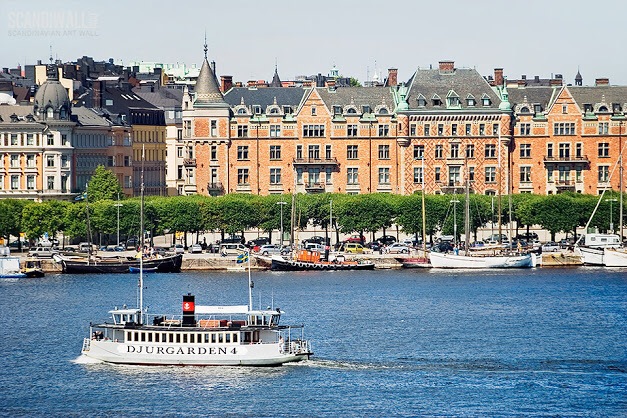
Considering Stockholm is a city built on many small islands, it’s not surprising that a favorite mode of transport is the ferry. In the city, there are several ferries used both by commuters and by pleasure trippers. The Djurgårds ferry takes people from Slussen on Södermalm to the museum and activity island of Djurgården. It’s a cute little boat that looks like a toy that a giant has flicked with his finger and thumb as it catapults over the waterway to the other side. This ferry also carries visitors to Östermalm and to Skeppsholmen, an Island located in the middle of the harbour, and is very well patronized by the city’s inhabitants.

Three other ferries in Stockholm are the ones taking well-heeled dwellers from the docklands development of Hammarby Sjöstad to Södermalm, and from Hammarby Sjöstad into the city, and the ferry that shuttles passengers from the Old Town to the suburb of Nacka and the islands of Fjäderholmarna.

But perhaps the most noticeable ferries are the giant liners positioned in Stockholm’s harbour that take passengers and vehicles to the Baltic Island of Åland and to Finland. These ferries satisfy various needs for Stockholmers. Some use them as a mode of transportation between Sweden’s capital and the Finnish cities of Helsinki and Åbo, maybe to work or to deliver goods or visit family. Others use the ferries as pleasure cruises, an opportunity for a trip out to sea, to eat well and maybe watch a show. Others use them as a way of buying cheaper duty free alcohol as the ferry bobs around in international waters. And other Swedes use them in a way that has gained these ferries notoriety – as a booze cruise. A popular weekend pastime is to embark the ferry on a Friday, drink, dance and party, and disembark, somewhat frazzled, when it returns to Stockholm 48 hours later.

Whatever the reason for taking one of Stockholm’s many ferries, this mode of transport is an undeniable part of the waterscape of this city and it certainly does contribute to Stockholm’s description as ‘the Venice of the North’.

A theory about Stockholmers

Stockholm

It happened again today. And, actually, it has happened once too often.

When I approached my office building this morning, there was a small group of people speaking Swedish standing outside in the cold. They couldn’t get into the building. As I have a pass card, I knew I could let them in. So, I smiled, and I said ‘I can let you in to the warmth’. There was no reaction, apart from a little wry smile. Swiping my card, I let them into the building and turned to look at them. Not one of them acknowledged what I’d done and said ‘Thank you.

This might seem like a small thing, but it happens all the time to me. I hold a door open for somebody. I get no ‘thank you’. I let somebody go on the bus before me. Nothing. Soembody bumps into me. And I apologise!

Why is this the case? Why do many Stockholmers not acknowledge or thank each other. It isn’t that they don’t see each other. Is it that they don’t care?

An interesting fact is that the vast majority of people in Stockholm come from somewhere else in Sweden. They have migrated from smaller towns and villages to seek work, love and excitement in the capital. My experience of being in towns outside Stockholm is that people are friendly, polite and acknowledging of each other. So what happens to these people when they move to the city?

I have a theory. I think that many Stockholmers who have migrated into the city have a perception of what a city should be. They seem to think a city should be fast-paced, tough, individualistic and unfriendly. That people should push themselves forward, and through, other people. That connecting with a stranger in a public place with eye contact, a small remark or a thank you does not belong in a capital city. I think that they are playing pseudo cosmopolitans.

In my opinion, this attitude is shamefully misguided. Citizens of much larger cities, such as New York or London, still find time to small talk, for politeness and to say sorry or thank you to each other. Try bumping into somebody in New York and not apologise. The price of impoliteness is sometimes harsh.

And the solution is easy. Say ‘thank you’ to the next person who does something for you today.

Really, it’s not that difficult.

Embarrassed on a bus

Riding home on the bus today, a woman squeezed in through the back doors and didn’t show a ticket to the driver. Suddenly, a voice boomed out over the loudspeaker. 

” You. Do you have a ticket?”

No response. Then, again…

” You. Back doors. White bag. Do you have a ticket?”

No response. People started looking round to see who the culprit is. The woman with the white bag stands firm, but starts to blush. 

Then, over the loudspeaker….

White bag, red face! You got a ticket???!!!”

And just like that, the woman ran out of the back doors and away into the Stockholm darkness.