Sweden’s most famous saint

I was yesterday in an area of Sweden some 50km north of Stockholm on event where we drove rally cars and shot clay pigeons. Although it was a lot of fun, it was something else that actually caught my fantasy. Something completely different. The venue we were at was next to a small village called Finsta. And it was in Finsta that Sweden’s most famous saint – Saint Brigitte or the Holy Birgitta was born.

I became so interested in this fact that I did some research into who this woman actually was. Born in Finsta in 1303, Birgitta Birgersdotter bore 8 children and, after her husband’s death, dedicated herself fully to religion.

She had visions, her earliest visions being of the virgin Mary placing a crown on her head and of Jesus dying on the cross. Birgitta started a religious order with its main base in Vadstena and eventually moved to Rome where she died in 1373. She was canonised in 1391 for her good works.

And today, The Holy Birgitta is one of the six patron saints of Europe intended to protect the european land mass.

I wonder what she would think of loud rally cars violently tearing up the earth not far from her place of birth?

Favourite Swedish expressions

I have a Swedish expression that I really like – ‘Inget ont som inte har något gott med sig’. With every bad thing, there’s always something good. It’s a little like the English ‘every cloud has a silver lining’.

A couple of days ago I asked people on Facebook to let me know their favourite Swedish expression or words and, why. This is what some of them said:

‘Skit gott’ (Shit good)- What a contradiction of words…Poop good???
onsdag kl. 06:52 · Gilla.

‘Nu går skam på torra land’ – (shame walks on dry land???) – Jättekul uttryck 🙂 used when somebody has done something he/she should be ashamed of
onsdag kl. 07:05 · Gilla.

‘Skamlös’ – (Shameless)- A wonderful word if you think about it.
onsdag kl. 07:27 · Gilla.

‘Jag älskar dig…’ – (I love you) – Because it is fantastic when you can say it to somebody. I get warm inside everytime I say it.
onsdag kl. 07:31 · Gilla · 1 person.

‘Det fixar sig” – (It’ll all work out) – Either exaggerated belief in the future or the irresponsible abandonment of your own fate into the hands of another.
onsdag kl. 08:00 · Gilla.

‘When people mix up phrases and don’t react themselves, such as “jag har många bollar i luften” + “jag har många järn i elden” = “jag har många bollar i elden”
(I have many balls in the air + I have many irons in the fire = I have many balls in the fire.)
onsdag kl. 21:08 · Gilla · 1 person.

What’s your favourite Swedish expression, and why?

Reality check in Söderköping

Visiting the small town of Söderköping in Östergötland seemed like the perfect romantic and quiet weekend. But, boy, were we wrong.

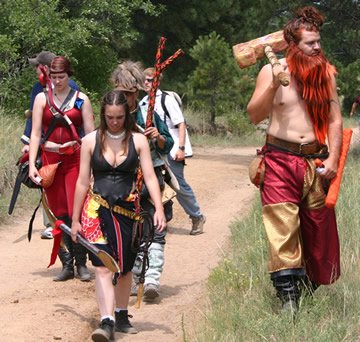
Arriving in the town was initially unspectacular. We parked the car and walked towards the hotel. But on the streets, we noticed something different. All the people of Söderköping were wearing unusual clothes – long cloaks and capes, pointy hats with bells on, baggy linen trousers. They carried staffs and walking sticks. Some of the men had long beards and the women had shawls wrapped around their heads and shoulders. What was this? Is this small town, 2 hours south of Stockholm, stuck in time? It was like walking into a scene from Harry Potter or Lord of the Rings. There goes Gandalf. Oh look, it’s Dumbeldore.

It didn’t take long for us to realize that this particular weekend Söderköping was hosting a Medieval festival. As night fell over the town, torches were lit to mark the dark paths and bonfires were set ablaze. The local park was turned into a muddy arena with jousting, live music and fire dancers. The place would, however, have looked more authentic without the big ‘Sponsored by Swedbank’ sign. This arena was packed with Swedes in their costumes, many really getting into the role. Many of these people were probably what, in Swedish, is called a ‘lajvare’.

‘Lajvare’s are the Swedish equivalent to the English ‘Larpies’ – people who participate in a role-play and physically dress up and act out their character’s actions. These live-action role-playing games (LARPs)are not a new phenomenon, dating back to the late 70’s and gaining popularity through the 80’s and 90’s. LARPs range in size from small private events lasting a few hours to huge public events with thousands of players lasting for days, rather like the one in Söderköping.

Culturally, this phenomena is very intriguing. Traditionally entertainment has meant spectating but participants in a LARP cast off the role of passive observer, and take on new roles that are often outside of their daily life and contrary to their culture. But, why? What’s the attraction?

Is the daily drudge of life in Sweden so tedious that ‘larping’ is the best solution? For some, I guess.

But for me, well, I enjoyed the night in the small Medieval town of Söderköping but I was happy to climb into the BMW, switch on my Ipod and head back to the big city.


Tyranny of the Minority


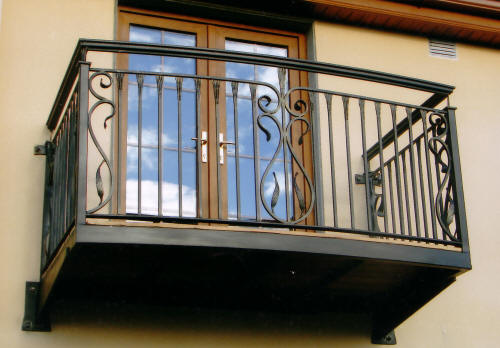
Last night, I participated in a Tenants’ Association meeting. All the owners of the flats were gathering together to vote on whether or not to build balconies on one of the buildings. Now, I happen to live in said building, so I was very interested, and turned up with my voting card in hand and smile on my face at the agreed time.

At best, these kinds of meetings give you an insight into Swedish democracy. At worst, they drag on and on and on with everybody giving their point of view, often irrelevant. Unfortunately, last night’s meeting was of this latter kind. Two and a half hours of discussing the merits of balcony building unfolded before we were able to whip out our cards and vote. I was desparate. I was tired and frustrated. But democracy takes time.

After the long drawn-out discussions, we finally voted. I learned that, in order for one side to ‘win’, there must be a 2/3 or more majority. This meant we needed 63 votes to win. The cards went up, the counting began. And the result?

59 votes for, 20 votes against and several abstentions.

Although there was a clear majority for the building of balconies, we lost. 20 people could prevent it from happening. Now, is this democracy? I wonder.

This is what’s known as Tyranny of the Minority – where a minority of people can block the decision for the majority. It’s very common in Swedish decision and policy making. But is it democracy?

It certainly didn’t feel like it last night.

The most liveable city in the North

In an unusual burst of self-confidence, a few years ago, Stockholm branded itself as the ‘Capital of Scandinavia’. One could expect this to mean that of the Scandinavian and Nordic cities, Stockholm is the most sought-after and popular to live in.

But this, apparently, is not the case.

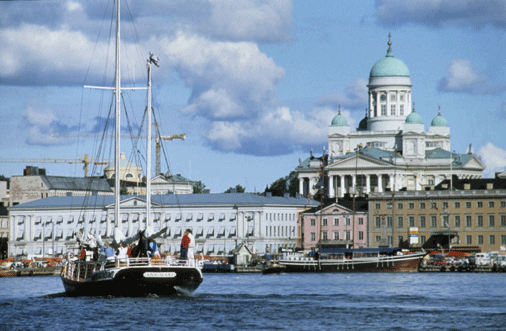
Of all the Nordic cities in the region, the city that people mostly want to live in Helsinki.

In a recent Global Liveability Survey of 140 cities, the Finnish capital comes out as number 7 on the list. The survey looks at criteria such as health care, environment and education.

Melbourne is in the number one position, then Vienna, then Vancouver. The first American citiy to appear on the list is Honolulu – in place 26.

Slobbering and slurping Swedes


So, there were 7 of us. Three Englishmen, one Scot, one American, one Canadian and one South African. But, because we all live in Sweden, we all knew actually what to do.

You see, Sweden is usually associated with reserved behaviour and pleasant manners. However, on several occasions a year, such as tonight, this myth is busted wide open.

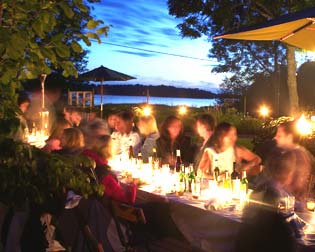
I am referring to a traditional get-together where where little food is actually eaten but alcohol consumption is high,where drinking songs are screeched out into the night sky and where audibly slurping and slobbering your food is considered proper etiquette. What event is this? The Swedish crayfish party.

The crayfish party is, as it sounds, a party where Swedes slurp and slobber crayfish. Now, eating crayfish is quite hard work. There isn’t much meat on these crustaceans and the little blighters can be quite tricky to crack open. This small amount of food, coupled with copious amounts of beer and snaps usually leads to a rowdy and boistrous atmosphere.

Crayfish parties are generally held during August, a tradition that started because crayfish harvesting in Sweden was, for most of the 20th century, legally limited to late summer. Dining is traditionally outdoors, but in practice the party is often driven indoors by bad weather. Customary party accessories are comical paper hats, paper tablecloths, paper lanterns (often depicting the Man in the Moon), and bibs.

And believe me, those bibs are needed…..

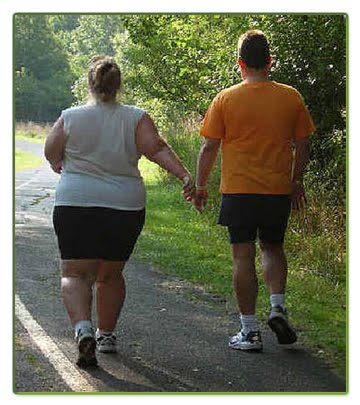
Love kilos

The Swedish value of equality manifested itself recently in some interesting research.

Research released from Ohio State University has shown that in heterosexual marriages in the USA, women tend to put on a few kilos after marriage. Men, however, tend to put on weight after a divorce.

Apparently, this is not the case in Sweden. According to experts at Karolinska Institute, it isn’t only women who increase in weight after a marriage. It is both men and women. There’s equality for you!

In Swedish, these extra kilos even have a name – ‘kärlekskilo’ (love kilos) or ‘trivselkilo’ (satisfaction kilos).

So the extra weight deosn’t sound that bad then does it?

No snoozin’ with ‘snus’ in


Cultural researchers say that you can understand a culture by looking at the products of that culture. For example, the way the houses look, what kind of clothes people wear or the food they eat.

One cultural product to come out of Sweden is a substance called ‘snus’. ‘Snus’ is brown, sticky and can cover your teeth in discoloured drool. Sound attractive? Then read on.

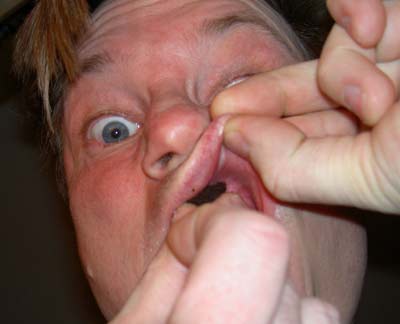
‘Snus’ is a moist tobacco powder, made in Sweden since the 19th century. ‘Snusers’ squeeze the moist substance into pellets or use pre-packed sachets that look like miniature teabags, placing them under their upper lip for up to an hour. In best case, you don’t notice that the ‘snus’ is in the user’s mouth. In worst case, the ‘snuser’ has a very swollen upper lip giving them a slightly retarded look. But where’s the kick? Well, absorbed into the bloodstream through the lip, ‘snus’ has a softer but longer nicotine buzz than cigarettes. No snoozin’ with ‘snus’ in.

Due to health reasons, within the EU, the sale of ‘snus’ is banned, which is odd since cigarettes and other forms of tobacco aren’t. However, in the rest of the world, ‘snus’ is proving a hit, with sales booming in the US and Canada. North Americans are increasingly buying ‘snus’ as a way either to quit or to beat smoking bans.

Nobody knows when the use of tobacco as a stimulant started but Europeans first came into contact with it during the 1400’s when Christopher Columbus landed on Haiti. The tobacco plant was quickly exported to Europe and put into products such as snuff, chewing tobacco and cigarettes.

It was believed at that time that tobacco cured cancer and syphilis.

But users of ‘snus’ don’t have to worry about the latter. ‘Snus’ has a pungent smell making the user’s breath very strong. The chances of catching a sexually transmitted disease are limited when nobody will even kiss you.

Swede Talk, Swede Talk

A few random notes from a blog by Nobel Prize Winner, Paul Krugman:

1. Stockholm isn’t perfect. Even in August, it can rain cats and dogs — which is why I’m still sitting in the lounge blogging over my coffee and herring.

2. More seriously, I wouldn’t want to live here — because I’m not Swedish! Culturally I’m very much an American, Northeast Corridor edition, and even the Swedes tell me that their society can feel a bit claustrophobic. Fundamentally, my home is in the real real America — the multicultural, multiracial, freewheeling society that is built around the American idea. Of course, the “patriots” of the right hate that America.

3. Of course the point is not that Sweden is perfect, it’s the fact that it works and thrives despite high taxes and a strong welfare state — which isn’t supposed to be possible according to conservative dogma.

An anecdote here: Robin and I were talking yesterday with an eminent American financial economist, and said something about tax levels here. He said, “Well, that’s why all the young people are leaving.” Except, you know, they aren’t. But never mind — that’s what’s supposed to be happening, and it must be happening.

The Swedish summer shut-down


Summertime, and the living is easy.

Swedish culture and lifestyle is very much structured around having long vacations during the summer (and preferably also in the winter). Foreign companies who work with Swedish companies are often dismayed by the ‘Swedsih shutdown’ from the end of June to the middle of August when everybody seems to be on holiday. To the outsider, this seems very inefficient.

Swedes love their long vactions. In fact, it is legislated that an employer has to allow an employee four weeks holiday in a row, unless something else is otherwise contracted between the parties. It’s hardy surprising with the deep, cold winters, that Swedes want to make the most of the long, light and hopefully warm days. It provides an opportunity to totally relax, to stay at the country house, to go out in the boat, or to travel.

But is it effective or even good for us to be off work for so long? Well, if we are to believe some recent research, the answer is no. This research out of Holland shows that the benefits of being on holiday radically reduce after the first week. What this leads them to conclude is that there is no apparent benefit on our health to being off work for longer than 1-2 weeks at a time.

So let’s see if the Swedish government considers these findings. Will we see a change in holiday legislation? My guess is that any party that wants to be re-elected will stay away from this particular hot potato.