
Arrived at Singapore airport today and was greeted by a smiling local official. Checking our passports he noticed we were from Sweden. ‘Aaah, Sweden!’ he said. ‘Abba and Celine Dion!’ He then proceeded to serenade us with ‘Chicatita tell me wass wron’. Welcome to Singapore!
Spotifree time

It’s common knowledge that Sweden has one of the world’s best systems for paid leave in connection with the birth of a child – thirteen months parental leave which can be shared between both the parents. The payment received is equivalent to about 80% of salary up to a certain level.
Now, Swedish company Spotify has announced an upgrade to this system for employees working in their company. Parents at Spotify are allowed to take free time, or parental leave, for 6 months at full pay. This is for either parent so is not gender, or role, specific. When the employee returns to work, there is also a ‘welocme back’ month where they can work part-time and from home to ease themselves back into the workplace and from their infant. The great thing about this is that it’s not just Sweden. It’s GLOBALLY! For all employees everywhere in the world.
It’s great to see private organisations taking responsibility for their employees. The government and the tax payer can only do so much, if they even do anything at all. The Head of HR at Spotify says
“This policy best defines who we are as a company, born out of a Swedish culture that places an emphasis on a healthy work-family balance, gender equality and the ability for every parent to spend quality time with the people that matter most in their lives.”
The Gentle Minister

Reading on social media recently, I am struck by the amount of praise given to Sweden’s Home Secretary, Anders Ygeman. The minister is appearing a lot in newspapers and on the TV at the moment commenting on the tragic events of Paris and the impact terrorism has on the increasing security levels on Swedish soil. He also regularly informs the public on the refugee situation and the political reasons behind the government’s actions to reintroduce border controls.
On the face of it, Anders Ygeman should not be considered a good communicator. He has a very gentle, apologetic manner. He avoids eye contact at times. He speaks with a very quiet voice and a very flat tone. He is, in fact, the opposite of everything that a leader is said to be – inspiring, charismatic and energetic. In the USA, or the UK, he would probably be ridiculed. But in Sweden, it seems to work.
From a cultural perspective, this is really interesting. What is it about Anders Ygeman that works so well in Sweden? Maybe it is a case of content over packaging. Often how we say something has more impact than what we say, but in Anders Ygeman’s case, it’s the opposite. He might not be charismatic, but he is clear and very direct. And is this an approach that Swede’s prefer in times of crisis – a no frills, humble and direct communication?
This queen don’t wave

A month or so ago, I bought a little model of Sweden’s Queen Silvia. Brandishing a handbag which encloses a solar panel, the energy from the sun is supposed to make her wave She’s been standing on my window ledge for a while now in direct light. But for the last few days, that queen isn’t waving. Her hand remains still. Royally poised. But nothing happens. Nothing. Nada. Zero. Zilch. Ingenting.
It’s a clear indication of the lack of sunlight we’ve had in Stockholm recently.
So little that the queen herself protests.
Wilkommen, bienvenue, welcome – to Sweden….

Last night I went to a performance of ‘Cabaret’ at Stockholm’s ‘Stadsteatern’. Starring popular singer, Sarah Dawn Finer, the story never felt more relevant. Set in and around the decadent Kit Kat Club, the familiar story depicts the slow and insidious growth of Nazism in pre-war Germany. As Hitler’s politics start to become more accepted, life initially goes on as usual inside the nightclub. But slowly, even the performers cannot ignore the hardening attitudes, the anti-semitism and what is necessary to survive. As the Nazis rise to power, and ‘Germanness’ falls into focus, the characters have to make a choice: stay or go.
One of the main characters is an American author based in Berlin. As he is confronted by the rise of Nazism he stands up against it saying ‘if you don’t stand against it, you stand with it’. Somewhat remniscent of a US President in a speech against terrorism, this hit a raw nerve. Just because we are not actively and vocally against something, does it really mean that we are for it? Is it that black and white?
As right-wing politics yet again take hold in Europe, what can we learn from the past? If we stand by and say nothing, do nothing, are we in effect accepting it? Are we saying it’s ok? And if we don’t stand up for others, who will stand up for us when we need it?
In the musical Cabaret, we see the nightclub as a metaphor of Berlin, slowly falling more and more under the influence of dark powers. We see the characters numb themselves in alcohol and we see one main character bend to the norms of society by demonstratively removing his makeup – stripped of his uniqueness and his humanity.
Never has it felt more relevant than today. ‘You are not German’ is today expressed as ‘You are not European‘ or ‘You are not Swedish’. And as I was consumed in the musical, I thought to myself, can we do it differently this time? Can we beat the negative forces in society and come out of it victorious? Or are condemned to repeat the mistakes of the past?
Stockholm’s building

Someone, I don’t know who, once said that you can tell if a town is prosperous by the amount of building that’s going on. By that definition, Stockholm must be a very wealthy place.
The amount of roadworks and building works currently happening in Stockholm is astounding. Main arteries have been dug up to create more lanes or bus stops, buildings are creeping upwards and additional floors are built on the rooves, new developments are being squeezed into empty plots. And the Slussen intersection is being demolished, reformed, debated and berated.
As a Yimby, I love these improvements but it can make day-to-day life difficult. And the fact is, this isn’t going to stop. Stockholm continues to thrive and be Sweden’s engine. In research by the Chambet of Commerce released this week, Stockholm is the fastest growing capital in the EU.
So fasten your seatbelts. It’s gonna be a bumpy ride.
Sweden’s forest cemetery

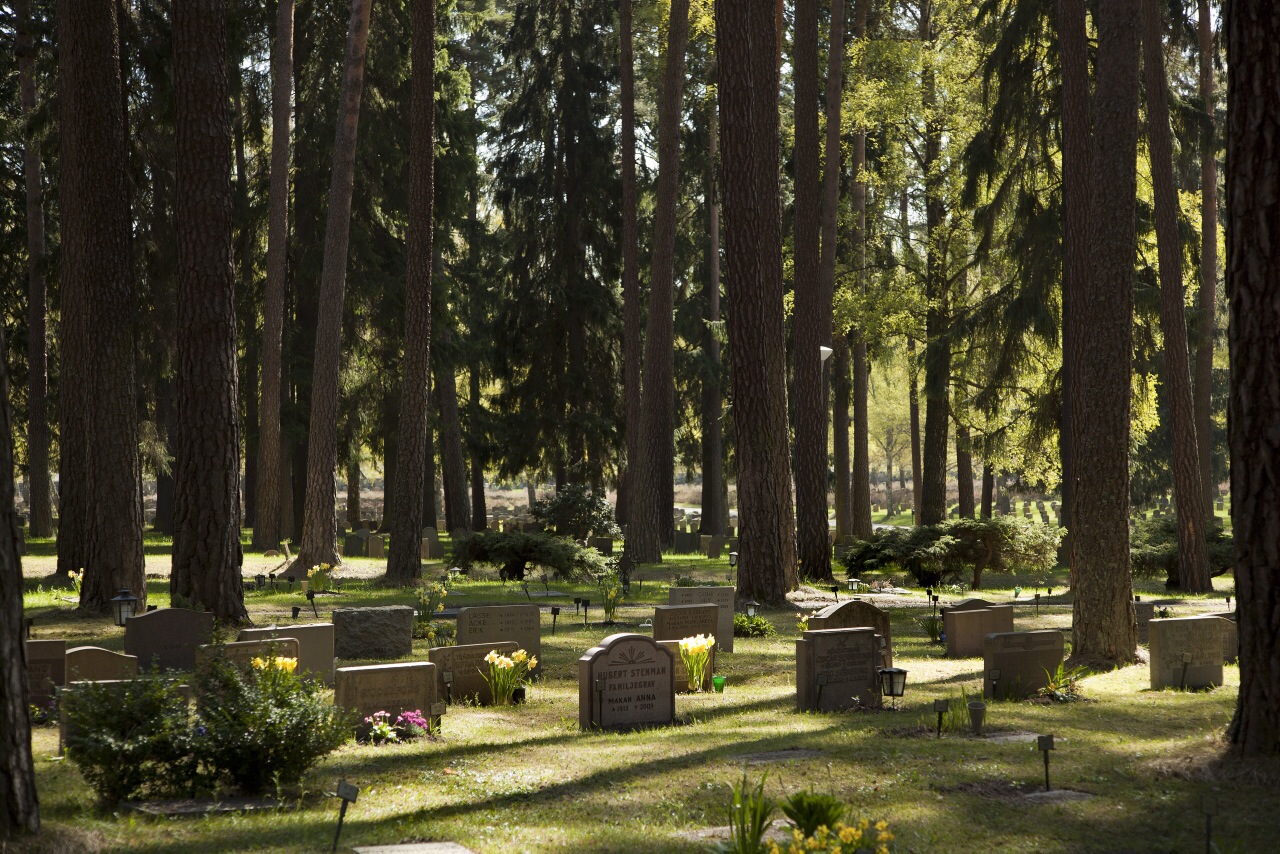
Today I visited a peaceful, magical place in Stockholm – Skogskyrkogården – the Forest Cemetery.
Built between 1919 and 1940, this location combines a burial ground with a chapel of rest and a coniferous forest.
Listed since 1994 as a World Heritage Site, the Forest Cemetery is a wonderfully serene place to say goodbye, to remember or just to visit.
‘Paradise Sweden is just a myth’

I’m fortunate enough to have a country house in the south of Sweden. The rural area, known as Österlen, is as beautiful as it is deserted – long stretches of sandy beaches, rolling open fields, wind-torn buildings and wind-bent trees. Being there has always been a retreat for me, but it hasn’t always only been relaxing.
Nagging away at the back of my mind has been a slight feeling of discomfort, like a distant memory that you just can’t recall. I sometimes feel ill at ease walking out to the barn, in case there’s something lurking in there. Or when I suddenly realise I’m alone on a stretch of beach, just the lapping of the sea to keep me company. Or when I’ve gone for a long walk and find myself surrounded by high fields of corn and approaching a bend in the road. Or when darkness descends. Or the fog rolls in.
This feeling of discomfort I have one man to thank for – author Henning Mankell. This popular Swedish writer, who died yesterday age 67, is responsible for the internationally acclaimed series of books and films about Inspector Wallander. The stories he wrote are full of violence, strangeness and critical social commentary. He set his narratives in the town of Ystad, and the surrounding countryside of Österlen, where I have my holiday home. Quoted as saying ‘ that Sweden is supposed to be a paradise is just a myth’, he populated his stories with rampaging murderers, gangs and psychopaths.
Henning Mankell passed away after some years of fighting cancer. He left a massive legacy of books and storíes behind him and will be remembered as the author whose international success opened the door for other Swedish detective novelists.
And as he rests in peace, he leaves us with the unwelcome insight that peace is in fact just an illusion.

Please follow and share this blog if you like what I write.
Sweden lessons 3: crossing the road

In Sweden, crossing the road can be a risky affair. Consider yourself warned.
The first thing is that you look to the left to cross the road. You do this preferably at a crossing, indicated by the white and blue sign of the crossing gentleman known as ‘Herr Gårman’. Crossings with traffic lights are a little easier, as the green figure chirps a high-pitched signal to indicate it is safe to cross.
However, pelican crossings are treacherous. Approach them with great caution. Cars and bikes are legally supposed to stop to let pedestrians across, but not all do. So the way to do it like this:
- Approach the crossing with assertiveness, maybe a little spring in your step
- Pause casually on the pavement at the crossing, looking to the left
- Lift a leg, either will do, and dangle it out over the crossing. This signals your willingness to cross
- Try to make eye contact with the approaching driver
- Step gingerly out into the road as you notice the driver slows down
- Avoid the bloody cyclists who bomb along the road and who don’t think that normal traffic rules apply to them and who think that they own the road and that you as a pedestrian have to get out of their way and not the other way around and if you don’t pay attention they will literally mow you down as you stand on the pelican crossing.
- Success! You reached the other side!
If you like what I write, please share this blog.
Swedes ban rice

Just when you thought it safe to go back into the kitchen, the Swedish Food Health and Safety Board announced today that rice is killing us. This white staple apparently has the deadly chemical arsenic in it.
People who eat rice more than four times a week are strongly advised to cut back and parents who reach for the convenient rice cake to appease their children should stop it immediately.
While I’m sure this is thoroughly well-founded, it’s a bit hard to take seriously as over the years we’ve been warned about eating most foodstuffs in one way or another.
From a global perspective, to the east of us, there are entire nations who build their cuisine on rice. And to my, granted limited, knowledge, I don’t believe arsenic poisoning is the biggest cause of death there.
 Watching the Swedes