A walk down the aisle


Isn’t it funny how something small can be so meaningful? In Sweden, it is less than a month until the Royal wedding when Crown Princess Victoria marries Daniel Westling. The party is planned to last two weeks, culminating on May 19th in the cathedral.

And it’s what will happen in the cathedral that is causing a huge stir. Victoria has stated that she wants her father, the King, to escort her down the aisle and give her away at the altar. Not so strange, you might think. Not so controversial. But in Sweden, this is causing a storm.

A father giving away his daughter at her wedding is not a Swedish tradition. In Sweden, the bride and groom walk down the aisle together towards the altar where they are then married. This is a major symbolic action. In Sweden, a woman is not something that is owned by one man and can be given away to another man. A woman is strong, independant, mature and educated. She is fully capable of walking down the aisle on her own, together with the man she has chosen to marry. She is not anybody’s property. This is yet another way in which the Swedish value of equality is exhibited in society.

That the future queen chooses to go against the tradition is a break in protocol. It is also seen by many, including myself, as a lost opportunity to communicate to the world’s press that in Sweden men and women are equal.

Of course, Princess Victoria should be able to do what she wants to do at her own wedding, but let’s not forget that she has a responsiblity to the nation, especially when the nation is funding her wedding. A future regent, if anyone, should be seen to uphold and promote the values of the country she represents.

If she doesn’t, what then is the point of a monarchy?
Stockholm A-Z: Café life


Café Life

Like many cities with diverse seasons, I find that Stockholm can be schizophrenic. In the winter, Stockholmers walk quickly to their destinations, head-down often avoiding social interaction on the street. This is understandable. It is so cold, you just want to get indoors.

In the early stages of summer though, the city changes.

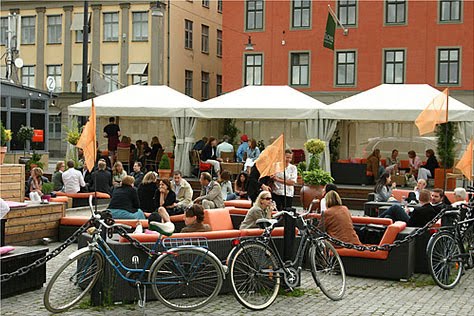
The sunnier, warmer weather comes and restaurants spread out onto the pavements and streets. It seems like even the smallest of cafés has an outside terrace. It might only consist of one table and two chairs, but it is still an outdoor terrace. Outdoor summer cafés open up for the season on quaysides, in parks and squares.

And the people flock to them in droves.

Café season is the start of beautiful people season. All winter, Stockholmers have been hidden under layers of thermal clothing. But now, they cast off their outer garments and slip into their summer outfits, their sunglasses and their shorts and sandals. A more grateful and beautiful nation I am yet to find. You wonder where all these Amazonian women and athetlic men have been hybernating for the winter half of the year. Oh, of course…in the gym.

Café life has a strong tradition in Swedish culture. It is still possible to find traditional coffee houses dotted about the city. A window to the past, they often still have the original decor and atmosphere. Swedes are amongst the top 5 countries when it comes to the consumption of coffee, and this is part of the reason why coffee is so good in most cafés. Even 7 Eleven has decent coffee. This is also why Starbucks considered Stockholm to be a saturated market long before they opened their first store at the airport earlier this year.

But it is the outdoor café that reflects life for the modern Stockholmer. Weather permitting, these are the perfect places to sit and watch the world go by. Infraheaters and blankets help keep any irritating chill at bay. So, grab your outsized sunglasses, head to a square, slip into a chair, order a macchiato and enjoy summer life in Stockholm.

Why did the Swede cross the road?


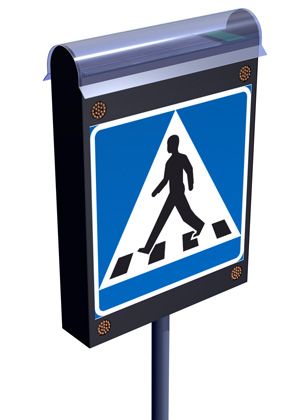
I’m sure we’ve all heard the joke about why the chicken crossed the road, but have you ever heard the one about why a Swede crossed the road? Or rather how a Swede crosses the road? You haven’t? It’s hilarious.

Crossing the road in Sweden used to be like a game of Russian roulette. You stepped tentatively out onto the zebra crossing and hoped the motorists would stop, knowing they had no obligation to do so. However, a while ago, a new law was introduced in Sweden. It stated that all cars must stop at zebra crossings to allow the pedestrians to go over.

However, it seems like this new law has caused another problem – an increase in road accidents between cars and pedestrians. Apparently, many Swedish people simply fling themselves out onto the crossings because they have right of way and cars have to stop. With the law on their side, they disregard the common sense rules that we all learn as kids.

So a new campaign had been launched this week, teaching Swedes how to cross the road. With the slogan ‘Make eye contact before you cross’, the authorities are programming people to actually look at the approaching cars before taking the first critical step.

It’s hilarious. But it gets better.

I was walking to work the other day and I was handed some campaign material. It took the form of a little yellow box and it rattled attractively with sweets inside. A big eye and campaign slogan was written on one side. On the other side, in small print, it said ‘Remember at crossings that drivers must give way to you, but remember also that you as a pedestrian must not step out onto the crossing without checking the vehicles that are approaching.’

I became so engrossed in the small text, the yellow box and the tempting sweeties that I stepped out onto a crossing without checking and almost got mowed down by a cycle courier.

So rule number 1 when crossing a road: do not read small yellow boxes and fantasise about sweets.

The rest, well, it’s just common sense.

The humane airline


As the ash cloud hovers ominously over Europe, so does the discussion and debate about reimbursements, damages and loans.

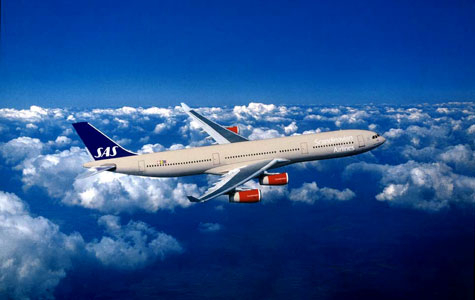
I flew to Bangkok, and was stranded there, with SAS. I cannot praise them highly enough. We passengers were provided with bus transportation, with hotel accommodation, with breakfast, with lunch, with dinner. We were given a voucher to cover email time and 3 minutes of international phone calls.

Other airlines made their passengers sleep at the airport, or pay for their own hotel and food. FinnAir flew people to Helsinki but, prior to boarding, made them sign a waiver to say they did not demand FinnAir should take them onwards to their final destination. So, once landed in Helsinki, passengers had to organise their own transportation to Copenhagen, Paris or wherever they were headed.

SAS got us home. Every one of us. At no extra cost to us.

For me, in the future, there is no competition. I will choose SAS every time I fly. I recommend everyone else does the same.

If we finally understand what a good airline SAS is, maybe we can save it from the bankruptcy that all experts are currently warning about. Sure, SAS might be more expensive than other airlines, but they have a humane approach to their customers.

I believe in karma. Do you?

The continental thing to do


The rain trickles down from the sky. Although it’s nearly May, the rain is a little icy. It stings a bit when it hits your skin. My coat is unbuttoned, so I pull it more closely around me. The wind cuts through me like a knife. I curse the fact that I only have a shirt on underneath and not a jumper too.

I walk along the road and notice that the cafés have opened their outdoor terraces. People huddle outside and drink a beer, or eat pizza. Some of them are lucky enough to have an infraheater above their heads casting a grateful heat onto them. Others may be shrouded in woolly blankets to protect them from the chill.

It really is far too cold to sit outside. But, this is Sweden, and it is the spring and as soon as the outdoor terraces are open, you sit there.

It is the continental thing to do.

Stockholm A-Z: Balloons


Balloons

You might not know this but I am an aristocrat. Yes, it’s true, I am titled. I am a Count. My official title is Balloon Count of Barkaby. I was given this title in a champagne ceremony a few years ago.

The title of Count or Countess is something that everybody is given after they carry out a journey in a hot air balloon over Stockholm. Where you land dictates where you become a Count or Countess of. I landed on a not-so-glamorous air strip in Barkaby, a not-so-attractive suburb outside the city.

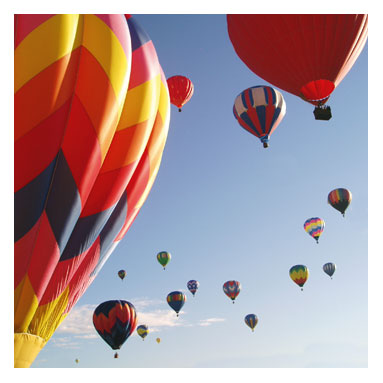
Hot air ballooning is synonymous with the summer skyline of Stockholm. Every evening, weather permitting, the sky fills with a mass of brightly coloured balloons with baskets of gleeful passengers hanging beneath them. The growl of the flame can be heard on street level as the balloons sail gently across the evening sky.

From up there, you get a fantastic view of the city. You see clearly how Stockholm is built on islands and how bridges form a network of communication. You see the houses shining in shades of ochra, amber and gold. You see people busy in parks, on the water and in the squares.

In these days where the sky is filled with ash clouds and planes can’t take us where we want to be, perhaps it will become the era of the hot air balloon.

I wonder how long it’d take to get to England?

Stockholm A-Z: Accessibility


Accessibility

In London and many other cities, the cityscape is dominated by high walls, fences, gates, and locked doors. Signs saying ‘No entry’,’Tresspassers will be Prosecuted’ and ‘Private Property’ abound.

Not in Stockholm. One of things that strikes a tourist or a foreigner when they come to Stockholm is the openness and accessibility of the city. In Stockholm, you are mostly free to amble down canal paths and along the lakesides. No private owner has claimed it as their own. At bus stops, buses sink to street level to allow disabled people access to public transport. The city’s parks are not fenced in, or shut after 11pm, but spill out onto the streets that surround them.

But the thing that reflects Stockholm’s accessibility the most is the way the city presents its public buildings. The Royal Palace in the centre of the city is not fenced off like London’s Buckingham Palace to keep the hoards at bay. If you want, you can walk right up to the palace and touch it. The Houses of Parliament have a pedestrianised walkway running right through the middle of them connecting Stockholm’s Old Town to the commercial centre. Not a policeman in sight.

Stockholm’s politicians and royals are often seen on the streets or at public events mixing with the hoi pal loi. Granted, they have body guards, but they are very discreet.

Unfortunately, this accessibility has resulted in murder. Prime Minister Olof Palme and the Foreign Minister Anna Lindh were both struck down, one on the street, the other in a department store. These tragedies however have not removed the Swedish need for accessibility and openness.

Accessibility is one way in which the Swedes display their fierce belief in democracy.

And if you take that away, what then is left of a progressive modern society?

Stockholm A-Z: Archipelago


Archipelago
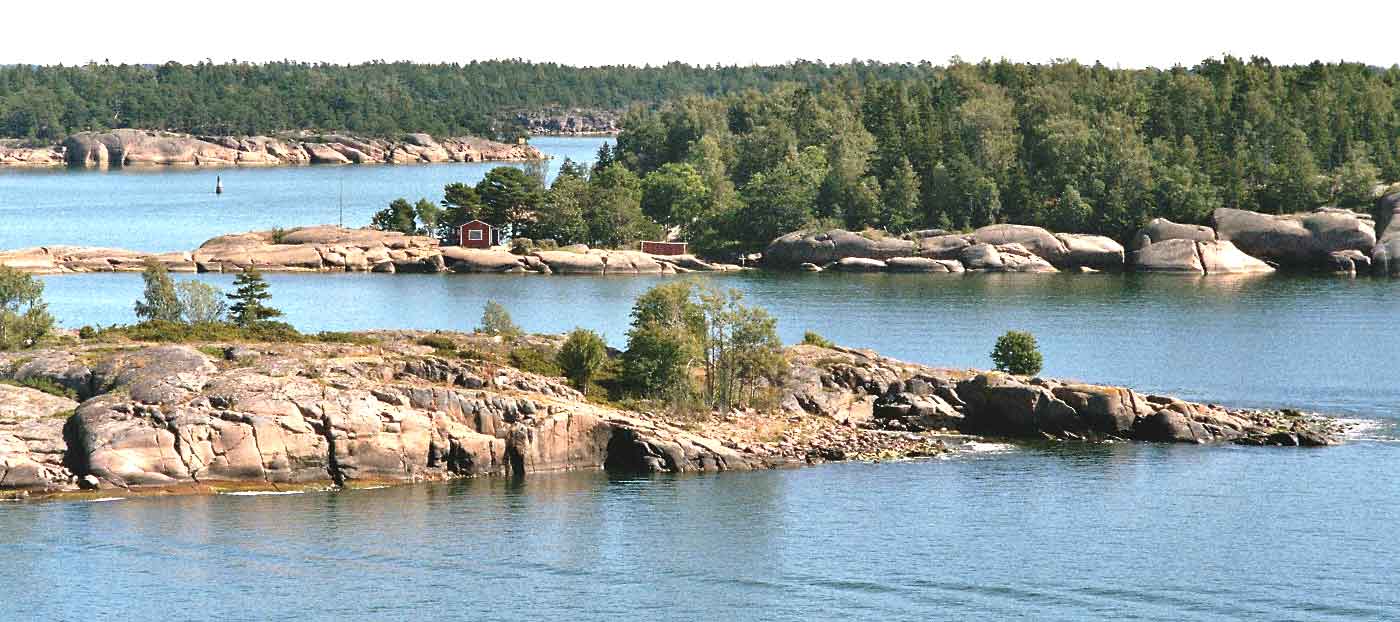
One of the Stockholmers favourite summer retreats is the archipelago outside of the city. The archipelago consists of over 20 000 islands. The islands are mostly flat and usually covered in greenery. They are various sizes ranging from the smallest of cobs and skerries to large islands with roads and villages. From the air it looks like God has broken digestive biscuits into different sized pieces and scattered them into the Baltic Sea.

Many of the islands are inhabited by permanent residents and a boat service carries residents to and from Stockholm in anything from one to six hours. Most islands, however, are not permanently inhabited, some having space only for a few wooden holiday cottages dotted about.

Many Stockholmers boat out to the archipelago in the summer months. They take picnics with them and munch on sour dough bread, quinoa salad and sip rosé wine. They sunbathe and swim from the rocks, often exotically naked. If the water temperature is over 17 degrees celsius they are happy. They glide in kayaks through calm, glistening water. They convene with nature.

I remember the first time I went out to the archipelago as a hardened Londoner. When we arrived at our island destination, all I could see was rocks and trees. I remember wondering where the pub was and how the hell anyone could spend a whole day sitting on a rock. But Stockholmers do just that.

For Swedes, the natural environment is very important whether it’s the archipelago, the woods or the mountains. It is as if many Swedes long to get away from their cosmopolitan lifestyles and retreat to their little red cottages deep in the woods. Or go fishing in fresh-water lakes. Or spend weekends picking wild berries. And mushrooms.

As little as a century ago, Sweden was an agrarian country with many of the people living under impoverished conditions. This heritage is still apparent in the Swedish mentality and could be one explanation for the sentimental relationship to nature.

Nature is an integral part of the Swedish lifestyle and Stockholm’s archipelago is the ultimate manifestation of this.

Fishing in Utopia

If you’d like to know more about Swedish culture, I strongly recommend this book – Fishing in Utopia by Andrew Brown. Written in 2008, it is about an Englishman’s experience of living in Sweden. In the 70’s he moved to Sweden to be with his Swedish girlfriend, then wife. Sweden was a Utopia for him – a welfare state that looked after its citizens. Unfortunately, his marriage didn’t work out and he moved back to England, where he became a successful journalist on The Independant.

Decades later, he decided to visit Sweden again to see if the Utopian future became true. Did the future everyone believed in then,actually come true? Or did the future disappear?

A great read. A fantastic way of describing a Sweden that was, and the Sweden of today. He tackles the small issues such as fishing in fresh-water lakes and the big issues such as what does it mean to be Swedish in the 21st century.

Safe landings


And so, miraculously, I am back in Sweden! We managed to secure seats on the only plane out of Bangkok that was flying to Scandinavia. Since the air space over Stockholm closes again at 20.00 tonight, we were really lucky! I now understand what a window of opportunity means.

I have to admit that it was rather scary knowing that we were flying over (through? around?) the ash cloud, but everything went well. When we landed, the relief that ran through the cabin was noticeable.

And one other thing was telling. The purser’s anouncement when we had landed on the runway went like this:

‘Thank for for choosing to fly SAS and Star Alliance. We hope you have enjoyed the journey and that you choose us again for your next flight – if we have survived ths….’

The far-reaching consequences of an eruption of a volcano on Iceland.