In the garden of (Sw)Eden


Runny nose? Itchy eyes? Headache? I think I can easily diagnose what is wrong with you.

Summer is here. The sun is high. The air is warm. The burgeoning trees are in full bloom and the air is heady with pollen. You are probably, like me, one of the 10% of the world’s population that suffers from pollen allergy. In Sweden, there are tens of thousands of people who are allergic. It’s raging wild. It’s like a national epidemic. They innoculated us against swine flu. Why not this?

According to statistics I saw the other day, Sweden has the highest rate of pollen allergy per capita than most other countries in the world. Why is this? Various theories abound.

Some say that Swedes are simply too clean. They are so squeaky clean that they cannot deal with bacteria and other alien elements, such as pollen, in their environment.

Others say that Swedes are soft. The long winter indoors doesn’t equip them for the amount of pollen that explodes in their eyes and nostrils this time of the year.

Others claim it is the nature of the flora in Sweden that makes the residents more susceptible. Birch, widely present in Sweden is, apparently, a nasty old pollen producer.

Whatever the reason, one thing is clear. It is one of life’s ironies.

After a long winter, the beautiful Swedish summer finally arrives. But many people can’t be outside because of the poisonous pollen.

I guess it’s just to squirt in the eye drops, pop the allergy pill, step out into the park and accept that even paradise – the garden of (Sw)Eden – had a snake.

A reality check is needed


Tonight is a night of anxiety for many Swedes. In fact, the last couple of days has been quite traumatic for them. You see, on Thursday, Sweden failed to qualify for the Eurovision Song Contest final which is being broadcast tonight.

Sweden sent a sweet girl, Anna Bergendahl, with a sweet song, to the semi final in Oslo. And Europe voted. And Sweden failed to impress the voters. And Anna was on the first bus back to Stockholm.

The next day, the papers were full of headlines screaming ‘Fiasco!’ and ‘Ban the Eurovision shit’. It was unjust, they claimed. Anna deserved better. Sweden deserves better. Europe is just jealous of our musical talents so they don’t vote for us. Eurovision should be changed! There should just be a Nordic Eurovision! Sweden should pull out immediately. The rhetoric was rabid, and the people were livid.

Sweden takes its Eurovision very seriously. Since ABBA won in the 70’s, and put Sweden on the musical map, it’s been a matter of national interest and pride to participate in the yearly contest.

But now, it’s fanatical.

One debate in the papers and on the television is about how Europe’s music is inferior to Sweden’s. They claim that all Europe’s music is basically rubbish and Sweden’s is the best. Sweden always sends great songs to the Eurovision Song Contest but they never win. This is because European voters are too stupid, or too tasteless, to appreciate good music.

I have rarely heard such blatant arrogance before.

A reality check is needed. The fact is that Sweden’s results in the Eurovision Song Contest have gone from bad to worse every year, while other Nordic countries have won. Sweden’s music is not the best, in this context. Sweden is out of touch with what music appeals to the masses in the rest of Europe.

What’s worse is that Sweden makes the mistake of believing that the Eurovision Song Contest is a contest for the best song. It isn’t, and it never has been. It is about politics, nationalism and entertainment. It always has been.

So, if winning is important, this is my advice to Sweden. Do not vote for the song you think is best. Vote for the song you think will do the best in Europe. Even if you think it is rubbish, chances are that millions of Europeans will disagree with you. Vote strategically.

Maybe then you will have a shot at the glory and recognition you obviously desperately desire.

A walk down the aisle


Isn’t it funny how something small can be so meaningful? In Sweden, it is less than a month until the Royal wedding when Crown Princess Victoria marries Daniel Westling. The party is planned to last two weeks, culminating on May 19th in the cathedral.

And it’s what will happen in the cathedral that is causing a huge stir. Victoria has stated that she wants her father, the King, to escort her down the aisle and give her away at the altar. Not so strange, you might think. Not so controversial. But in Sweden, this is causing a storm.

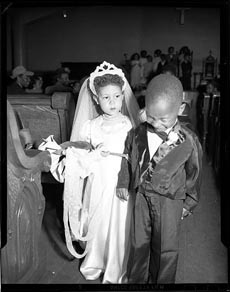
A father giving away his daughter at her wedding is not a Swedish tradition. In Sweden, the bride and groom walk down the aisle together towards the altar where they are then married. This is a major symbolic action. In Sweden, a woman is not something that is owned by one man and can be given away to another man. A woman is strong, independant, mature and educated. She is fully capable of walking down the aisle on her own, together with the man she has chosen to marry. She is not anybody’s property. This is yet another way in which the Swedish value of equality is exhibited in society.

That the future queen chooses to go against the tradition is a break in protocol. It is also seen by many, including myself, as a lost opportunity to communicate to the world’s press that in Sweden men and women are equal.

Of course, Princess Victoria should be able to do what she wants to do at her own wedding, but let’s not forget that she has a responsiblity to the nation, especially when the nation is funding her wedding. A future regent, if anyone, should be seen to uphold and promote the values of the country she represents.

If she doesn’t, what then is the point of a monarchy?

Why did the Swede cross the road?


I’m sure we’ve all heard the joke about why the chicken crossed the road, but have you ever heard the one about why a Swede crossed the road? Or rather how a Swede crosses the road? You haven’t? It’s hilarious.

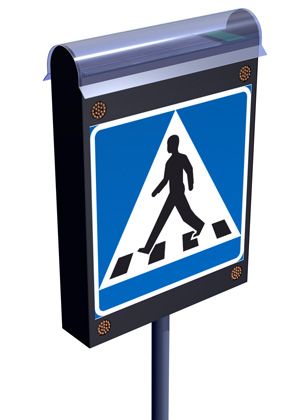
Crossing the road in Sweden used to be like a game of Russian roulette. You stepped tentatively out onto the zebra crossing and hoped the motorists would stop, knowing they had no obligation to do so. However, a while ago, a new law was introduced in Sweden. It stated that all cars must stop at zebra crossings to allow the pedestrians to go over.

However, it seems like this new law has caused another problem – an increase in road accidents between cars and pedestrians. Apparently, many Swedish people simply fling themselves out onto the crossings because they have right of way and cars have to stop. With the law on their side, they disregard the common sense rules that we all learn as kids.

So a new campaign had been launched this week, teaching Swedes how to cross the road. With the slogan ‘Make eye contact before you cross’, the authorities are programming people to actually look at the approaching cars before taking the first critical step.

It’s hilarious. But it gets better.

I was walking to work the other day and I was handed some campaign material. It took the form of a little yellow box and it rattled attractively with sweets inside. A big eye and campaign slogan was written on one side. On the other side, in small print, it said ‘Remember at crossings that drivers must give way to you, but remember also that you as a pedestrian must not step out onto the crossing without checking the vehicles that are approaching.’

I became so engrossed in the small text, the yellow box and the tempting sweeties that I stepped out onto a crossing without checking and almost got mowed down by a cycle courier.

So rule number 1 when crossing a road: do not read small yellow boxes and fantasise about sweets.

The rest, well, it’s just common sense.

Stockholm A-Z: Accessibility


Accessibility

In London and many other cities, the cityscape is dominated by high walls, fences, gates, and locked doors. Signs saying ‘No entry’,’Tresspassers will be Prosecuted’ and ‘Private Property’ abound.

Not in Stockholm. One of things that strikes a tourist or a foreigner when they come to Stockholm is the openness and accessibility of the city. In Stockholm, you are mostly free to amble down canal paths and along the lakesides. No private owner has claimed it as their own. At bus stops, buses sink to street level to allow disabled people access to public transport. The city’s parks are not fenced in, or shut after 11pm, but spill out onto the streets that surround them.

But the thing that reflects Stockholm’s accessibility the most is the way the city presents its public buildings. The Royal Palace in the centre of the city is not fenced off like London’s Buckingham Palace to keep the hoards at bay. If you want, you can walk right up to the palace and touch it. The Houses of Parliament have a pedestrianised walkway running right through the middle of them connecting Stockholm’s Old Town to the commercial centre. Not a policeman in sight.

Stockholm’s politicians and royals are often seen on the streets or at public events mixing with the hoi pal loi. Granted, they have body guards, but they are very discreet.

Unfortunately, this accessibility has resulted in murder. Prime Minister Olof Palme and the Foreign Minister Anna Lindh were both struck down, one on the street, the other in a department store. These tragedies however have not removed the Swedish need for accessibility and openness.

Accessibility is one way in which the Swedes display their fierce belief in democracy.

And if you take that away, what then is left of a progressive modern society?

Fishing in Utopia

If you’d like to know more about Swedish culture, I strongly recommend this book – Fishing in Utopia by Andrew Brown. Written in 2008, it is about an Englishman’s experience of living in Sweden. In the 70’s he moved to Sweden to be with his Swedish girlfriend, then wife. Sweden was a Utopia for him – a welfare state that looked after its citizens. Unfortunately, his marriage didn’t work out and he moved back to England, where he became a successful journalist on The Independant.

Decades later, he decided to visit Sweden again to see if the Utopian future became true. Did the future everyone believed in then,actually come true? Or did the future disappear?

A great read. A fantastic way of describing a Sweden that was, and the Sweden of today. He tackles the small issues such as fishing in fresh-water lakes and the big issues such as what does it mean to be Swedish in the 21st century.

No Songkran in Sweden

Yesterday as we drove around Bangkok, people standing by the sides of the roads threw buckets of water over the windscreen of our car. This throwing of water is is the most obvious celebration of Songkran (Thai New Year). Thais roam the streets with containers of water or water guns (sometimes nicely mixed with talc), or post themselves at the side of roads with a garden hose and drench each other and passers-by.

The throwing of water originated as a way to pay respect to people, by capturing the water after it had been poured over Buddhas for cleansing and then using this “blessed” water to give good fortune to elders and family by gently pouring it on the shoulder. Among young people the holiday evolved to include dousing strangers with water to relieve the heat, since April is the hottest month in Thailand (temperatures can rise to over 100°F or 40°C on some days). This has further evolved into water fights and splashing water over people riding in vehicles.

Nowadays, the emphasis is on fun and water-throwing rather than on the festival’s spiritual and religious aspects, which sometimes prompts complaints from traditionalists. In recent years there have been calls to moderate the festival to lessen the many alcohol-related road accidents as well as injuries attributed to extreme behavior such as water being thrown in the faces of traveling motorcyclists.

It’s a good job that this celebration doesn’t exist in Sweden. To ‘kasta vatten’ – to throw water – can also mean to piss.

And you wouldn’t want strangers in Stockholm to ‘kasta vatten’ on you as you cycle past minding your own business.

Recycling in Bangkok

Increasing our cultural awareness is often all about challenging our assumptions and seeing the situation from another perspective. A great example of this happened yesterday here in Bangkok.

We are staying in the city at the apartment of two good friends of ours. Their apartment is lovely, with a large living room, 3 spacious bedrooms and a view over the rooftops and tropical greenery. They have a balcony for airing laundry and a gally kitchen. In the kitchen are two containers for rubbish. One for dry rubbish and one for wet rubbish.

‘That’s great’, I said, ‘that you recycle here. Is there a recycling station in the basement?’

The reply surprised me. And reminded me to challenge my assumptions. The reason they separated the rubbish was not for recycling purposes in the way that I meant it. That was my assumption from my English-Swedish perspective.

No, the reason is that in Bangkok, when you throw out the rubbish, this is what happens. People sift through it to pick out plastic, tin, card – anything that they can sell and get money for. The reason my friends separated the dry from the wet was to make it easier for the rubbish sifters. To make it less sticky and messy for them in the sweltering heat.

They were being nice.

Origin of the Easter tree


In Sweden, they don’t only have Christmas trees, they also have Easter trees. The Easter tree is a handful of twigs and sticks (usually birch)in a vase with coloured feathers attached to the ends. Some people hang eggs. Some people hang chickens.

The Easter tree, or ‘påsk ris’, can be seen all over the country this time of year. Outside shop entrances, in peoples’ living rooms, outdoors in the neighbours’ gardens.

The Easter tree is an interesting cultural phenomena. In fact, all products of a society are. This is because they originate somewhere and, often, we have forgotten the origin but still maintain the product or behaviour.

What’s the origin and symbolism of the Easter tree then?

Well, some Swedes say that it symbolises the wiping away the winter. The twigs represent a broom and the feathers get caught in the broom as we sweep.

Others say that it represents witchcraft. The twigs represent a witch’s broomstick and the feathers indicate flight. This could also be why Swedish kids dress up as witches at Easter and do a kind of ‘trick or treating’ for Easter eggs.

But, apparently the Easter tree has a completely different origin and symbolism. It comes from the 1600’s. Swedish people in the 1600’s used to take twigs and sticks and beat each other with them on Good Friday to commemorate the suffering of Jesus. In the 1800’s and 1900’s, they started to be decorated and became a symbolic decoration for Easter.

So, wiping, witching or whipping. Who would have thought the colourful Easter tree would have such a colourful history?

Swedish studs


According to all research, Swedes are law-abiding citizens who respect rules and regulations and follow them.

This might be true in many cases, but not in the case of the studded tire.

The studded tire prevents slipping and skidding on winter roads. It is great when there is an icy surface to drive on but, as soon as the snow is gone, the studded tire slashes the surface of the road. This damages the road and sends millions of tiny, unhealthy particles into the air, which is breathed in by unsuspecting pedestrians and cyclists.

To combat this, the government banned studded tires on one of the main roads in Stockholm – Hornsgatan. Only on Hornsgatan. Driving on any of the roads around Hornsgatan is ok, but not actually on Hornsgatan itself. This seemed sensible to the politicians, but was really impractical for drivers.

Yesterday, the results of this ban were announced. It seems as if Swedes have contradicted all research and become rebellious. Apparently, 40% of all cars that drive on Hornsgatan still have studded tires. This is equal to 12000 cars per day. The number of fines that have been issued due to this flagrant violation of the law is 15.

One Swedish violator, interviewed on tv, said that the law is ‘ludicrous’. Another said that it is a ‘ridiculous waste of money and resources’.

I have been faithfully avoiding Hornsgatan with my studded-tired car. Although I disagreed with the law, I followed it anyway. I thought everybody would. I didn’t want to risk a fine.

Mm, what does this say about me?