Reality check in Söderköping

Visiting the small town of Söderköping in Östergötland seemed like the perfect romantic and quiet weekend. But, boy, were we wrong.

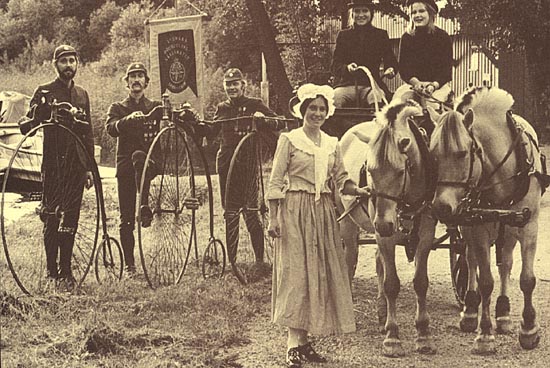
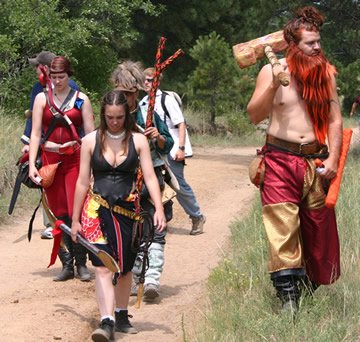
Arriving in the town was initially unspectacular. We parked the car and walked towards the hotel. But on the streets, we noticed something different. All the people of Söderköping were wearing unusual clothes – long cloaks and capes, pointy hats with bells on, baggy linen trousers. They carried staffs and walking sticks. Some of the men had long beards and the women had shawls wrapped around their heads and shoulders. What was this? Is this small town, 2 hours south of Stockholm, stuck in time? It was like walking into a scene from Harry Potter or Lord of the Rings. There goes Gandalf. Oh look, it’s Dumbeldore.

It didn’t take long for us to realize that this particular weekend Söderköping was hosting a Medieval festival. As night fell over the town, torches were lit to mark the dark paths and bonfires were set ablaze. The local park was turned into a muddy arena with jousting, live music and fire dancers. The place would, however, have looked more authentic without the big ‘Sponsored by Swedbank’ sign. This arena was packed with Swedes in their costumes, many really getting into the role. Many of these people were probably what, in Swedish, is called a ‘lajvare’.

‘Lajvare’s are the Swedish equivalent to the English ‘Larpies’ – people who participate in a role-play and physically dress up and act out their character’s actions. These live-action role-playing games (LARPs)are not a new phenomenon, dating back to the late 70’s and gaining popularity through the 80’s and 90’s. LARPs range in size from small private events lasting a few hours to huge public events with thousands of players lasting for days, rather like the one in Söderköping.

Culturally, this phenomena is very intriguing. Traditionally entertainment has meant spectating but participants in a LARP cast off the role of passive observer, and take on new roles that are often outside of their daily life and contrary to their culture. But, why? What’s the attraction?

Is the daily drudge of life in Sweden so tedious that ‘larping’ is the best solution? For some, I guess.

But for me, well, I enjoyed the night in the small Medieval town of Söderköping but I was happy to climb into the BMW, switch on my Ipod and head back to the big city.
Love kilos

The Swedish value of equality manifested itself recently in some interesting research.

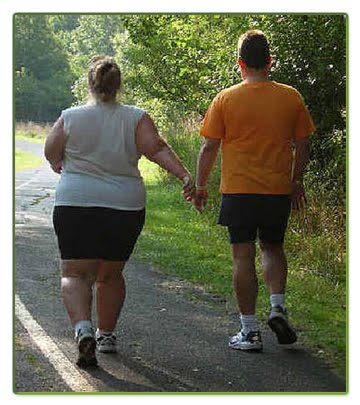
Research released from Ohio State University has shown that in heterosexual marriages in the USA, women tend to put on a few kilos after marriage. Men, however, tend to put on weight after a divorce.

Apparently, this is not the case in Sweden. According to experts at Karolinska Institute, it isn’t only women who increase in weight after a marriage. It is both men and women. There’s equality for you!

In Swedish, these extra kilos even have a name – ‘kärlekskilo’ (love kilos) or ‘trivselkilo’ (satisfaction kilos).

So the extra weight deosn’t sound that bad then does it?

The Swedish summer shut-down


Summertime, and the living is easy.

Swedish culture and lifestyle is very much structured around having long vacations during the summer (and preferably also in the winter). Foreign companies who work with Swedish companies are often dismayed by the ‘Swedsih shutdown’ from the end of June to the middle of August when everybody seems to be on holiday. To the outsider, this seems very inefficient.

Swedes love their long vactions. In fact, it is legislated that an employer has to allow an employee four weeks holiday in a row, unless something else is otherwise contracted between the parties. It’s hardy surprising with the deep, cold winters, that Swedes want to make the most of the long, light and hopefully warm days. It provides an opportunity to totally relax, to stay at the country house, to go out in the boat, or to travel.

But is it effective or even good for us to be off work for so long? Well, if we are to believe some recent research, the answer is no. This research out of Holland shows that the benefits of being on holiday radically reduce after the first week. What this leads them to conclude is that there is no apparent benefit on our health to being off work for longer than 1-2 weeks at a time.

So let’s see if the Swedish government considers these findings. Will we see a change in holiday legislation? My guess is that any party that wants to be re-elected will stay away from this particular hot potato.

Swedish fashion crimes


I read recently about how Sweden is famous around the world for fashion. Designers such as Filippa K, Efwa Attling, Johan Lindeberg and lables such as Nudie, Cheap Monday and weSC were mentioned as leading the way. Swedes have an image as a trendy, fashionable bunch.

I often witness what some Swedes wear. Now, I am no expert in sartorial trends but I do know a couple of Swedish fashion crimes that would be arrested and thrown into isolation by the fashion police.

Crime 1
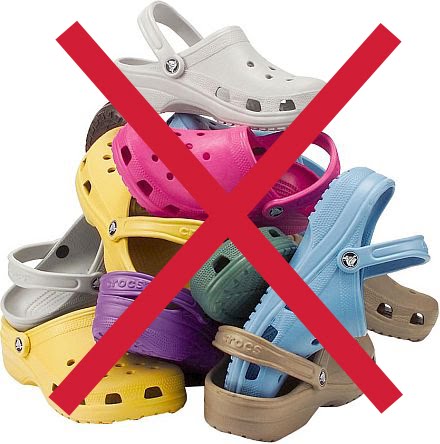
Rubber clogs, invented in Sweden, and known as crocs. We’ve all seen them in their lurid, eye-catching colours. They are banned in hospitals because the static they cause can deactivate life-support equipment. Personally, I think they’re banned because they’re ugly.

Crime 2
Knee-length tube socks and open sandals. Not uncommon in offices where a lot of technical people work it seems. Say no more.

Crime 3
Underpants under swimming trunks
I’ve mentioned this before, but am shocked every time I see it. It’s reflects the ultimate in brand obsession. A pair of designer underpants can’t just be secreted where no-one can see them. Oh no, put them on under your swimming trunks and let everybody see the designer’s slogan when you’re on the beach. I’m sure everybody isn’t thinking how cool it is, but how disgusting it is.

Crime 4
High-waisted shorts
Shorts pulled so high up the body that they could also be nipple warmers. Not only are the pulled up, but they are often way to tight down below. Now, I know Swedes are open about their bodies, but that leaves nothing to the imagination.

So remember when Swedes are portrayed as a trendy nation, there are also many who commit terrible fashion crimes.

Anybody got any others to add?

Loving Stockholm


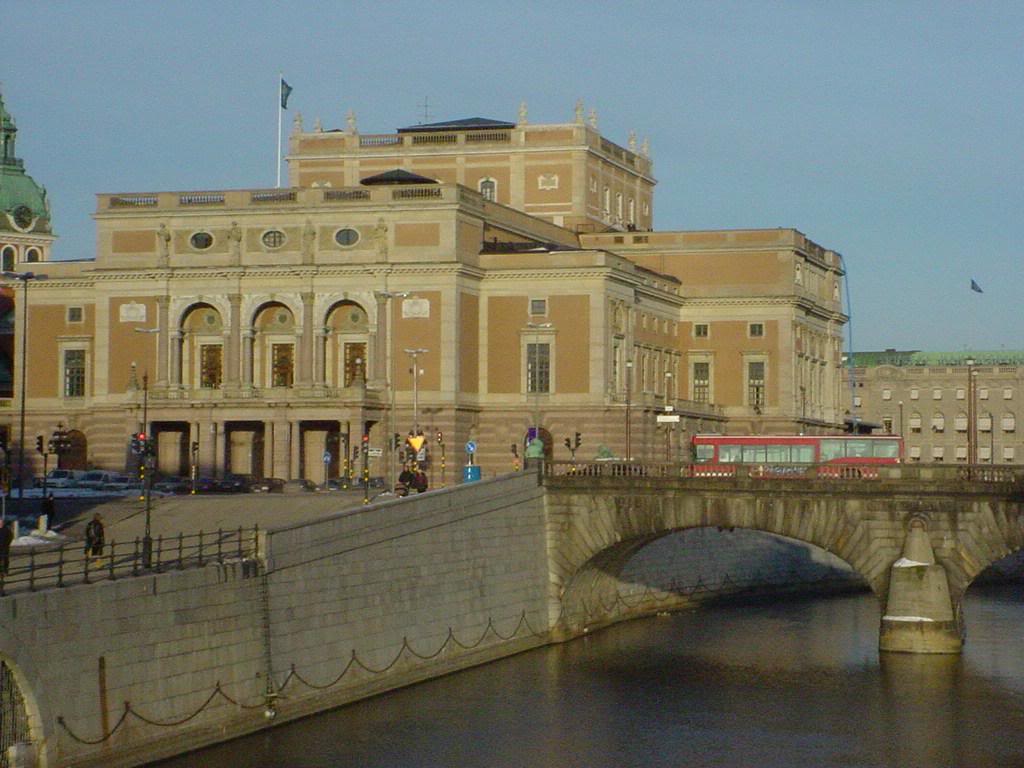
It was a few minutes to midnight, and the giant digital clock, projected onto the facade of the opera house, started counting down. Hundreds of people in the square outside watched as the clock reached 5,4,3,2,1. And the place exploded with music. Stockholm’s largest outdoor club had started. House music boomed out from the roof of the opera, giant screens showed the bouncing DJ’s and strobes shot out over the crowd.

This was the end of the Royal wedding Saturday and the start of Sunday morning. In my 16 years in Sweden, I have never seen Stockholm so alive with people and parties. Open-air bars and clubs on every square, concerts on stages around the city, people of all ages wandering around enjoying the sights and sounds. Everyone participating in Sweden’s largest party – Love Stockholm 2010.

And who couldn’t love Stockholm on a night like this? While the priveleged were banqueting in the palace, the people had taken to the streets.

And they kept it going. All. Night. Long.

God’s opinion on royal weddings


Tomorrow is the Royal wedding between Crown Princess Victoria and Daniel Westling in Stockholm’s cathedral.

Stockholm is prepared for a party on an unprecedented scale. Streets are cordened off, tents are in place, concerts are booming out from various stages around the city centre, international camera crews are poised. Flowers are planted. Flags are flying. The city is full of people.

And it’s raining. And the forecast for tomorrow is also rain.

A friend of mine, who is avoiding the wedding by leaving Stockholm for the weekend, takes pleasure in this.

‘You see,’ he informs me, ‘ God is a Republican’.

Stockholm A-Z: Exercise


E is for exercise

This weekend was the Stockholm Marathon. It was a fantastic spectacle of sporty Swedes and other foreigners stamping the 40 plus kilometers around Stockholm. Thousands of people lined the streets cheering, singing and dancing. The sunny summer weather had brought them out in droves.

Standing on the side of the road, cheering on my partner, I was impressed by the amazing effort that all the runners were investing.

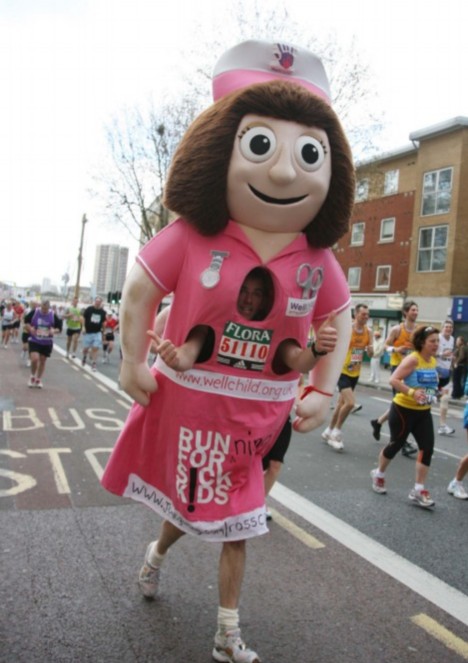
I was also struck by the main difference between the Stockholm Marathon and the London Marathon – fun runners in funny costumes. The London Marathon is full of them. People dressed as chickens, as donuts and as marshmallows run the route, usually for charity. In the Stockholm Marathon, the concept of the fun runner in funny costumes is not very common. During the time I watched, I saw a few funny hats, a robber and a bumble bee. Otherwise, it looked very serious. The participants were focused runners, not fun runners.

And this, for me, reflects a crucial part of Swedish culture. People here take their exercise very seriously.

Stockholm is an exercise-friendly city. Every morning, lunchtime and evening, hundreds of joggers run along the many waterside pathways. Cyclists take over the city this time of year and perilously navigate the cycle tracks and roads. Strollers, speedwalkers, stickwalkers,skaters,skateboarders are all out on the streets. Canoists bob around the canals in colourful kajaks. People play kubb and boule in the parks. Every neighbourhood has at least one gym – and they are all packed. Swimming pools, squash courts, yoga studios abound.

In Stockholm, it feels like everybody exercises in some way. And I guess it pays off.

Visitors often remark that Stockholm is populated with so many good-looking people, of all ages. And they wonder why it can be so.

I hate to admit it, but could it be something to do with exercise?

Stockholm A-Z: Djurgården


D is for Djurgården

For me, it’s easy to forget about the island of Djurgården. It feels so far away. But actually, it’s not very far at all. A 10 minute bike ride or a 20 minute run and you are there.

Djurgården is the ‘pleasure island’ for Stockholmers. Located in Stockholm’s harbour, it hosts museums, galleries, gardens, a zoo, a funfair, a market, cafés, restaurants, a theatre, hotels. The list goes on.

When I first moved to Sweden, I used to think it was stupid to have so many museums concentrated in one area. I used to find it tedious to have to go out to the same destination every time I wanted to go to one of these museums.

But I have changed my mind. I think Djurgården is amazing.

It is one of Stockholm’s truly unique features. Going to Djurgården is like visiting a sanctuary, away from the stresses of urban life, where it is all about focusing on recreation.

The existence of Djurgården is deeply engrained in the Stockholmers’ minds, and strongly rooted in history. As far back as the 1200’s, the island was a royal hunting ground. In the 16th and 17th centuries, the focus shifted from royal hunting to recreation for the public. The 16th century historian Olas Magni describes ‘sculling girls conveying lads and maidens out to play and disport themselves.’

But the true rise of Djurgården happened in the late 1800’s, when a horse-drawn omnibus line was created linking the city to the island. And in 1897 the great Stockholm Exhibition took place there.

This put Djurgården firmly on the map where it still remains today as one of the Stockholmers’ most favourite places to disport themselves.

Stockholm A-Z: Café life


Café Life

Like many cities with diverse seasons, I find that Stockholm can be schizophrenic. In the winter, Stockholmers walk quickly to their destinations, head-down often avoiding social interaction on the street. This is understandable. It is so cold, you just want to get indoors.

In the early stages of summer though, the city changes.

The sunnier, warmer weather comes and restaurants spread out onto the pavements and streets. It seems like even the smallest of cafés has an outside terrace. It might only consist of one table and two chairs, but it is still an outdoor terrace. Outdoor summer cafés open up for the season on quaysides, in parks and squares.

And the people flock to them in droves.

Café season is the start of beautiful people season. All winter, Stockholmers have been hidden under layers of thermal clothing. But now, they cast off their outer garments and slip into their summer outfits, their sunglasses and their shorts and sandals. A more grateful and beautiful nation I am yet to find. You wonder where all these Amazonian women and athetlic men have been hybernating for the winter half of the year. Oh, of course…in the gym.

Café life has a strong tradition in Swedish culture. It is still possible to find traditional coffee houses dotted about the city. A window to the past, they often still have the original decor and atmosphere. Swedes are amongst the top 5 countries when it comes to the consumption of coffee, and this is part of the reason why coffee is so good in most cafés. Even 7 Eleven has decent coffee. This is also why Starbucks considered Stockholm to be a saturated market long before they opened their first store at the airport earlier this year.

But it is the outdoor café that reflects life for the modern Stockholmer. Weather permitting, these are the perfect places to sit and watch the world go by. Infraheaters and blankets help keep any irritating chill at bay. So, grab your outsized sunglasses, head to a square, slip into a chair, order a macchiato and enjoy summer life in Stockholm.

The continental thing to do


The rain trickles down from the sky. Although it’s nearly May, the rain is a little icy. It stings a bit when it hits your skin. My coat is unbuttoned, so I pull it more closely around me. The wind cuts through me like a knife. I curse the fact that I only have a shirt on underneath and not a jumper too.

I walk along the road and notice that the cafés have opened their outdoor terraces. People huddle outside and drink a beer, or eat pizza. Some of them are lucky enough to have an infraheater above their heads casting a grateful heat onto them. Others may be shrouded in woolly blankets to protect them from the chill.

It really is far too cold to sit outside. But, this is Sweden, and it is the spring and as soon as the outdoor terraces are open, you sit there.

It is the continental thing to do.