
The humane airline


As the ash cloud hovers ominously over Europe, so does the discussion and debate about reimbursements, damages and loans.

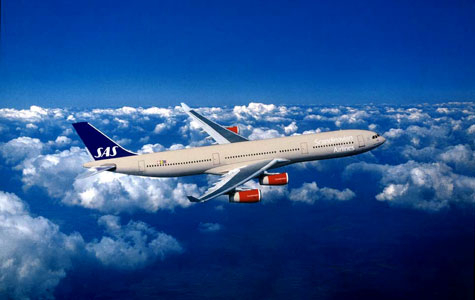
I flew to Bangkok, and was stranded there, with SAS. I cannot praise them highly enough. We passengers were provided with bus transportation, with hotel accommodation, with breakfast, with lunch, with dinner. We were given a voucher to cover email time and 3 minutes of international phone calls.

Other airlines made their passengers sleep at the airport, or pay for their own hotel and food. FinnAir flew people to Helsinki but, prior to boarding, made them sign a waiver to say they did not demand FinnAir should take them onwards to their final destination. So, once landed in Helsinki, passengers had to organise their own transportation to Copenhagen, Paris or wherever they were headed.

SAS got us home. Every one of us. At no extra cost to us.

For me, in the future, there is no competition. I will choose SAS every time I fly. I recommend everyone else does the same.

If we finally understand what a good airline SAS is, maybe we can save it from the bankruptcy that all experts are currently warning about. Sure, SAS might be more expensive than other airlines, but they have a humane approach to their customers.

I believe in karma. Do you?
Safe landings


And so, miraculously, I am back in Sweden! We managed to secure seats on the only plane out of Bangkok that was flying to Scandinavia. Since the air space over Stockholm closes again at 20.00 tonight, we were really lucky! I now understand what a window of opportunity means.

I have to admit that it was rather scary knowing that we were flying over (through? around?) the ash cloud, but everything went well. When we landed, the relief that ran through the cabin was noticeable.

And one other thing was telling. The purser’s anouncement when we had landed on the runway went like this:

‘Thank for for choosing to fly SAS and Star Alliance. We hope you have enjoyed the journey and that you choose us again for your next flight – if we have survived ths….’

The far-reaching consequences of an eruption of a volcano on Iceland.

Escape routes in my head

Escape Route 1
Fly to Bejing and take the Trans-Siberian railway across Mongolia to Moscow. Then take another train to Helsinki and a boat across the Baltic to Stockholm. Home!

Escape Route 2
Fly to Singapore and board a cruise liner across the Indian Ocean. Pass either round the southern tip of Africa or through the Suez Canal. Arrive in the Med and take a train up over Europe to Denmark. Take a train across the Öresund bridge to Malmö and then a train or bus to Stockholm. Home!

Escape Route 3
Catch a flight to Rome,Madrid or Athens when the air route is opened. From there, take a train, bus or rental car and drive up through Germany, Denmark and finally to Swedish south coast. Take train or bus to Stockholm. Home!

Escape Route 4
Catch a flight to Singapore and onwards to Los Angeles. Take another flight across USA to New York. From New York, fly to Rejkavik. From the Icelandic capital catch a boat to Norway. Once in Norway, take a train, bus or rental car over to Stockholm. Home!

Escape Route 5
Fly northwards to Shanghai and further on over Siberia and to the Arctic circle. Land somewhere icy and take a husky sledge through Russia, Finnish and Swedish lapland. Rent snow scooters to the first train station in Sweden (wherever that is). Take a train or bus down the long, thin country of Sweden to Stockholm. Home!

Stranded in Thailand

On Thursday I was due to return to Sweden after my trip to Thailand. This didn’t happen. A volcano erupted on Iceland spewing ash into the atmosphere and causing air space to be shut down over Europe.

My flight was cancelled and I marched out of the airport in a long line of disgruntled passengers, bussed back into Bangkok and put up in a hotel.

Three nights later and I am still here.

The hotel is a SAS hotel so all of the guests here have the same problem. A mixture of Swedes, Danes and Norwegians remain grounded and nobody knows when we will be able to get home. Experts see no end to the volcanic ejaculation.

We are lucky. Many other airline passengers have been forced to finance their own accommodation. Our hotel rooms are paid for by SAS and all our food is included. A plentiful buffet is provided at breakfast, lunch and dinner. It feels like an Atlantic cruise – with no certainty of when it will end.

You can tell how long somebody has been here by the amount of food they pile on their plate. Those who are newly-arrived stack the food high onto their plates, returning frequently to the buffet. If it’s free, then it’s good.

Those of us who have been here longer have developed a more restrained approach to the food – for us, moderation is the best policy. Since we’ve understood that we don’t know how long we’ll be here we have also understood we can’t eat an endless amount of deep-fried spring rolls and cream cakes.

How will this adventure end? When will we return to Swedish soil? How fat will we be when we get off that plane in Sweden?

Watch this space…..

The thick heat of Bangkok

We land at Bangkok airport after a long night’s journey from Scandinavia. The flight is full of pale-skinned, winter-tired Swedes and Danes. We step off the plane and into the heat of the walkway bridging the gap between the plane and the gate. So nice, we think, so warm, what a difference.

We pick our bags up and head out to the entrance where a driver is waiting to whisk us away to our destination. As we wait for the car to come round, we take pleasure in the humidity and the heat. The sun is beating down and the air is still. We still wait for the car. The air is thick with heat. We still wait.

The car arrives and we fling ourselves gratefully into the air-conditioned environment.

I guess we need some time to adjust.

Watching the Thais


However fascinating watching the Swedes is, sometimes you just need a break. This evening I’m heading off to warmer climes to spend 10 days in Thailand. I will be visiting some friends who live in Bangkok and spending some time lounging on the beach. I feel I really need this break after the long and hard Scandinavian winter. I think a visit to a sunnier, warmer climate is a human right when you live as far north as Sweden.

But I am not taking a break from my blog. I am sure I will experience a lot of blogworthy things in Thailand.

So, for 10 days I won’t be watching the Swedes.

I’ll be watching the Swedes in Thailand. And I’ll be watching the Thais.

The day society goes to hell


Watching the Swedes is about my observations of Swedish behaviour. Sometimes, it’s easy to think that I am describing ‘typical Swedish’. However, it’s important to remember that I describe individuals I see and these people may behave in ways that are typical to themselves but not reflective of Swedish society as a whole. I am glad to say that, sometimes, it’s just the questionable behaviour of one person.

One example of this happened today. It is an example that makes me angry, sad and frustrated.

Today a 74 year old Swedish woman died in hospital. She died after she was assaulted in a car park outside a supermarket in the south of Sweden. The whole thing started as an argument over a parking space between the dead woman and a man in his 20’s. It resulted with the man punching the woman’s wheelchair-bound husband, and then punching the 74 year old woman right in the face. He hit her so hard that she fell to the ground, smashing her head on the tarmac. The internal bleeding she suffered led to her death in hospital today. The young man is still unidentified.

What kind of a person hits someone in a wheelchair and then thumps a pensioner in the face?

Thankfully, this kind of thing is in the minority. I am glad to live in a country like Sweden which is relatively safe, and where people are relatively respectful of each other. This is why, when things like this happen, I feel shocked and angry.

I hope that it continues be a rarity and I continue to react in the outraged way I do. I hope everybody does. The day we are complacent is the day we condone this kind of behaviour. It’s the day we say that it’s ok to behave in this way.

And it’s the day society goes to hell.

A nation of hard workers


According to statistics from the Swedish Statistical Office, unpaid overtime in Sweden increased by 40% last year. It was a majority of men who worked additional overtime and it is believed that this is the result of the financial crisis.

Ask most Swedes how hard they work, and the majority of them would say they work extremely hard. Unfairly hard, some of them may even say.

And yes, they do work hard. As long as it’s not before 9am or after 3pm of course, since they have to go to day care to pick up the kids. And not between 11.30 and 1pm because that’s when they eat lunch and exercise. Nor should it be mid-morning or mid-afternoon because that’s the coffee (fika) break. And as long as it’s not on a Friday afternoon because then they’re winding down for the weekend.

Nor should it be anywhere between the end of June and the second week of August because that’s the summer.

And as long as it’s not on a bank holiday (of which there are many), or a day between a bank holiday and a normal weekend, or the day before a bank holiday.

Yes, apart from that, they work very hard.

Big babies and the ageing process


One thing that strikes me as I walk the city streets, is the size of children in pushchairs. They are humongous! Kids that can obviously walk are transported about by Swedish parents all over the city. I don’t know if the kids are lazy, or the parents, but they are huge!

I’ve always thought that the parents weren’t willing to accept that the children were growing older. That they wanted to keep them young and ‘babyish’ for as long as possible. My theory was given credibility with the fact that Swedes remain as students for longer than many other nationalities and there is a high proportion of grown adults still living at home.

This is why I was surprised to see the see the results of a recent survey from the University of Kent, in the UK. The survey was about when different cultures think that we stop being young.

According to the survey, Swedish people think that we stop being young at 34. This is much younger than in many other countries.

In the UK, we think we are young until 35, apparently. And in Cyprus – the age where youth ends is 45.

In fact, Portugal is the only surveyed country that thinks that our youth finishes earlier than the Swedish average.

So, my argument about why big Swedish kids are still in pushchairs doesn’t hold.

Or maybe it does.

Given that their youth ends earlier than most other countries in the survey, it’s necessary to hold on to it while you’ve still got it.

It happens today at 17.32


At 17.32 today, we will experience the vernal equinox, when night and day are of equal length. From tomorrow, the days get longer and lighter. Spring and summer are on the way, and the temperature is rising.

This time of the year, it’s easy to feel that everyone is Sweden is either going away or has already been away on a long-haul holiday to the sun. Thailand is the favourite winter destination for Swedes, followed by the Dominican Republic and the Canary Islands.

But not everybody can afford an overseas holiday. Not everyone has the means or the state of health to sit on a plane and be catapulted to warmer climes. But there is a solution. In the Swedish town of Västerås.

At the care home for the elderly, ‘Södergården’, the staff have created a South Pacific room for the residents.

In the ceiling, there are infra red lamps which provide heat and solarium tubes which provide ultraviolet light. Electric fans provide a light sea breeze. The room is filled with sand, and projected onto the walls are images of a Hawaiian blue sky, sea and palm trees. These images can be changed so as to alter the theme of the room – for example to an archipelago scene or city view of Paris or Rome. The residents lounge in deckchairs or sit at the bar and sip exotic fruit cocktails.

This is such a fantastic idea to brighten up the existence of the residents in an old folks’ home. Apparently it hasn’t been proven yet, but experts believe that a room like this can lead to better sleep patterns, more energy and reduced anxiety for the old timers.

When all you hear are horrific examples of how old people are treated in residential homes, this comes like a breath of fresh air.

When I hear examples like this, it’s almost as though I’m looking forward to becoming old in Sweden.